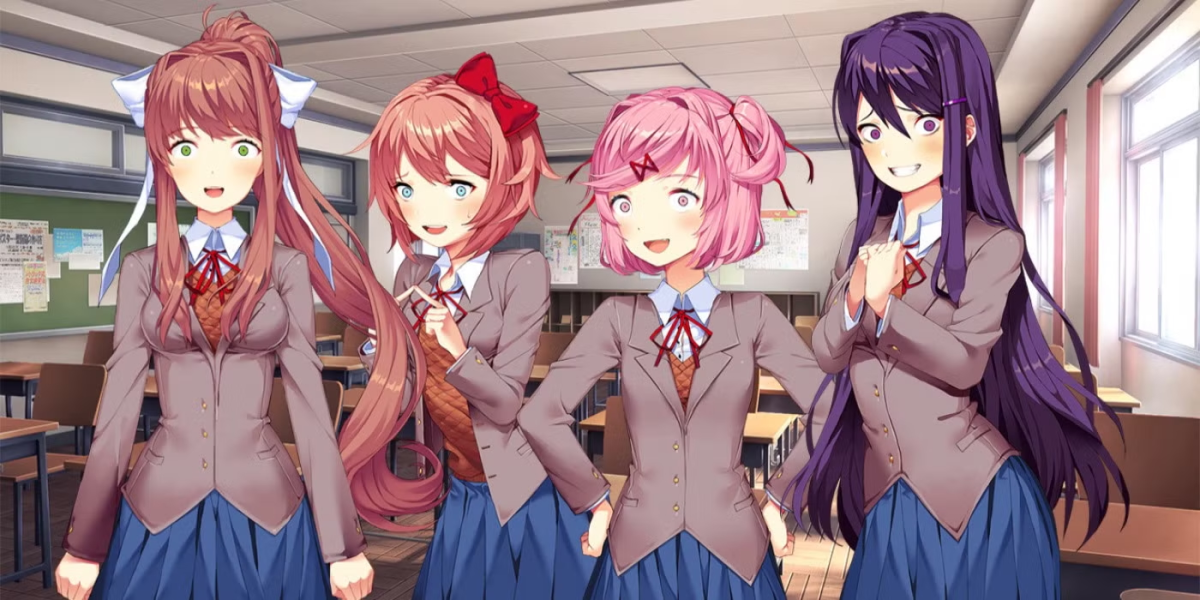
Doki Doki Literature Club has been removed from the Google Play Store, over five months after its initial launch for Android devices. Publisher Serenity Forge has confirmed its removal is intentional, as Google has reportedly claimed the game’s content ‘violates its Terms of Service in its depiction of sensitive themes.’
The move has sparked significant concerns about censorship, following months of outrage against payment providers determining access to video games with sensitive and adult themes.
Doki Doki Literature Club removed from Google Play Store – quick links
Doki Doki Literature Club no longer available on Android devices
Doki Doki Literature Club, first released in 2017, does explore sensitive themes. It’s a visual novel that pitches itself as a cutesy relationship builder, but is actually a psychological horror adventure that explores a dissolution of mental health. This is clearly noted in the game’s description, and it’s rated appropriately as not being for children.
It plays with perception and reality, with a meta-narrative that forces players to question their own beliefs and sanity, as they’re hauled along a strange and twisting plot. While it features harsh themes, including self-harm and obsession, the plot deals with these sensitively, buoyed by sharp, insightful writing.
‘DDLC is widely celebrated for portraying mental health in a way that meaningfully connects deeply with players around the world, helping them feel heard, understood, and less alone on their journey,’ developer Dan Salvato and the Serenity Forge team said.
‘Managing to achieve that – making a truly meaningful difference by using the power of fiction to connect to others – is what I’m most grateful for. It inspires me every day to keep making cool new things, things that can really reach others, especially those in need of connection.’
Doki Doki Literature Club game has earned an audience over the years for its portrayal of horror themes, and how it cleverly subverts the cutesy visual novel genre. Despite this sensitivity and cleverness, it appears the game has been determined as not suitable for the Google Play Store.
As Serenity Forge’s statement notes, it remains available on many other storefronts, none of which have seemingly had an issue with the game since its launch in 2017.
Concerns about game censorship grow
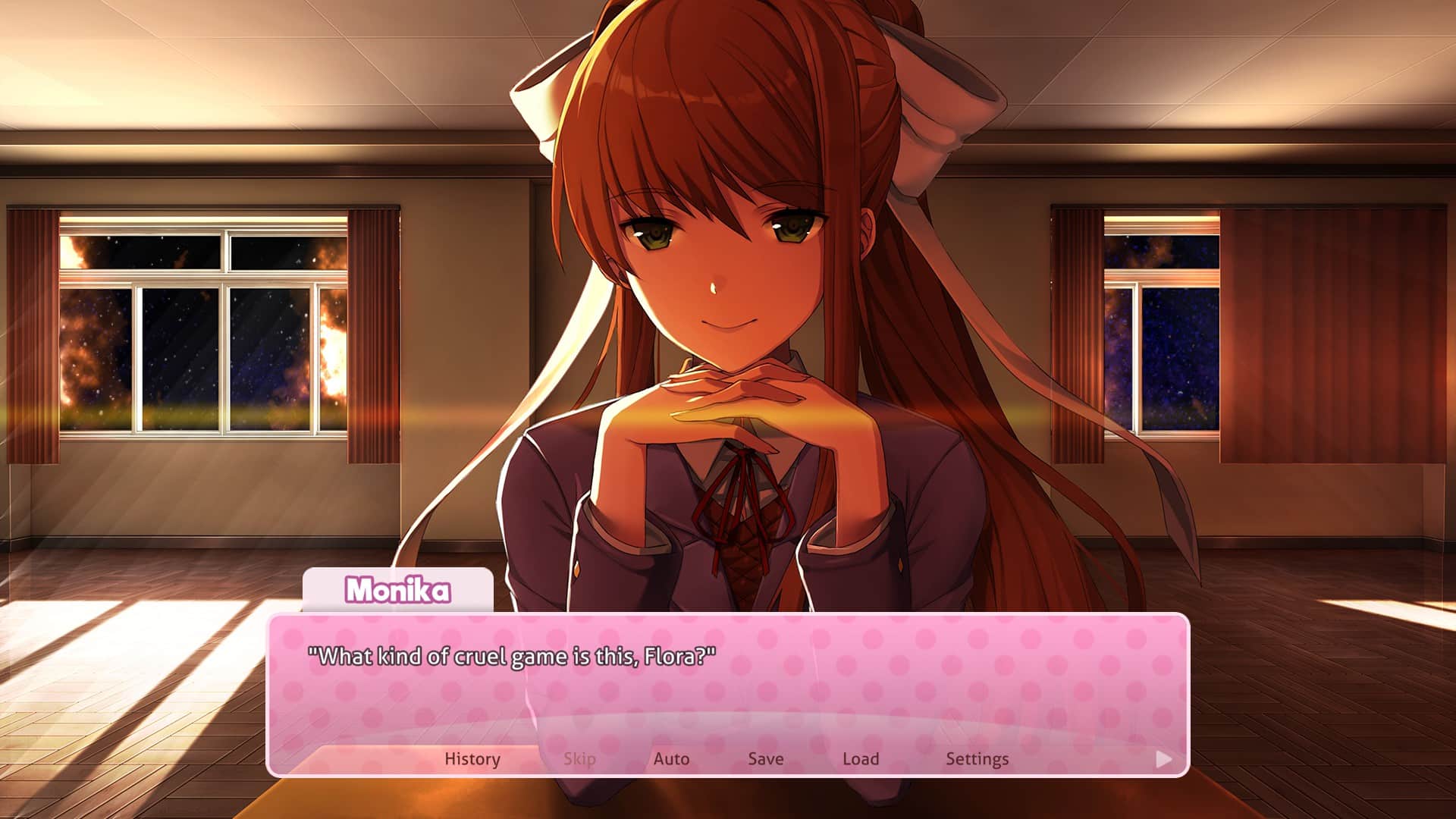
At this stage, it’s unclear what prompted the sudden removal of Doki Doki Literature Club from the Google Play Store, but there are many concerning factors worth noting.
In March, Jordan’s Public Security Directorate suddenly issued a warning about the game, outlining to parents that kids should not play it, as it allegedly featured ‘dangerous psychological content.’ Given the warning was released nearly ten years after the game’s release, it was newsworthy for being so oddly-timed.
The prevailing assumption was that someone adjacent to Jordan’s PSD stumbled across the game, or that it was the subject of an awareness campaign.
Over the last few years, there has been a rise in activism against gamers having access to titles with sensitive and adult themes, led by campaign groups like the Australia-based Collective Shout. In late 2025, the group succeeded in having many games with adult content removed from Steam and itch.io, over concerns of their depiction of women and sexual behaviour.
Putting pressure on payment providers like Mastercard, Visa, and PayPal seemingly led to this success, as companies chose to change policies about what content consenting adults could access.
As itch.io noted in its response post, it had no choice but to remove games, as it relied on payment providers to operate.
‘Our ability to process payments is critical for every creator on our platform,’ itch.io said in a statement on its website. ‘To ensure that we can continue to operate and provide a marketplace for all developers, we must prioritise our relationship with our payment partners and take immediate steps towards compliance.’
At this stage, there are no clear links between campaign activism and the removal of Doki Doki Literature Club from the Google Play Store, but it’s another example of sensitive games being removed due to misunderstanding of their value and contributions to art.
Currently, Serenity Forge and Team Salvato are looking for alternative options for Android users, to ensure the game remains playable on this platform.