Peruse the nominations for any international screen awards, be it the Oscars, BAFTAs or Emmys, and finding an Australian usually isn’t difficult. The AACTA Awards are in good company, then.
Each year, the Australian Academy of Cinema and Television Arts celebrates homegrown names in local projects, and also amasses an industry ‘who’s who’ to share their experiences at the five-day AACTA Festival. This year the AACTA Festival runs from 4 to 8 February at HOTA Home of the Arts on the Gold Coast. In a testament to Down Under talents, it shines a light on several Aussies who have successfully developed international careers.
At the 2019 and 2024 Academy Awards, Tony McNamara flew the flag for Australia. The screenwriter was first nominated for Yorgos Lanthimos’ devilishly witty regal comedy The Favourite, which also won him a BAFTA. He then returned to the contenders’ list for bringing the Frankenstein-esque Poor Things to the big screen with the same filmmaker and flair.
With creating television’s The Great and penning Cruella and The Roses on his recent filmography as well, it’s unsurprising that McNamara considers his career ‘certainly a lot better than I thought it would be,’ as he tells ScreenHub with a laugh.
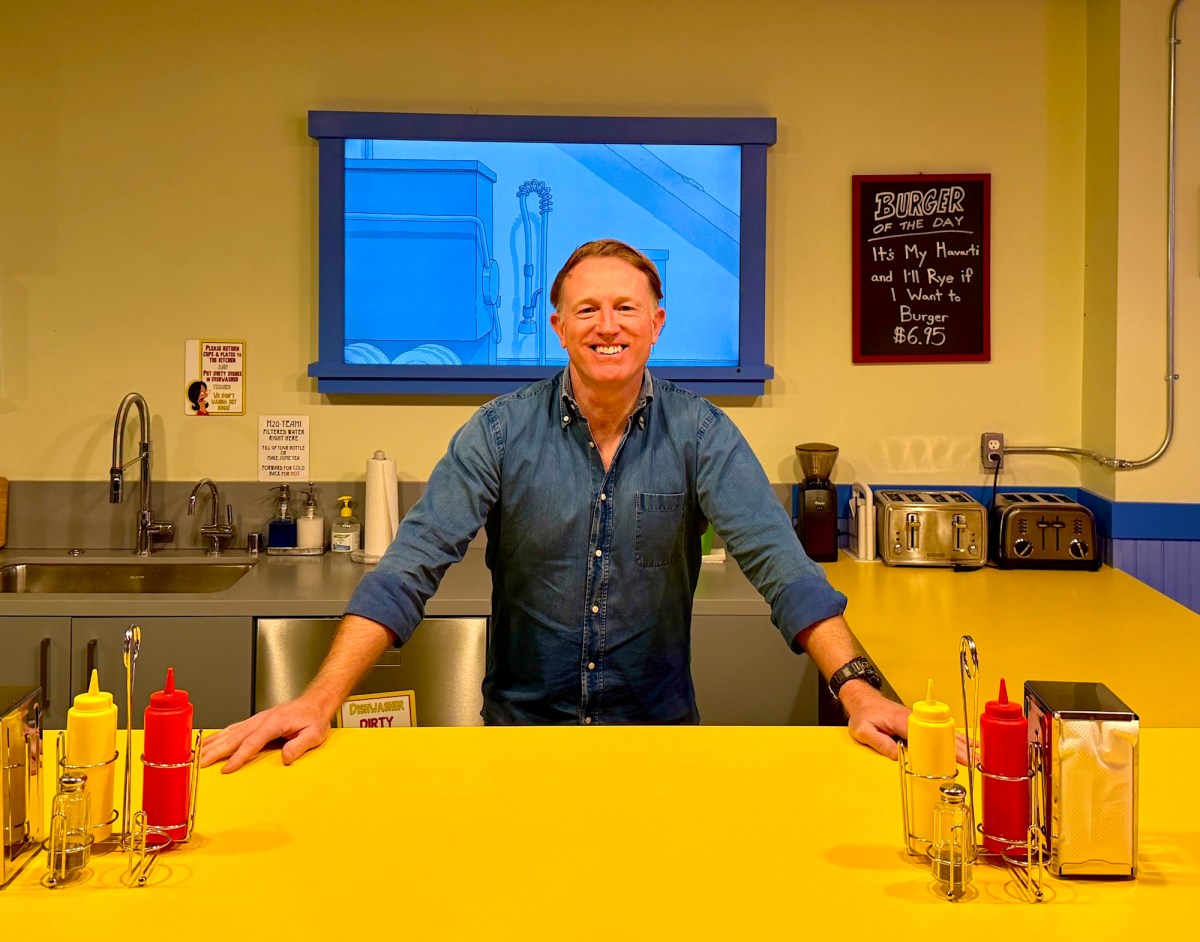
None of this success – which he chalks up to ‘a lot of luck and you have to work really hard’ – would’ve happened without getting his start at home. That’s a familiar story for other Australians who’ve enjoyed significant triumphs overseas, including The Last of Us Emmy-nominee actor Anna Torv and The Bob’s Burgers Movie co-director Bernard Derriman.
Building an international career – quick links
Success doesn’t happen overnight
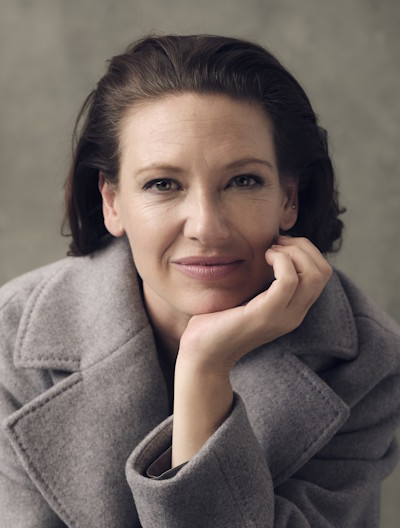
‘We’re everywhere,’ says Torv of Aussies working internationally. On American sci-fi series Fringe between 2008 and 2013, fellow Australian John Noble co-starred. On Netflix’s David Fincher-directed crime thriller Mindhunter – which Torv describes as ‘an elegant, exquisite, smart show that people loved and that did wonderful things for me’ – Damon Herriman played Charles Manson, as he did in Once Upon a Time in Hollywood the same year.
Now a mainstay both at home and in the US, Torv initially headed to London after featuring in local TV drama Young Lions and the film Travelling Light, alongside ‘cup of soup commercials, Nestle ice cream, Dulux paint,’ she says.
‘I think it’s always one foot in front of the other, to be honest. I remember graduating, I would just constantly set myself little goals.’
The maiden step on the Force of Nature, The Newsreader and Territory talent’s list at the time: ‘I just want to see if I can earn money as an actor.’
From there, ‘then you go “okay, right, so now can I earn a living just doing stuff that I want to do?” And then you just slowly keep doing it — slowly, slowly, slowly.’ But breaking into the industry in the UK ‘was really hard,’ Torv says. ‘I was finding it really tough to get a job.’
‘I had auditioned for this project and I didn’t get the part. But they said “do you want to come in and just play the ICU nurse?” and that was a really humbling experience – and, I think, a really profound one to actually realise that at any point, you’ve just got to keep working hard, and it is what it is. It doesn’t go in a straight line.’
‘I remember going on set, and no one knew who I was there. I had one line. No one talked to us. And it was just a very interesting experience. The next day I got a BBC show, which was amazing,’ Torv continues. That job: in the cast of the first season of drama series Mistresses.
Torv found London more challenging than the US, although her breakthrough role didn’t come instantly. ‘I did quite a few trips to get representation over there, and then a ton of auditions,’ she explains. ‘And then I had screen-tested for a Warner Bros show that I didn’t get. But then when Fringe came up, I was actually back in Australia. I got that from Australia, which was pretty great.’
There’s more than one way to follow a dream
Why are Aussie actors seemingly a constant presence in US productions? ‘I think America is a little bit easier because there’s just such a proven record that we can do the accent – and it’s a shorter flight,’ says Torv.
For two-time Emmy-winning animator Derriman, spending more than a decade and a half (and counting) on Bob’s Burgers also sprang from establishing a clear track record. ‘I got my first job working for Disney while I was still in high school, and I worked for there for 14 years. And then when Disney shut down in Sydney, I started doing some of my own thing, and bits and pieces here and there, and started to pick up work from over here,’ he tells ScreenHub from the US.
At Walt Disney Studios, Derriman cut his teeth on a huge range of sequels and TV spinoffs, as well as big-screen animated hits such as Aladdin, Lion King, 101 Dalmatians, Beauty and the Beast, The Little Mermaid, Lady and the Tramp, Jungle Book and Bambi. Initially, he wanted to be a live-action director. ‘That was my dream from when I was a little kid,’ he says. ‘But, especially in Australia, it’s not easy.’
‘I was looking to get in to study film after school, and it was actually my father who saw an ad for Disney, and his thought was “you can draw”. So that was the one thing, that I was lucky I could draw.’
Most Disney animators weren’t also making Tropfest-awarded shorts about Mark ‘Chopper’ Read, music videos for TISM and Flash animations like Arj and Poopy with comedians, though.
Indeed, Derriman credits Flash, and the ability to cheaply create his own shorts with it, with helping him progress his career. Beavis and Butt-Head ranks among the highlights that followed. ‘It was surreal being in Sydney and you’re on Skype calls with Mike Judge, and pitching him your boards,’ he reflects.
‘When you’re at Disney, you’re this small cog in this big machine, and you do your thing and you don’t always have the bigger picture. You’re constantly turning to a director to say “Is this what you want?” And what I learned then, and what I always tell people who want to get into animation, [is] do your own shorts – because you only have yourself to answer to,’ he says.
‘I made a lot of terrible shorts, but once you start to improve and then you learn, you get better material.’
Always learning
Smart, sharp, sublimely funny material is McNamara’s wheelhouse, as his international hits demonstrate. His own stints behind the lens preceded his Lanthimos collaborations, as did writing theatre. He penned his debut play The Cafe Latte Kid while waiting tables. First staged by Sydney Theatre Company in 1994, it was then adapted into the 2003 Ben Lee-led film The Rage in Placid Lake, McNamara’s feature directorial debut.
Writing his initial play and taking it to cinemas were influential experiences; it’s easy to see how they’ve helped shape everything that has followed for him.
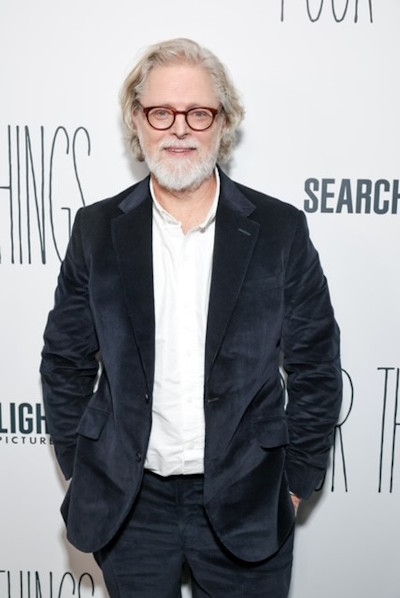
‘I think doing theatre taught me about audiences, and taught me how to connect with an audience – and when you’re not and why you’re not, and trying to work that out. And then adapting to the big screen was a good experience because 70% of my job is adaptations now,’ McNamara says.
‘So it was nice to do my own adaptation of my own thing, and realise a play is not a film, a book’s not a film, they’re a completely different animal,’ he says. Those learnings extend to TV, with The Great, his Elle Fanning-led satirical riff on Russian history, similarly originating in Australian theatre.
Both before and after The Rage in Placid Lake, McNamara’s resume spans an extensive array of Aussie television series, such as The Secret Life of Us, Love My Way, Offspring, Spirited, Tangle and Puberty Blues. His local TV run, which culminated in the 2016 to 2021 series Doctor Doctor, ‘just taught me how to do it,’ he says.
‘It taught me how to be part of a team, and I worked with really good people and really good producers, like John Edwards and Imogen Banks. And on Puberty Blues, I worked as a producer on that. So I think it was learning how to be part of a writing team, learning how a TV show runs. And Doctor Doctor, I ran with Claudia Karvan.’
‘So by the time I got to The Great, I had a good grounding in how a writers’ room works, how a show works. And then, even though it’s a $100-million show … something I’d never come close to before, I did have a lot of the skills to kind of make it work.’
Keep at it – and enjoy what you do
For Australian screenwriters, producers, actors, animators and directors, the journeys of McNamara, Torv and Derriman all highlight the same advice: keep at it. Torv emphasises that point. ‘Keep doing it. Keep pushing. Care about the work. Take the work seriously, not yourself,’ she says.
Derriman adds: ‘I always tell people, work on your own stuff, get better at it, and if you get good enough, you’ll get noticed.
‘That was basically how I really got my job on Bob’s, because it was doing some of those shorts that ended up getting on the internet. I got an agent through one of those projects and started taking meetings over here.’
Another key is factor is ‘liking what you do,’ stresses McNamara. ‘I’ve never not enjoyed writing.’
‘Learn your craft and enjoy your craft, and enjoy the actual process of writing. Because you can’t control whether your movies are hit or your show’s a hit. You can’t control any of those things – or whether it’s miscast or not.
‘There’s so much as a writer you don’t have control over, but you have control over your experience of writing something.’