The Death of Bunny Munro – quick links
Strutting onto the screen from Nick Cave’s 2009 novel, aided in this six-part adaptation by a sensational Matt Smith, Bunny Munro sells dreams but lives a nightmare. The customer falling hardest for his spiel: himself.
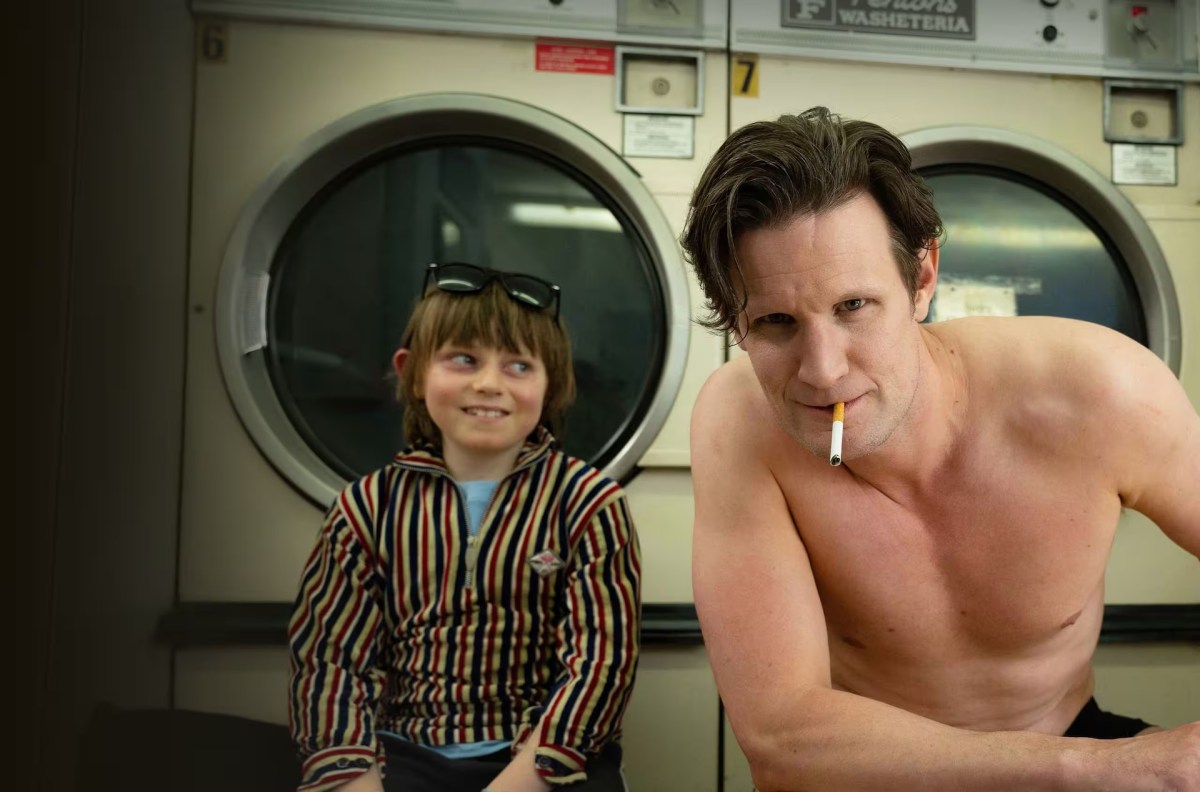
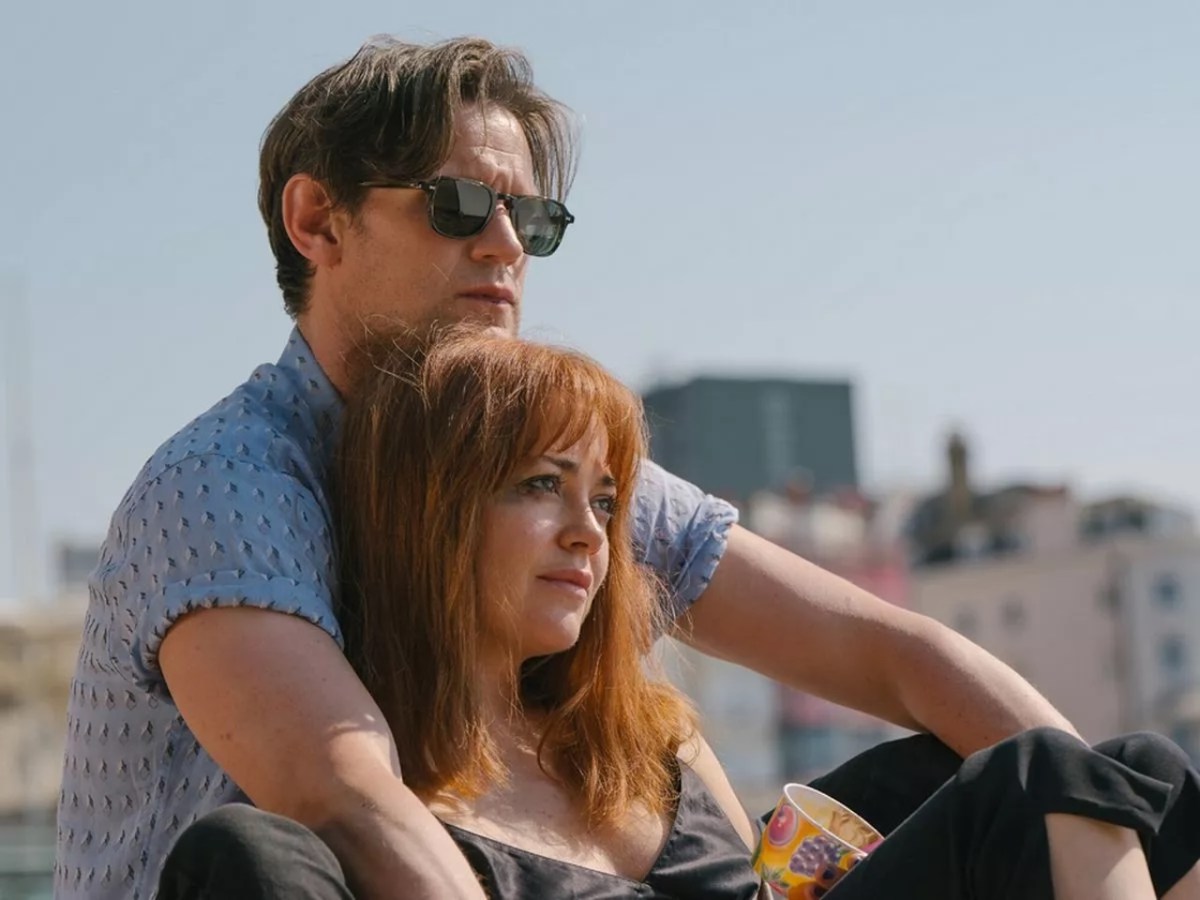
Before the debut episode of The Death of Bunny Munro wraps, its sex-addicted salesman namesake has fiddled while his marriage and Brighton’s West Pier both burn, skipped out of his wife Libby’s (Sarah Greene) funeral for a cigarette and a stint of scowling self-gratification in a public bathroom, slept with his best friend’s girlfriend at the wake, then absconded on a road trip with his nine-year-old son Bunny Junior (Rafael Mathé) as two social workers sit in his flat.
A man who brags of his ability to successfully spruik what women want, and not just with cosmetics, on house calls – ‘by appointment,’ he stresses, sneering at door-to-door hawking – Bunny has bought into his own swaggering image, into the assertion that masculinity means following your desires no matter the consequences and into constantly stroking his own inflated ego.
Even after Libby’s suicide, he couldn’t be more seduced by the belief that sleazing around England’s south coast circa 2003 equals bliss, following in the venom-laced footsteps of his womanising dad Bunny Senior (David Threlfall).
Bunny Munro: found in translation
When The Death of Bunny Munro hit bookshelves, it marked Cave’s second novel, two decades after 1989’s And the Ass Saw the Angel (which has also been mooted for the screen treatment).
Neither version of The Death of Bunny Munro aims for subtlety with its antihero’s antics and appetites. Nuance isn’t in Bunny’s repertoire, as constantly reinforced in the miniseries smartly scripted by Somewhere Boy’s Pete Jackson and evocatively directed by Industry’s Isabella Eklöf. (Cave executive produces alongside Smith, and provides the stirring score with regular collaborator and fellow Aussie legend Warren Ellis.)
Putting the moves on housewives while Junior waits in the car, punishing one unresponsive woman with a urine-soaked bathroom, making a pitstop at a stripper-touting pub and stealing from a blind potential client: this is all in a day’s work ‘shaking the money tree’ for Bunny, as he characterises his routine to his son on their oft Kylie Minogue-soundtracked drives.
The devil-horned serial killer stalking the area and soaking up newspaper headlines as Bunny and his boy hit the road is also far from understated, as is the murderer’s haunting thrall over the character.
Cave didn’t pen a redemption story, nor has Jackson. Astutely found in the page-to-screen process, however – and leading the show away from the text’s echoes of Irvine Welsh’s Filth – is greater space for Bunny Junior’s experience.
A bookish and curious child with a chronic eye infection and a new penchant for still chatting with his mother after she’s gone, he’s initially unwavering in his adoration for his dad. The question of whether the Munro family’s generational cycle can be thwarted to save its youngest son from becoming its latest bad seed gives the series its deeply moving emotional weight.
Bunny Munro: toxic masculinity
British television in 2025 has already delivered a stellar examination of toxic masculinity’s impact upon young hearts and minds, complete with an exceptional breakout portrayal. Adolescence’s Emmys sweep, winning eight awards, including Outstanding Limited or Anthology Series, plus the Lead Actor, Supporting Actor and Supporting Actress categories, was well-deserved.
The Netflix hit’s Owen Cooper and The Death of Bunny Munro revelation Mathé have opposing assignments, as outstanding as they each prove: one unpacking how the product of a loving home becomes anything but caring; the other retaining his tenderness while awakening to the reality of his poisonous Lothario dad, plus the latter’s before him.
With its rampant sex scenes and the frequent sight of Smith’s naked rear, no one will be screening The Death of Bunny Munro in schools to teach tomorrow’s men. Still, interrogating 21st-century notions of manhood remains the pair’s shared focus.
In both, male violence towards women waits to erupt from a swell of entitlement and anger, to rush in wherever empathy recedes and to taint lives forever.
In The Death of Bunny Munro, without the hope for Junior to tread a different path – as earned by so thoughtfully fleshing out the boy’s sensitive and open nature – it might’ve seemed too easy and convenient to steep Bunny’s actions in mimicking the dad that could never love him back.
Bunny Munro: brilliant Smith
Call it the dead wife trope, call it the lost Lenore: there’s no escaping that Libby’s passing is pivotal to The Death of Bunny Munro. But Bunny isn’t a man changed. His love of his sordid behaviour continues unadulterated, as does his lack of concern for anyone but himself.
Smith’s task, then: to wear venal charm like a second skin, layer a lifetime of shirked-off despair and trauma under glued-on arrogance and hedonism, and entrance and repel in equal measure. While The Death of Bunny Munro arrives smack-bang in the middle of House of the Dragon’s planned four-season run, its star isn’t repeating himself in playing fiendish and brutal again.
No camera can look away when Smith is centre frame, as was true of his delightful supporting part as a mohawked 90s punk in New York in 2025 film Caught Stealing, too, and in everything from Doctor Who and The Crown to Mapplethorpe and Last Night in Soho before it. Audiences can’t either.
When his reflection catches his own gaze, Bunny often joins them.
Another of this series’ savvy moves: knowing that there’s a healthy time limit to peering at its eponymous figure, whether through the eyes of Bunny, Libby, Junior, Senior, the friends and acquaintances that he largely screws over, or any of the women that he attempts to bed.
With episodes ranging from 29 to 41 minutes in length, The Death of Bunny Munro cuts to the bone not just piercingly, but sharply and swiftly.
The Death of Bunny Munro is currently streaming on Binge.
Discover more screen, games & arts news and reviews on ScreenHub and ArtsHub. Sign up for our free ArtsHub and ScreenHub newsletters.
Sarah Ward is a film and television critic; arts, entertainment and culture editor and journalist; and film festival organiser. She is the film and TV critic for ABC radio Gold Coast, the Australia-based film critic for Screen International, and a critic and member at the Alliance of Women Film Journalists. Sarah’s background also spans stints as film and television editor at both Concrete Playground and Variety Australia, and as Goethe-Institut Australien’s Kino in Oz critic and writer. Her work has been published by the Australian Centre for the Moving Image, Birth.Movies.Death, SBS, SBS Movies, Flicks, Lumina, Senses of Cinema, the Australian Academy of Cinema and Television Arts, Junkee, FilmInk, Broadsheet, Televised Revolution, Metro Magazine and Screen Education, the City of Gold Coast, the World Film Locations book series and more.
Actors:
Matt Smith, Rafael Mathé, Lindsay Duncan
Director:
Isabella Eklöf
Format: TV Series
Country: UK
Release: 20 November 2025