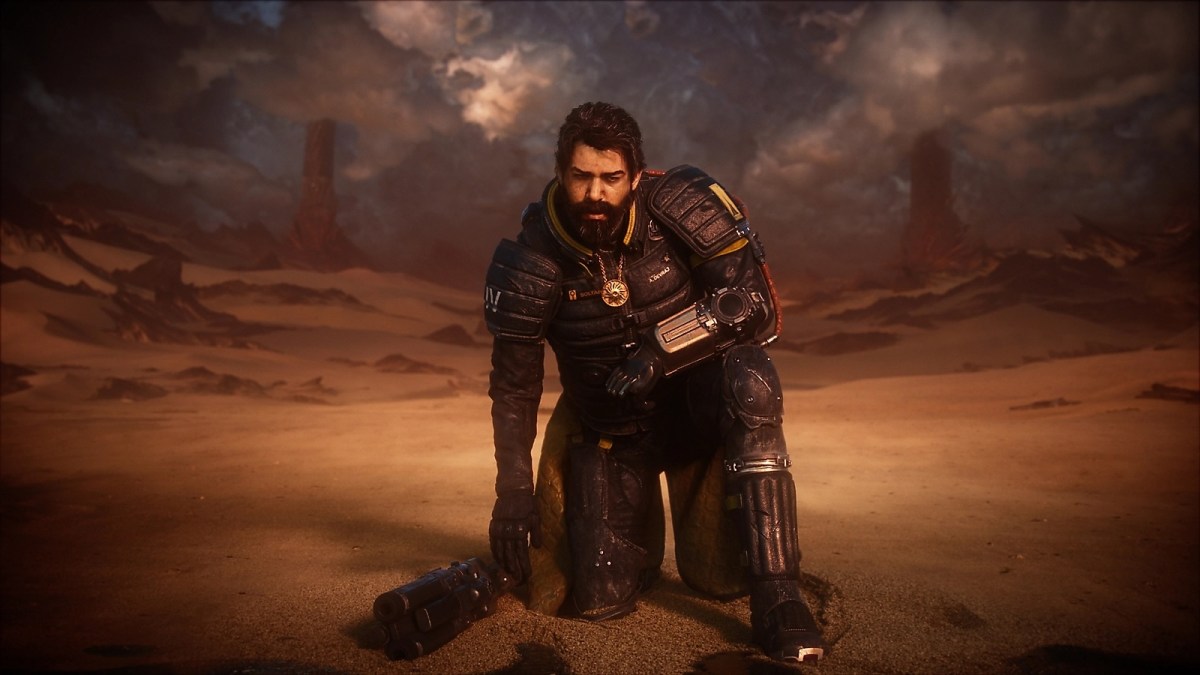
Dying in a video game is typically shameful. It’s assumed to be a mark of lacking skills, or a failure on the part of the player. Not so in Saros, an action-heavy game where dying is a doorway you pass through many times.
It should be frustrating, to fall again and again in this looping gameplay across the alien planet of Carcosa. It should be easy to give up. Instead, Saros allows you to rally and strengthen, with every death gaining you momentum and experience, to help you chart your course through its rugged terrain.
With a compelling mystery at the centre of this sprawling sci-fi story, and performances that encourage you to imprint on its cast of characters, Saros will grip your heart tightly. Even through the grit and frustration of facing near-impossible odds, you’ll want to forge onwards.
Saros PS5 game review – quick links
An intriguing rogue-lite
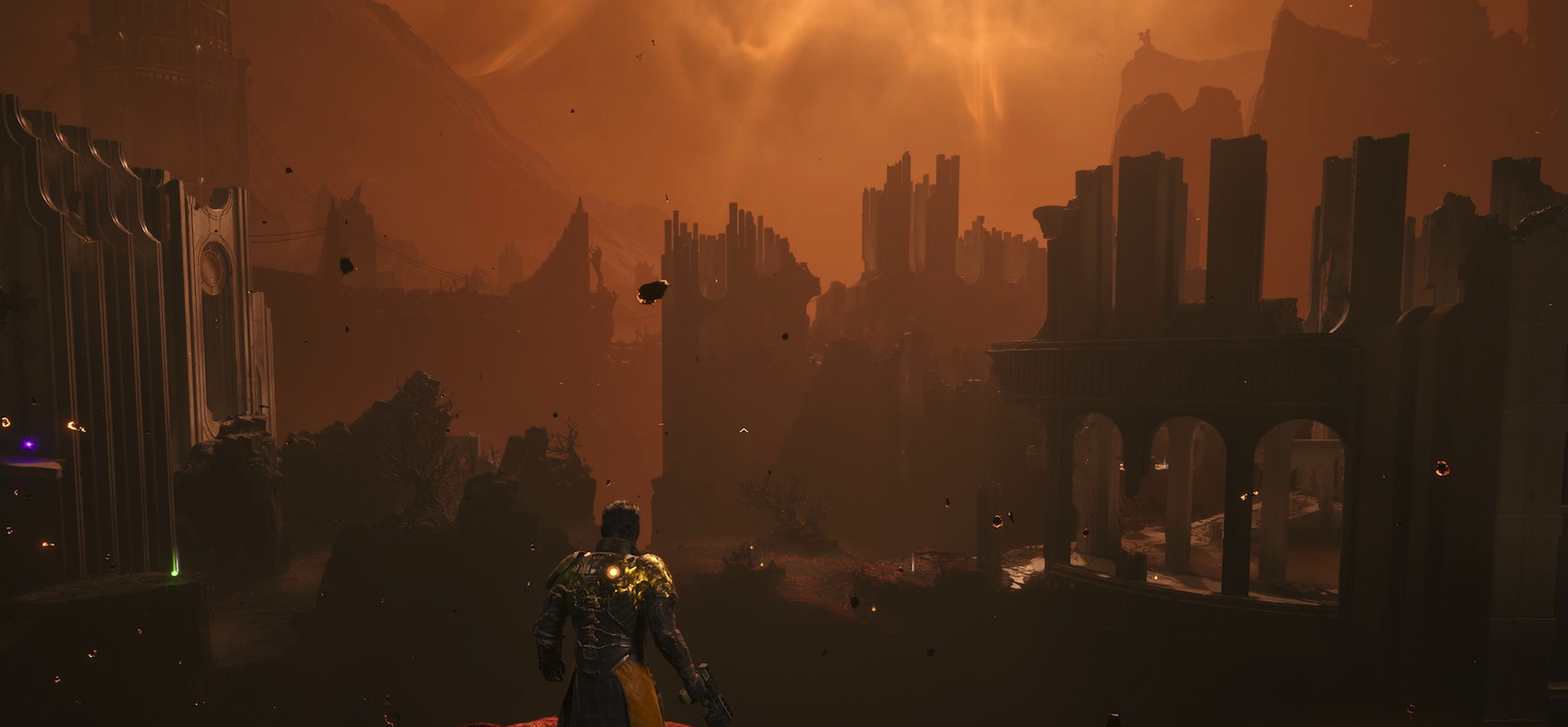
The journey of Saros begins with the arrival of Soltari enforcer Arjun Devraj, who charts the alien planet of Carcosa alongside a slowly-diminishing crew of soldiers. The game doesn’t waste time with introductions or a particularly layered setting. You simply arrive into its world, wide-eyed, and must swiftly learn the rules of your adventure.
Devraj is a skilled enforcer, with access to a variety of special abilities. He can dash through beams of energy and has access to various pieces of futuristic weaponry, from guns to parasitic canons. He wanders Carcosa with a mission to uncover its mysteries, but soon stumbles across a more personal conundrum. In the game’s opening moments, he’s obliterated by an eldritch creature with long, tentacle-like limbs, only to be revived on the Soltari home base.
Nobody knows how he’s returned or where he’s been. Devraj doesn’t understand why he returns, or why he can’t die. There’s something of Edge of Tomorrow and All You Need Is Kill in this set-up, with Devraj caught in a death loop, forced into a desperate search for answers while confronting alien horrors.
On his second loop, Devraj stumbles on a further mystery. Carcosa is haunted by an eclipse that seems to transform the landscape around him, making enemies more hostile, and encouraging the land to sprout new life.
Answers dance out of reach as you tackle Carcosa, with every loop adding new layers and twists to the world. Devraj is chasing after his former crew members and friends. Along the way, he uncovers more of the eclipse and its mysterious power to warp minds.
Much of the Soltari crew has vanished into Carcosa at the whims of this power. In audio logs, the game paints a terrifying picture of what’s happened, as each crew members whispers of their fantasy and reverence for a mysterious god-like being, or enthuses about the fall of the world.
Looping gameplay that evolves with every run
Saros allows its world-building to evolve lushly. With a relatively cold open, you’ll have questions immediately, none of which are answered succinctly, or with any haste. The core mysteries of Carcosa are left to linger and evolve, with artful and subtle hints at the horrors ahead, and the monsters you’ll face as you progress.
It’s not only the sharply-written and well-performed audio logs that keep you desperate to learn more and get closer to the game’s heart. It’s Carcosa itself.
By nature, Saros is a rogue-lite, in that you’ll be traversing an ever-progressing narrative by looping through various locales. But even with a sense of repetition in stages, as you come to grips with the combat system and towering bosses that block your way, you’re always travelling onwards.
The lands you traverse shift and change with each entry, so you’re never charting exactly the same course twice. You’ll get random weapons and upgrade drops, too, so there are elements of chance and variety in each run. Sometimes, you’ll pick up a game-changing upgrade that improves your speed or your firepower. Sometimes, you’ll gain armour strength at the detriment of your dash speed.
It’s these layers of chance, along with the opportunities to explore new locations, that will revive your spirits when you fall for the millionth time and grow frustrated at the thought of taking on another loop – not to mention the desire to see the game’s lush and artful story through to the end.
A world of great mystery and terror
There are so many wonderful sights awaiting on Carcosa. In the tradition of developer Housemarque, led by the creative direction of Australian developer Gregory Louden, Saros is an incredibly good-looking game.
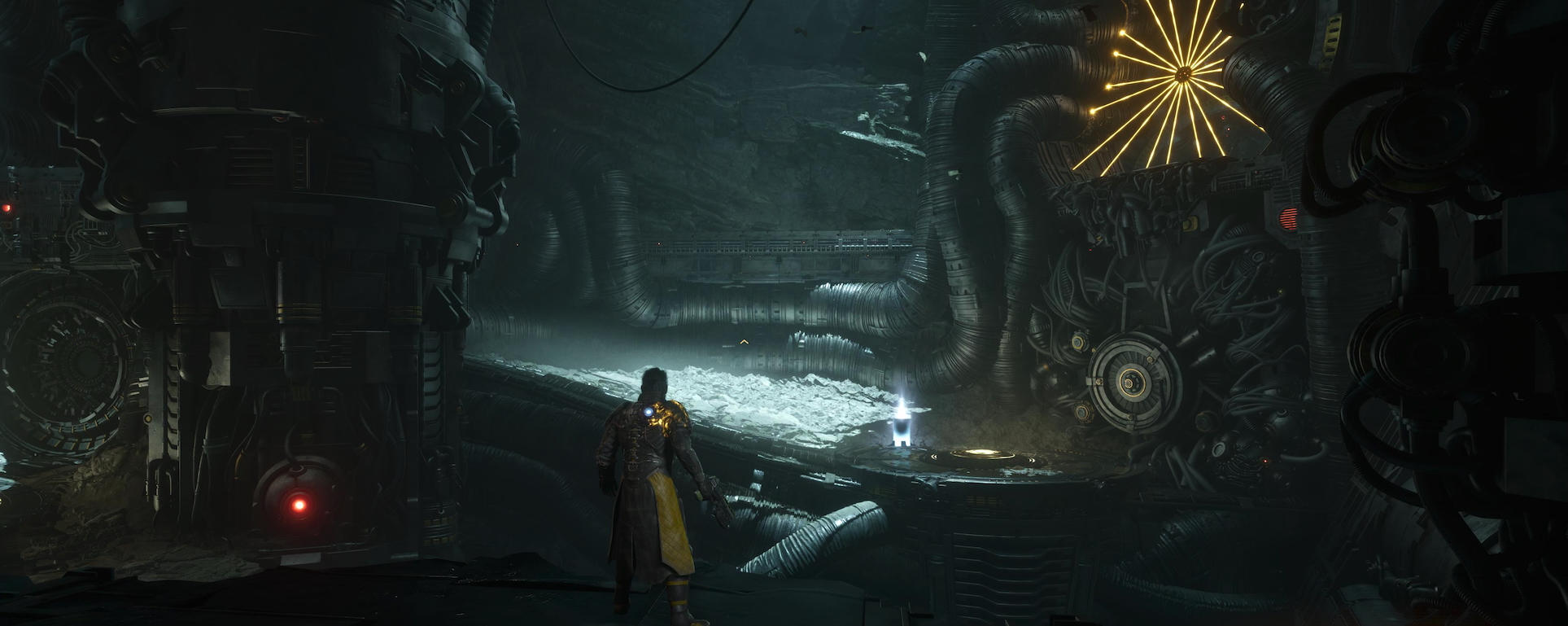
As you travel, you’ll encounter lands twisted by corruption, and marked with great beauty. You’ll see strange and uncanny statues twisted around landscapes of blood-red vines and white rock. You’ll visit Giger-like space stations where wires wrap around great monuments like umbilical cords.
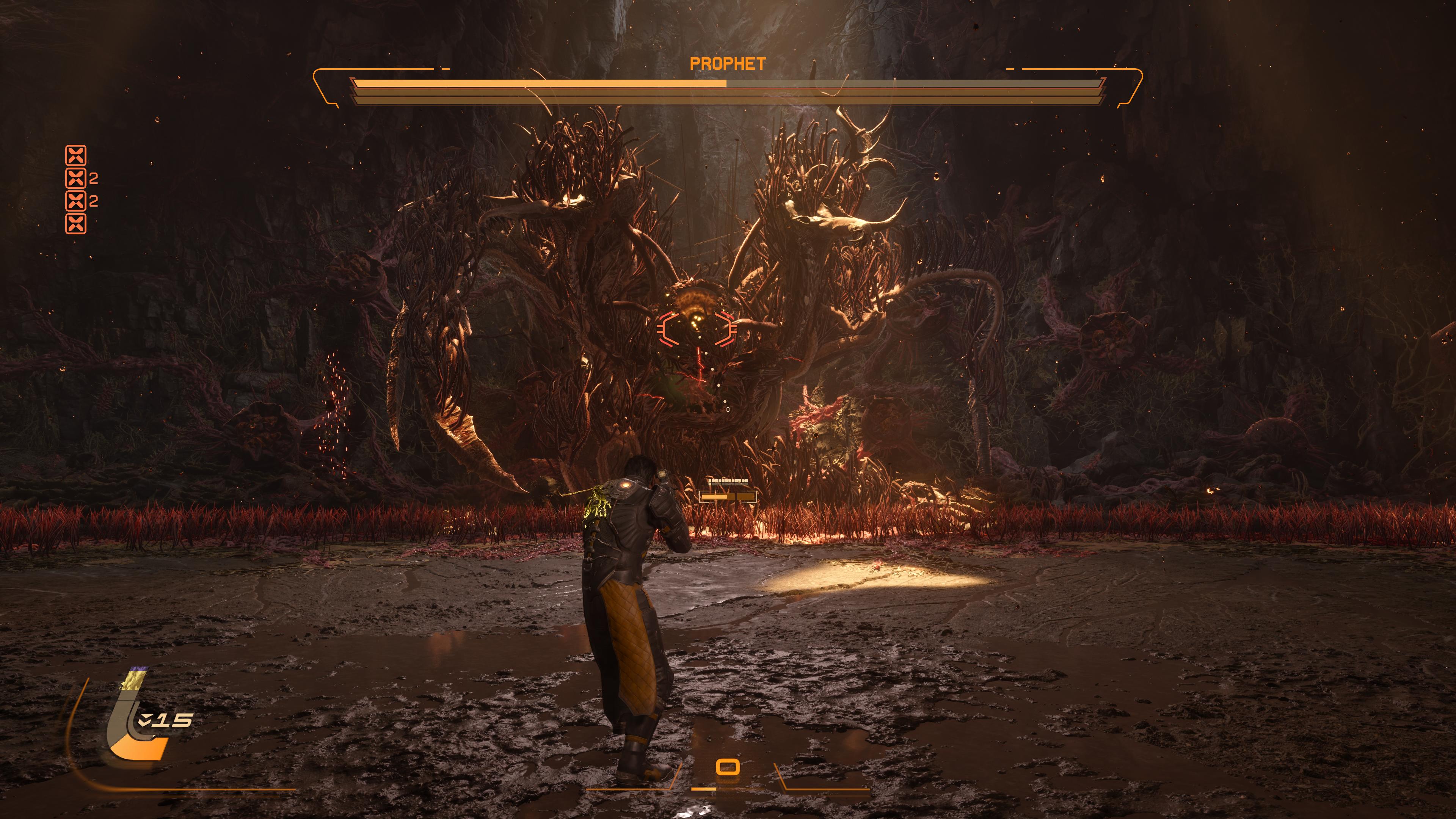
Eventually, you’ll meet a host of bosses that are equal-parts horrific and gorgeous, with winding limbs, spreading vines, and all-seeing eyes. It’s mesmerising, and while you’ll need to clear your shock and awe to maintain your focus and sharp reflexes, there’s also time to appreciate just how beautiful the game is.
On the subject of difficulty
It’s natural to have some trepidation about Saros, even with this high praise. Housemarque is known for making difficult games, and it did not shy away from outlining Saros as another during pre-release marketing.
This is a difficult game.
But it’s also a fair one, with options for those who are less inclined to throw themselves repeatedly at a wall. In Saros, you’ll begin without sea legs. Enemies are incredibly difficult, and require you to combine third-person shooting skills with dashing, dodging and using an energy-absorbing shield. But eventually, you’ll sink into the game’s rhythm and begin to uncover its unique patterns.
Enemies tend to move with the flow of Carcosa, and eventually, you will recognise how they attack and shoot, and when to deploy your own skills to counter them. It’s like a dance. Even in towering boss battles, you’ll learn a distinct pattern, using all your accumulated skills and abilities to figure out exactly when to make your move.
When you inevitably fall, as a natural part of the game’s loop, you’ll be able to build yourself back up with new unlockable skills, and then try your luck with new items and weapons in the next iteration of Carcosa.
It’s also worth noting the rogue-lite designation here. Yes, there is an element of repetition as you travel through worlds, but each biome is segmented, so once you tackle its trials and move past particular areas – by unlocking gates, defeating monsters or by other means – you won’t be required to keep revisiting areas you’ve already conquered.
A teleport system allows you to travel to any biome to unlock new secrets, giving you the opportunity to experience new sights in each loop, at your own pace.
It’s this mix of repetition and forward progress that makes Saros so moreish. For those who love a challenge, this is certainly a game that requires focus and quick-thinking. But for those curious about its esoteric, sci-fi vibes and vast, visually-impressive realms, there’s also the opportunity to advance through sheer will and determination, and to eventually get where you’re going by weathering Devraj until he’s able to plow through the alien hordes.
Saros understands exactly what motivates players, and presents all the tools you need to experience the joy of triumph against the odds. Even when it presents a frustrating road block, there is always the opportunity to move through it, with persistence key to enjoying the game’s many, ever-twisting challenges.
A code for Saros was provided by the publisher for the purposes of this review.
Discover more screen, games & arts news and reviews on ScreenHub and ArtsHub. Sign up for our free ArtsHub and ScreenHub newsletters.
Developer
Housemarque
Publisher:
Sony Interactive Entertainment
Release Date:
30 April 2026