Magic: The Gathering‘s latest set, Reality Fracture, is one for long-time fans. While I suspect anyone can jump in, the set feels purposefully designed to reward those with deeper franchise knowledge, and anyone who’s interested in the winding story of MTG – the events that take place between major card sets, and the creatures and characters who occupy its world.
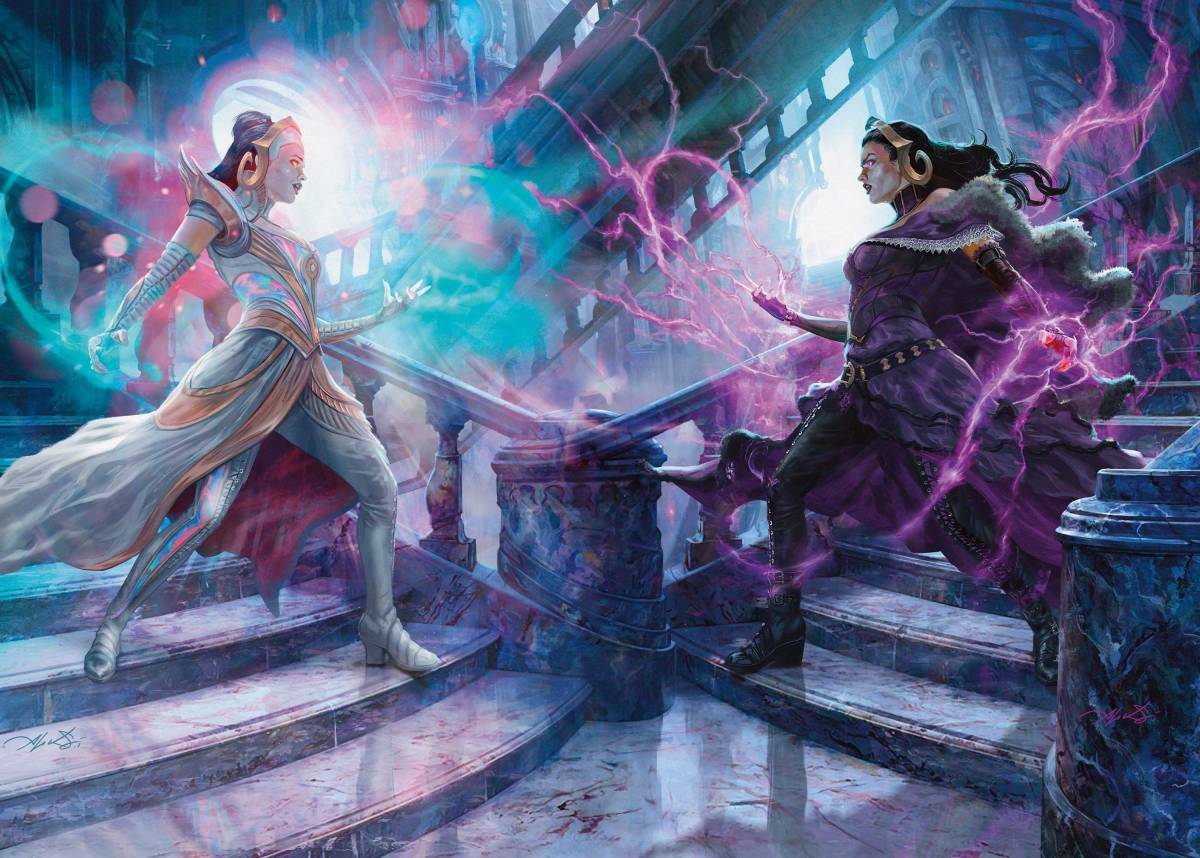
The crux of the set is made very clear in card artwork and flavour text, as well as the appearance of major Planeswalker characters, from Jace to Liliana, Garruk, Chandra and beyond.
In the lore of Reality Fracture, powerful Planeswalker Jace Beleren, previously the fulcrum preventing the total destruction of the MTG universe, has lost his mind and decided to rewrite reality, recasting certain characters in new roles and magic colours.
To put it even more bluntly, as many others have described, Reality Fracture is Jace Beleren’s fanfiction of what the MTG universe should be. Recognisable characters associated with death are now associated with life. Fiery characters are now frosty characters. The delightful Homunculus Fblthp, once lost, knows exactly where he’s going (maybe one of the only truly great changes that Jace makes).
It’s all high chaos, which makes for a very rich set where the story leaps off the cards.
MTG Reality Fracture review – quick links
Familiarity with MTG lore helps understanding of this unique, creative set
As mentioned, familiarity with the world of MTG will help with understanding this set, although it does also make the process of drafting more complex.
In Reality Fracture, you get both the canon world of MTG delivered across various cards, as well as elements of the alternate or ‘echoed’ universe. In many packs, you’re actually getting ‘Echoed Pairs’ of characters, with one version being their original self and the other being their alternate universe self in new colours.
It helps to understand which is the canon version of the character, from a flavour perspective, so you can see the changes that Jace makes and how this new universe has formed.
It does mean you have to think differently about recognisable characters, as well. If you love Liliana as a character – and who doesn’t? – you can consider whether to build decks around her original, death-based powers, or to branch out with her alternative universe counterpart, Liliana the Fautless, to build a deck around life gain.
Reality Fracture is a very character-driven set, with a higher likelihood of getting Echoed Pair heroes in booster packs or nabbing a Planeswalker. Jace is the main character, and has a few variants here, but in any deck good for playing individual formats, you’re likely to be leaning into many key, recognisable (and some changed) characters for synergy.
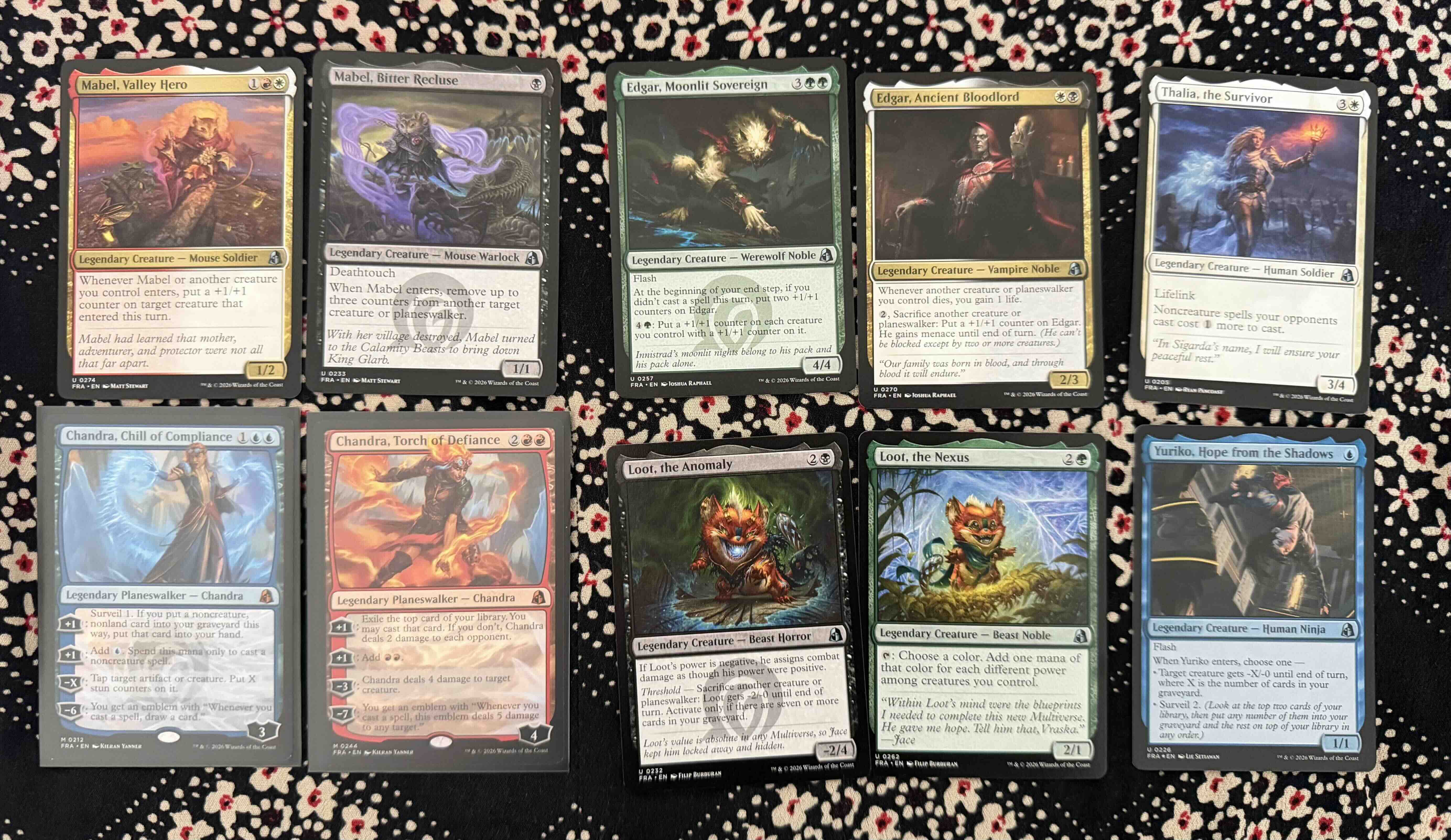
Edgar Markov returns here, and he can be a vampire (white/black) or a werewolf (green). As a vampire, he can initiate life gain for each creature planeswalker death, and he gets buffed by creature sacrifice. As a werewolf, he’s a high-powered creature with flash, and you can put two +1/+1 counters on him at the beginning of your end step, as long as you don’t cast spells in that turn.
Mabel, Valley Hero is a red/white creature that can buff creatures as they enter. Mabel, Bitter Recluse is a one-mana black creature with deathtouch which can remove counters.
The temptation would normally be to pair characters to create thematic decks, but each echoed character in Reality Fracture feels so different that you really need to be dealing with them standalone, and figure out how to hinge your plays on their powerful, individual abilities.
With such variety between characters, there’s a lot of different threads of synergy going on. Characters that share colours with others from another universe may not be as synergistic as it first appears, as there’s so many new colour combinations and drafting types in Reality Fracture.
Where before, players were dealing with one universe of relative synergy, these alternate universe shenanigans make deckbuilding a bit more challenging. You need to be thinking with more of an open mind about how you build your decks, which universes characters come from, and how best to make strategic plays.
It’s also worth noting there appears to be a higher volume of powerful, high mana creatures in this set, necessitating a slower build up of mana before you can go in for the win. Patience is typically rewarded, and Reality Fracture will require much of it.
Beyond considering your draft pool of heavy hitters, you also really need to consider playing blue, because Jace is the all-important force of this particular set, whether you like it or not.
All Jace, everywhere, all at once
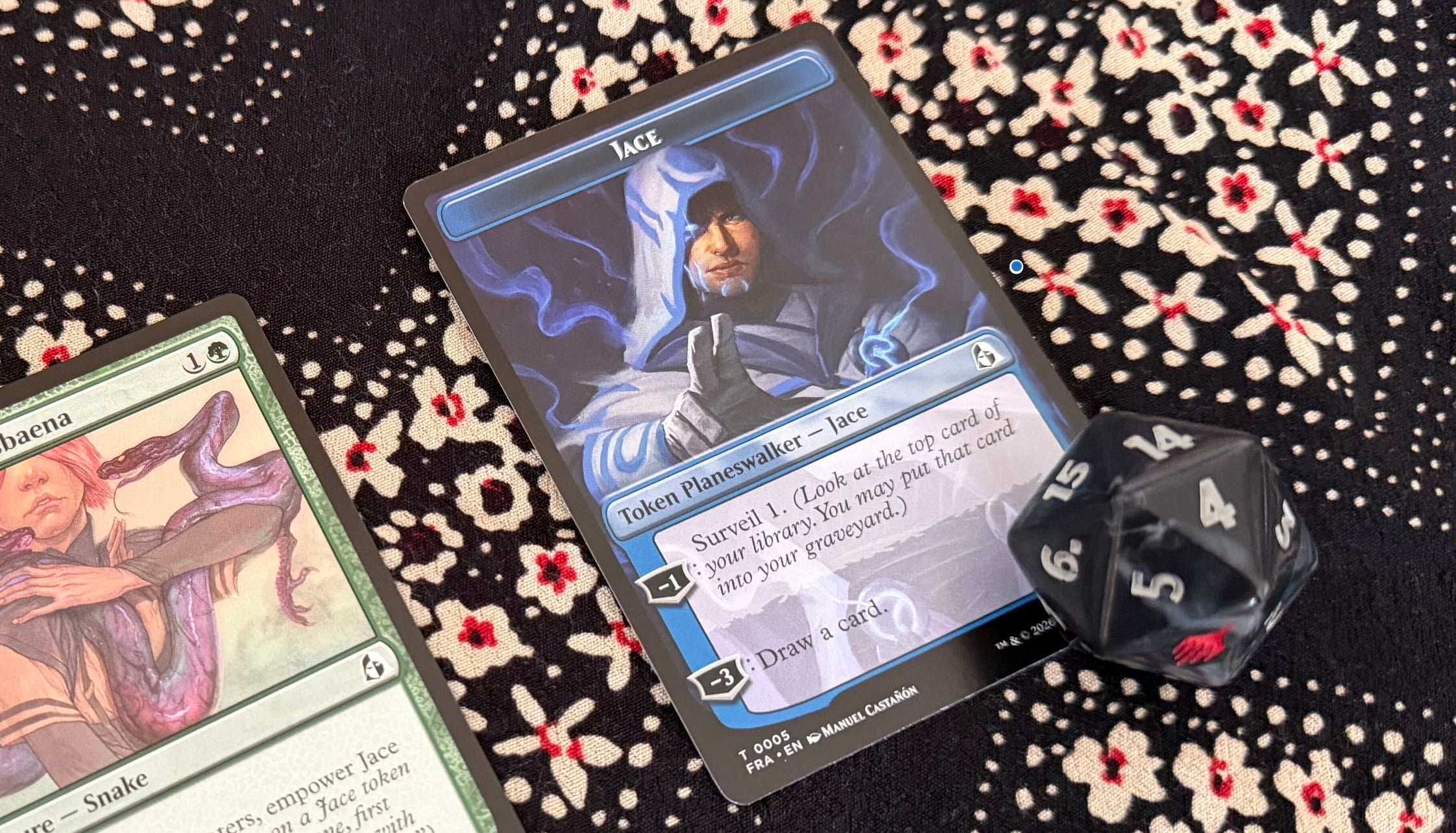
In my draft pool, my cards were very Jace-heavy. Not only did I nab two Jace, Reality Sculptor Planeswalker cards, I also ended up with a bunch of cards to ‘Empower Jace’ – a new mechanic that allows you to power up a Jace token, pictured above.
This token is particularly powerful because playing cards like Way of the Cryomancer (and other Legendary Enchantments), Arcane Amphisbaena, Solve for Disappointment and Mindseeker Oculus all allow you to empower Jace, as well as providing other benefits along the way. If you play your cards right, you can be drawing an additional card on each of your turns with this token, as well as surveilling to ensure you’re picking up the right cards for your next play.
Jace, Reality Sculptor also lets you empower a Jace token, based on the number of islands you control. As you can imagine, this builds up fast and speeds card draw well. This particular Planeswalker also has another, more evil ability: if you can put 25 or more loyalty counters on a single Jace token, you can exile all but the bottom card of each opponent’s library. This essentially gives everyone one turn only to win, otherwise they’ll deck out and lose immediately.
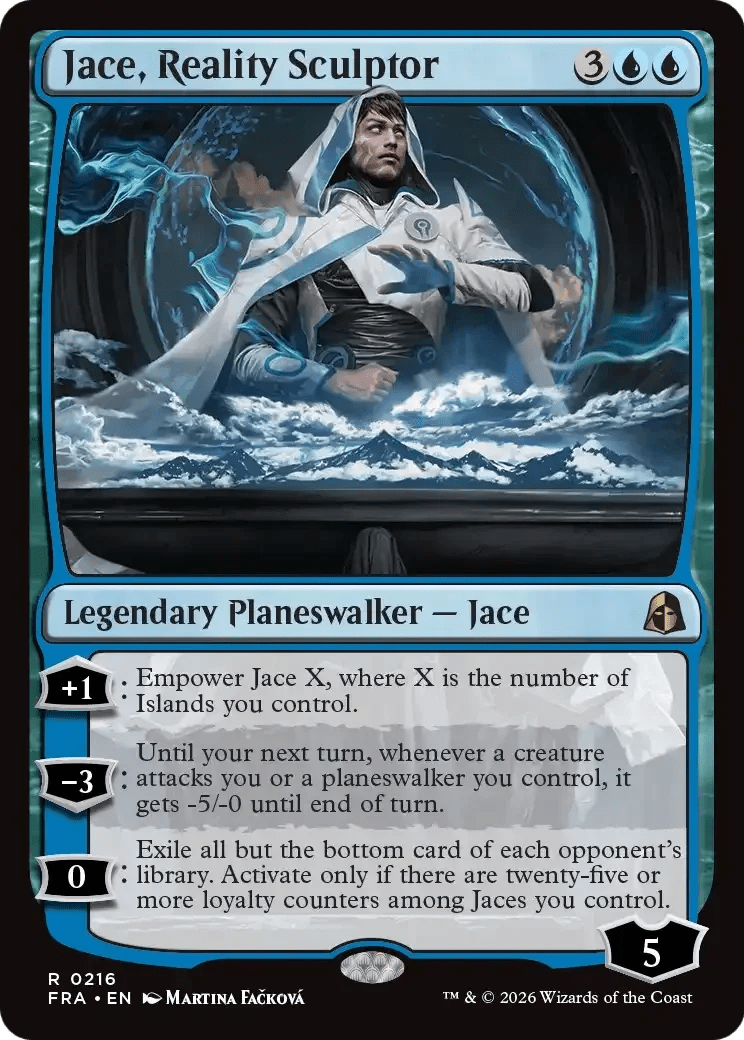
Mean, mean, mean. And delicious. I didn’t manage to win a game this way, but I’m salivating at the possibility of doing it just once to have the satisfaction.
It would be wonderfully thematic at least, as this set is all about Jace pulling a bunch of mean moves to shift the universe in his favour. You can feel his influence on many cards this set, with a variety of ultra-cool artworks showing off his fall from grace, and just how much his power has spread across the MTG universe.
For those players disinterested by Jace, the sharp focus on him and his new world may be a disappointment. But for everyone else, his wild mental break makes for rich ground to explore.
Cool art, powerful spells and so many possibilities
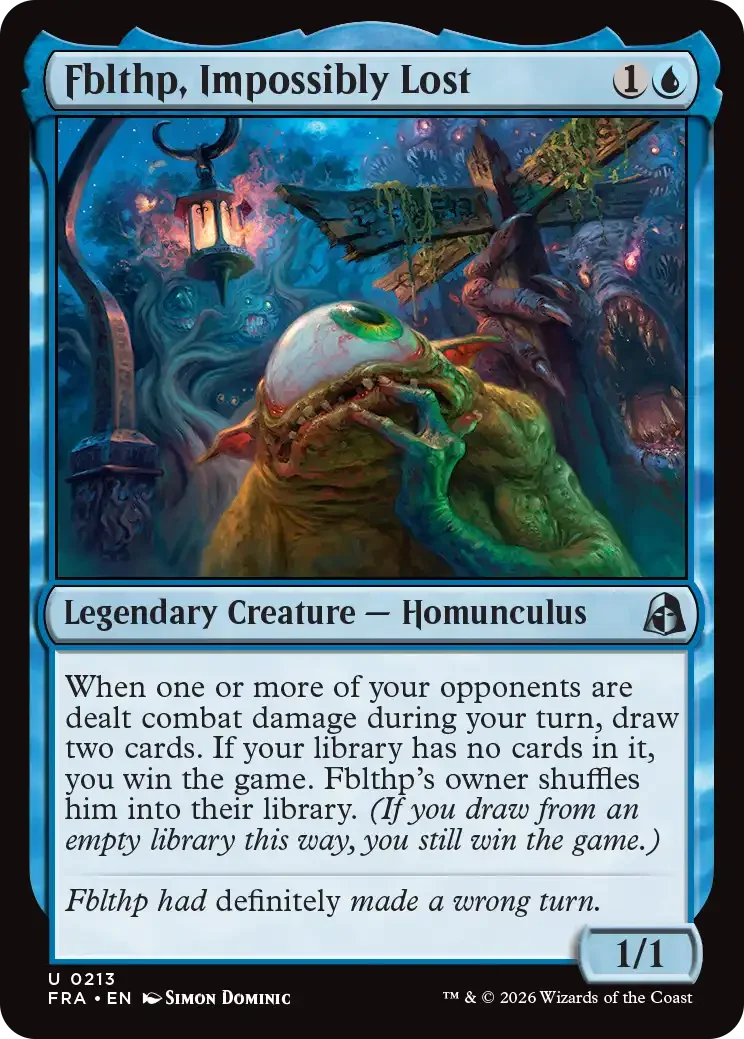
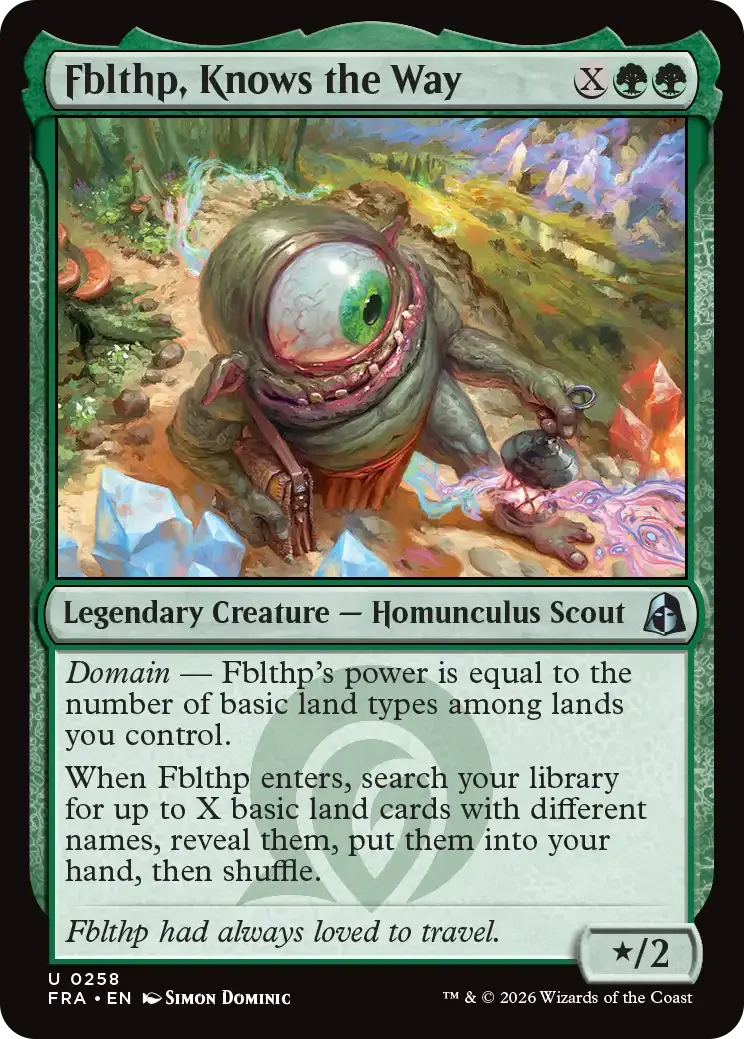
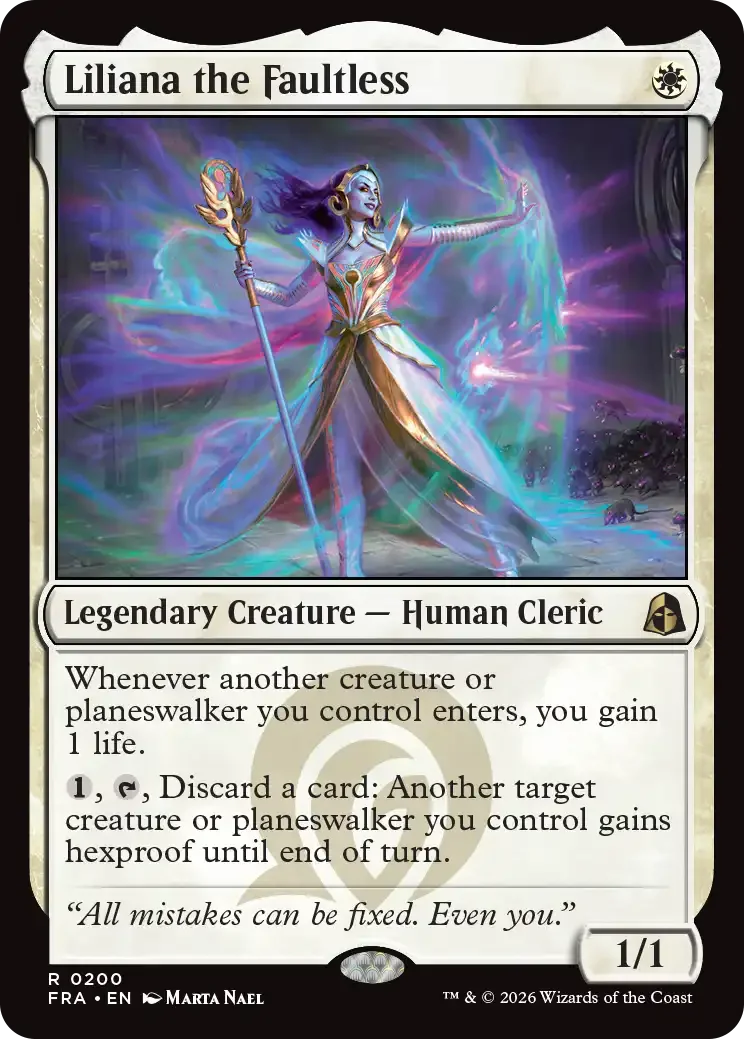
While challenging in draft format, I do think Reality Fracture is a very rich set with unlimited possibilities elsewhere. It feels particularly cool for those who love Planeswalkers and their unique loyalty abilities, and for those planning new Commander Decks around recognisable and changed heroes.
There’s a powerful array of new Legendary Creatures here, with many feeling ripe for more considered building. There’s only one set Commander Deck for Reality Fracture, headed up by a powerful Jace Planeswalker, but within this you can find a host of viable new commanders, from The Ur-Sphinx to Niv-Mizzet, Ghost Counsel.
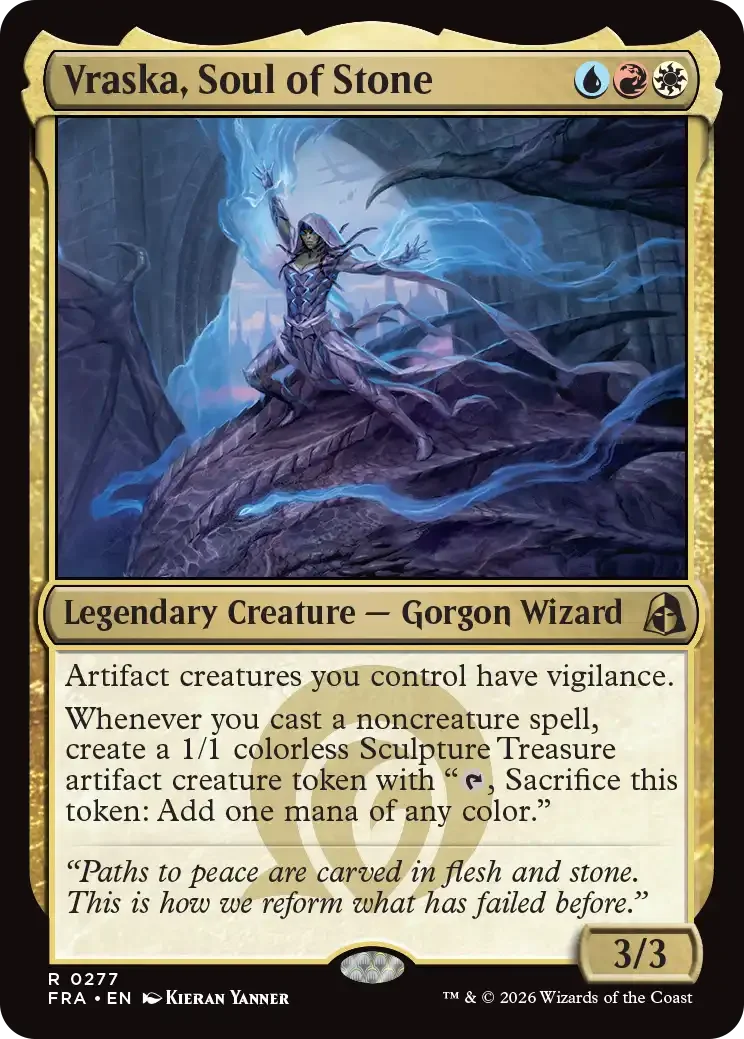
In the wider set, characters including Tam, the Possibility and Vraska, Soul of Stone are also great options.
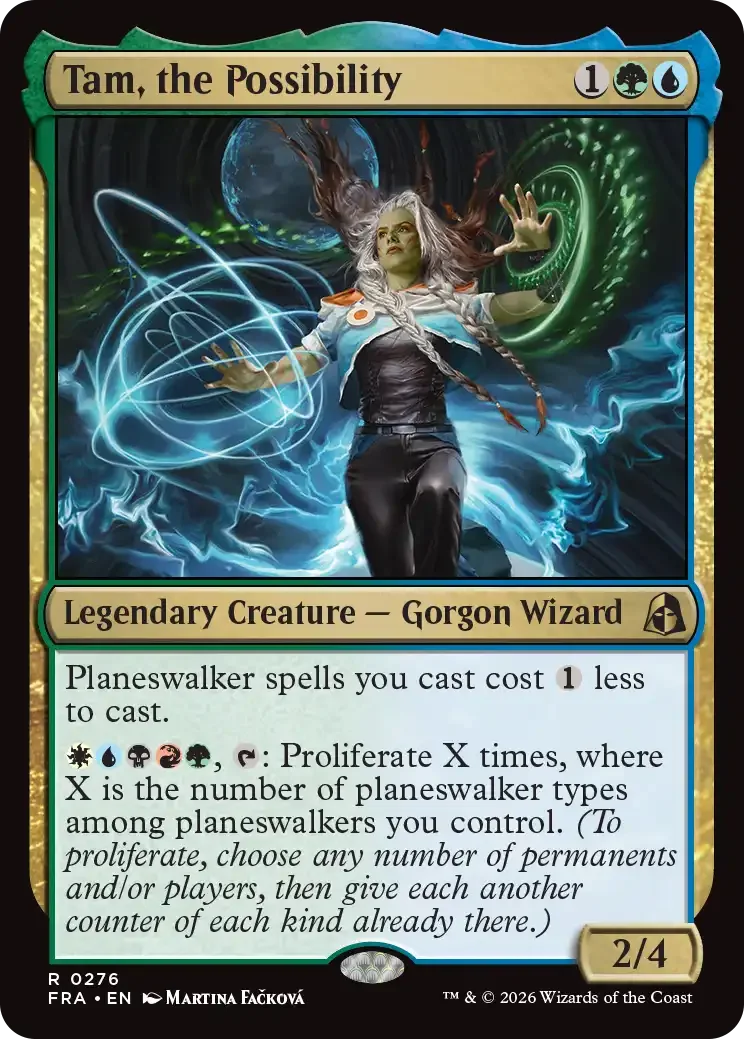
I particularly like Tam’s abilities, which would serve as a great ‘superfriends’ commander, as she makes all Planeswalker spells cost one less to cast. She can also multiply counters based on how many Planeswalkers are deployed, which should lend itself well to a highly chaotic time.
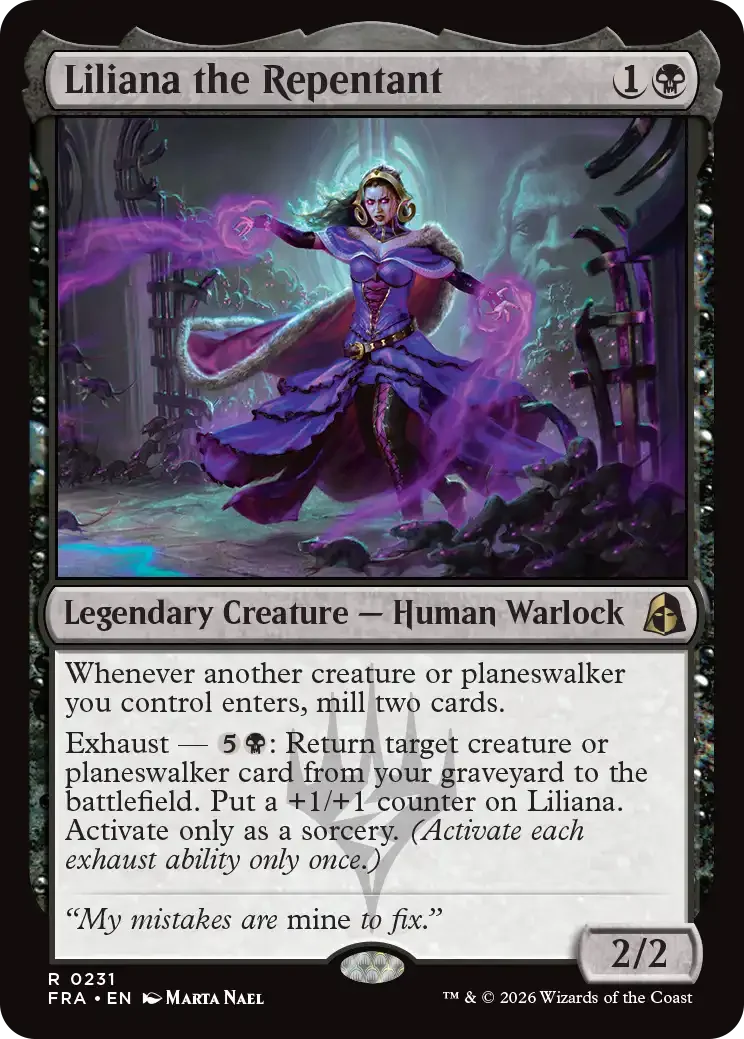
I do wish the two new Liliana cards – Liliana the Fautless and Liliana the Repentant – were a bit more powerful or had Planeswalker abilities, because I’d love to build them as headliners – but you can’t win them all.
What is here is very rich, with opportunities for clever deckbuilding around Jace, and a host of big, new creatures to buff existing decks. In draft, there is a bit of chaos around developing and maintaining synergies, if only because this set has a dual focus on two universes, but as usual with this format, it also comes down to draft pool and clever thinking.
It’s also simply very easy to be distracted by how cool and wild this set becomes, particularly as you stumble across your favourite characters, but not as you know them.
MTG Reality Fracture is a big, wild set that’s packed with novel abilities and neat ways to put big, powerful creatures on the board. You will need to grapple with its enormity if you’re playing in more strategic formats, but its ambition and scope lends itself very well to creative, thoughtful deckbuilding.
If you’re familiar with the world of MTG, its many changes to popular characters, and tiny, fun easter eggs found along the way are an added bonus.
MTG Reality Fracture Booster Packs were provided for the purposes of this review.