
Magic: The Gathering‘s Reality Fracture set arrived with just one Commander Deck, instead of the more standard four. When you dive in, you understand why – because this is a whopping Commander Deck, and absolutely stands on its own as a flavourful, synergistic and battlefield-breaking arrival.
Being standalone also certainly suits the story of Reality Fracture, which sees iconic hero and Planeswalker Jace attempting to recreate the universe of MTG to ‘fix’ all the problems he perceives in the universe. Jace is the all-powerful god of this new fractured reality, and his will is ironclad. He controls all the means of creation, all the big scary monsters, and both halves of the world he’s assailed – the prime universe, and the newly-created secondary universe.
ScreenHub: MTG Reality Fracture is a creative, flavourful set with surprising synergies
The singular Reality Fracture Commander Deck encapsulates that story and power very well, in a hard-hitting deck that delivers euphoric highs once you get its power ramped.
MTG Reality Fracture Commander Deck review – quick links
Picking your commander for the MTG Reality Fracture Commander Deck
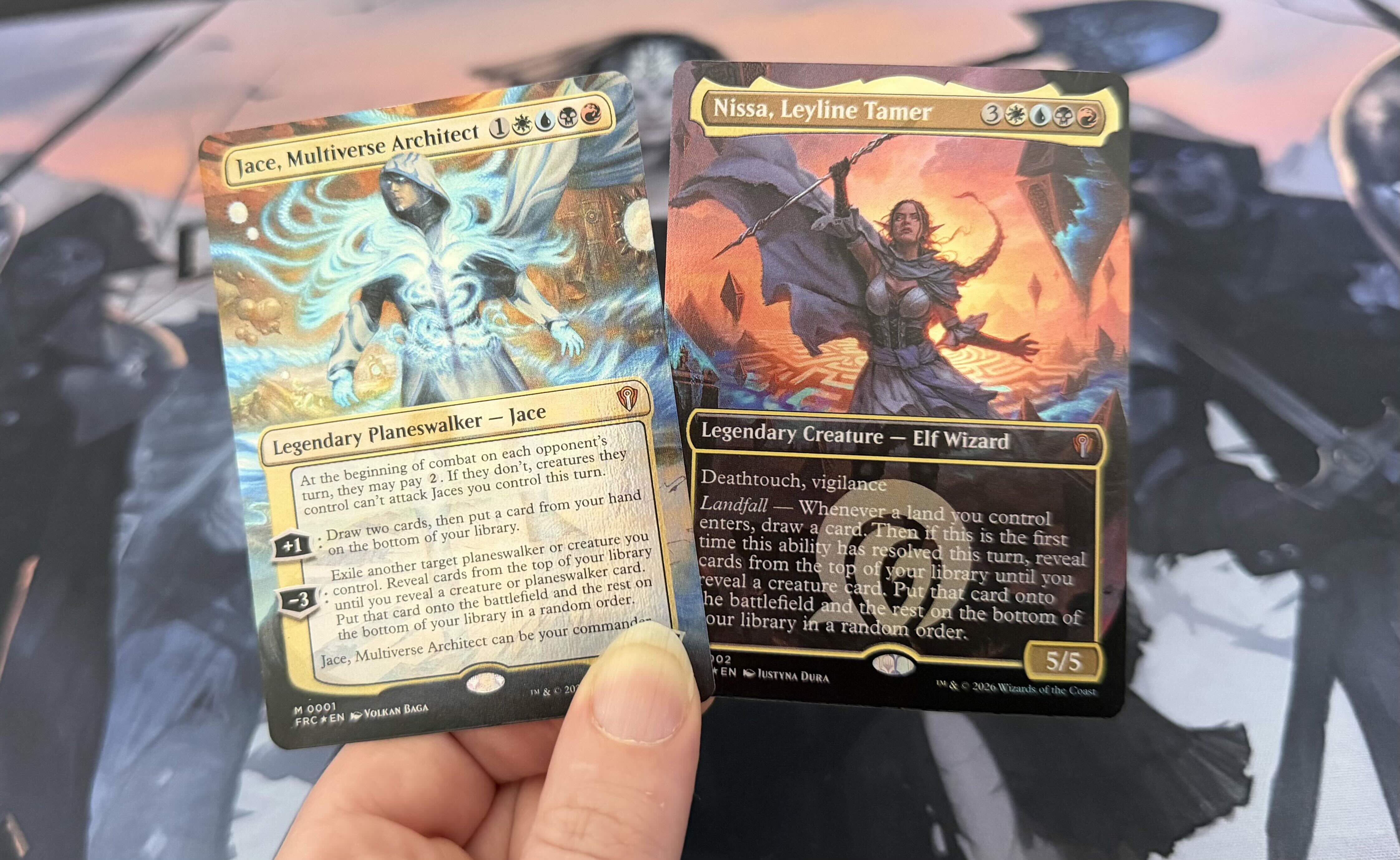
This Commander Deck has a unique construction. First up, it’s worth noting you get two commander cards to pick from – either Jace, Multiverse Architect or Nissa, Leyline Tamer.
Jace is a Planeswalker, so he can’t attack, but he does let you draw cards to speed up your play and you can exile another Planeswalker or creature to play another creature or planeswalker directly onto the battlefield, without paying its mana cost.
Nissa is a seven-drop creature with deathtouch and vigilance that also has a unique landfall ability: whenever a land enters, you draw a card and you may then reveal a creature card from the top of your library and put it onto the battlefield, once per turn.
Both cards are designed to help speed up the play of your creatures, which comes in handy given most of this commander deck is made up of high-powered, game-changing creatures costing five or more mana.
That said, Jace does have the advantage here, as he costs two less than Nissa and his card draw and creature-playing abilities, as well as his ward costs, makes him more formidable and flexible to play. Plus, it’s just good flavour for this set.
In terms of abilities, Jace’s are very easy to understand and easy to play. This is a Commander Deck that’s great for folks of all experience levels, because it’s fairly logical in how it plays out.
Slowly planting the seeds of destruction
After picking your commander, the next thing you’ll want to do is learn the art of patience.
This Commander Deck is very slow-moving at first, and you will leave yourself open to early damage by design. What you want to be doing on your first five or so turns is building up and ramping your mana, as quickly as the cards allow. There’s no real finesse here. All of your creatures are big heavy-hitters and they’ll need to wait until you have enough mana to play them.
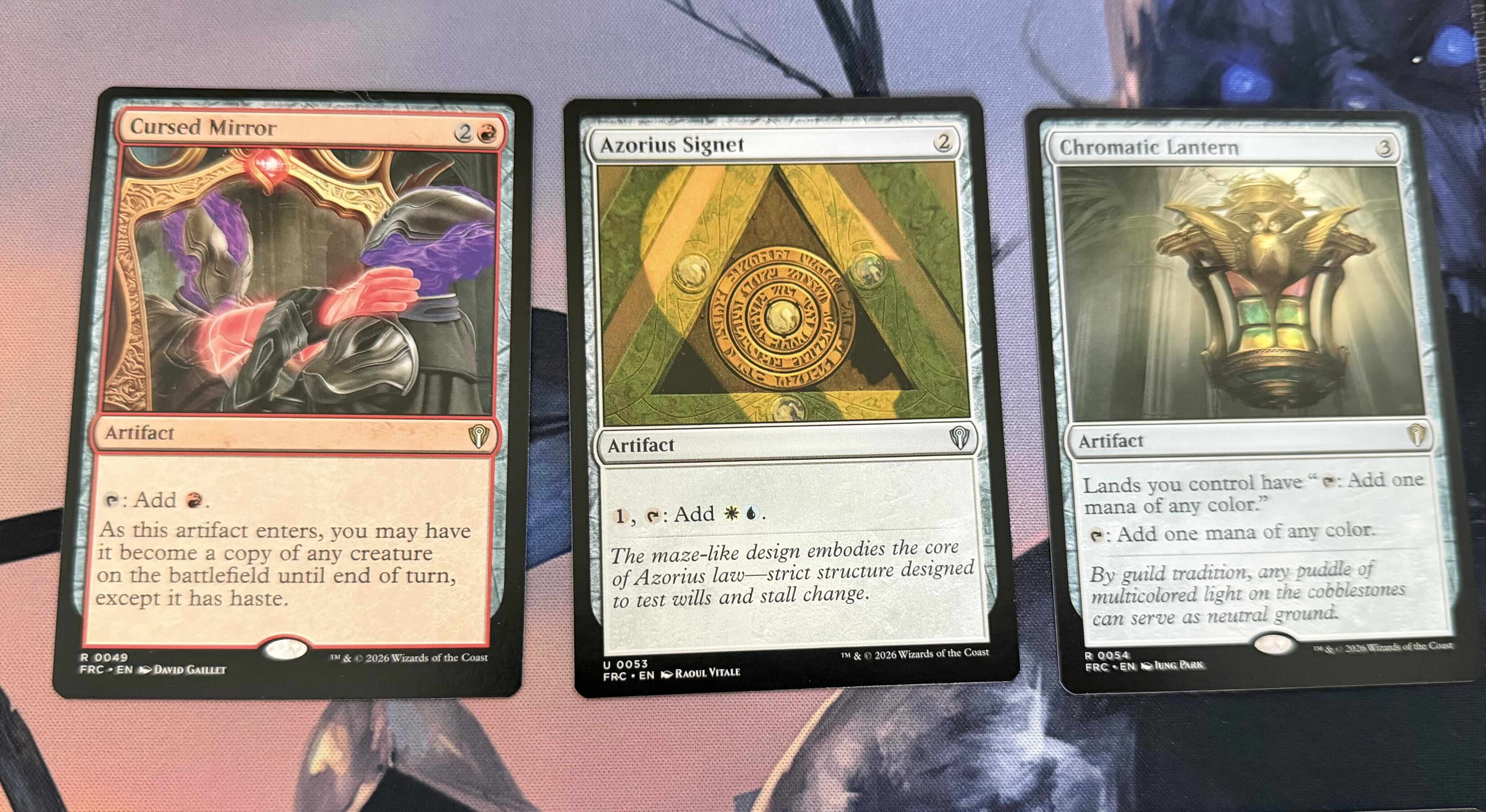
Focus on ramping mana by playing an array of useful artifacts: your standard Sol Ring, Arcane Signet, Fellwar Stone, Chromatic Lantern, and a host of Talismans – Creativity, Dominance, Indulgence and Progress. It might feel a bit bad ‘wasting’ turns on three-mana ramp cards, but eventually this will pay off.
By turn five-ish, you might be in a better position to start making gains, at which point you should consider immediately playing Jace, Multiverse Architect to start ticking up his loyalty number so you can start playing creatures and then replacing them with bigger or better creatures for ‘free.’
Jace will help to speed up card draw, giving you access to an array of creatures which may then be played for their mana cost, or cheated onto the battlefield using Jace’s three-cost ability. The whole point here is to rely on ‘warping’ reality by speeding your high-cost creatures out as soon as possible, which is great flavour.
There’s enough ramp here to make your goals happen, and while you need to absorb some damage early on or at least accept that other players may be faster than you in building their armies, the payoff makes it all worthwhile.
Unleash the beasties
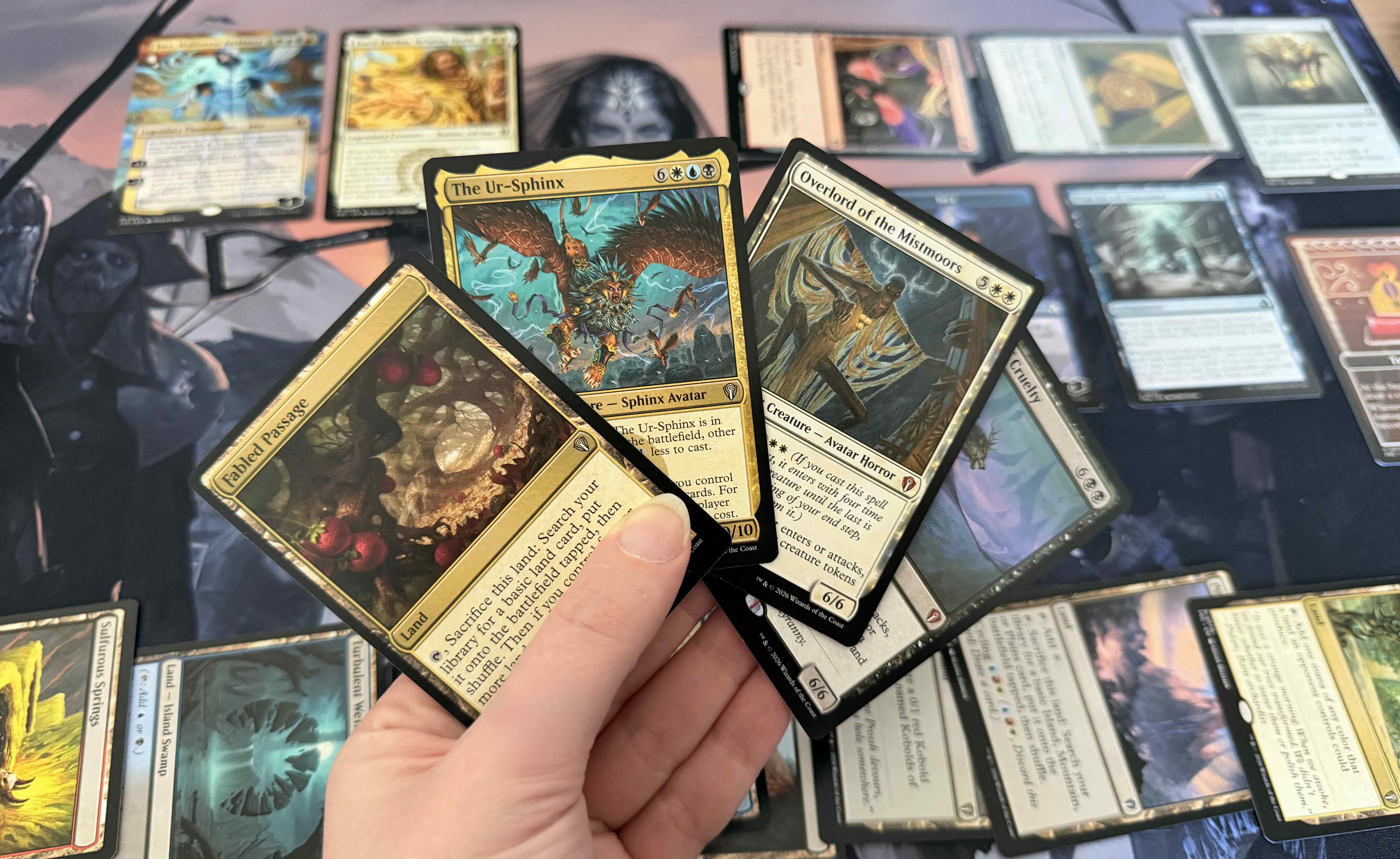
Once you’ve got ample mana to sling, it’s time to cause all-out chaos. This deck is absolutely packed with creatures that have enter effects or otherwise rock high power and toughness that’s difficult to deal with on the battlefield.
The Ur-Sphinx is a nine-drop creature that is largely suited to be a commander card, but a flying 10/10 is nothing to sniff at. There’s also the ten-drop Memnarch, the Warden which is an indestructible 8/9 creature that gives you card draw for every artifact you own (and by the time it comes out, you’ll control quite a few). Niv-Mizzet, Ghost Counsel is another very impressive inclusion here, as a six-drop card that gives you card draw at the cost of life you’ve gained – but it can also be tapped to create that life, so you’re essentially getting new cards for free.
Ob Nixilis, the Ascended is a seven-drop creature that destroys all tapped creatures an opponent controls when it enters that also creates angels if you gained life in a turn. Ginger, Queen of Sweets makes you the monarch on entry. Jhoira, Weatherlight Corsair gives you control of your opponent’s creatures.
The icing on the cake is Dack Fayden, Helping Hand, which can completely change the game if you play it at just the right moment. This particular card lets you reveal X amount of creature cards from the top of your library until you match the number of opponents in your game. Because cards in this Reality Fracture Commander Deck have enter abilities, you get all those enter abilities and then those cards are given to opponents and goaded, so they must attack – but can’t attack you.
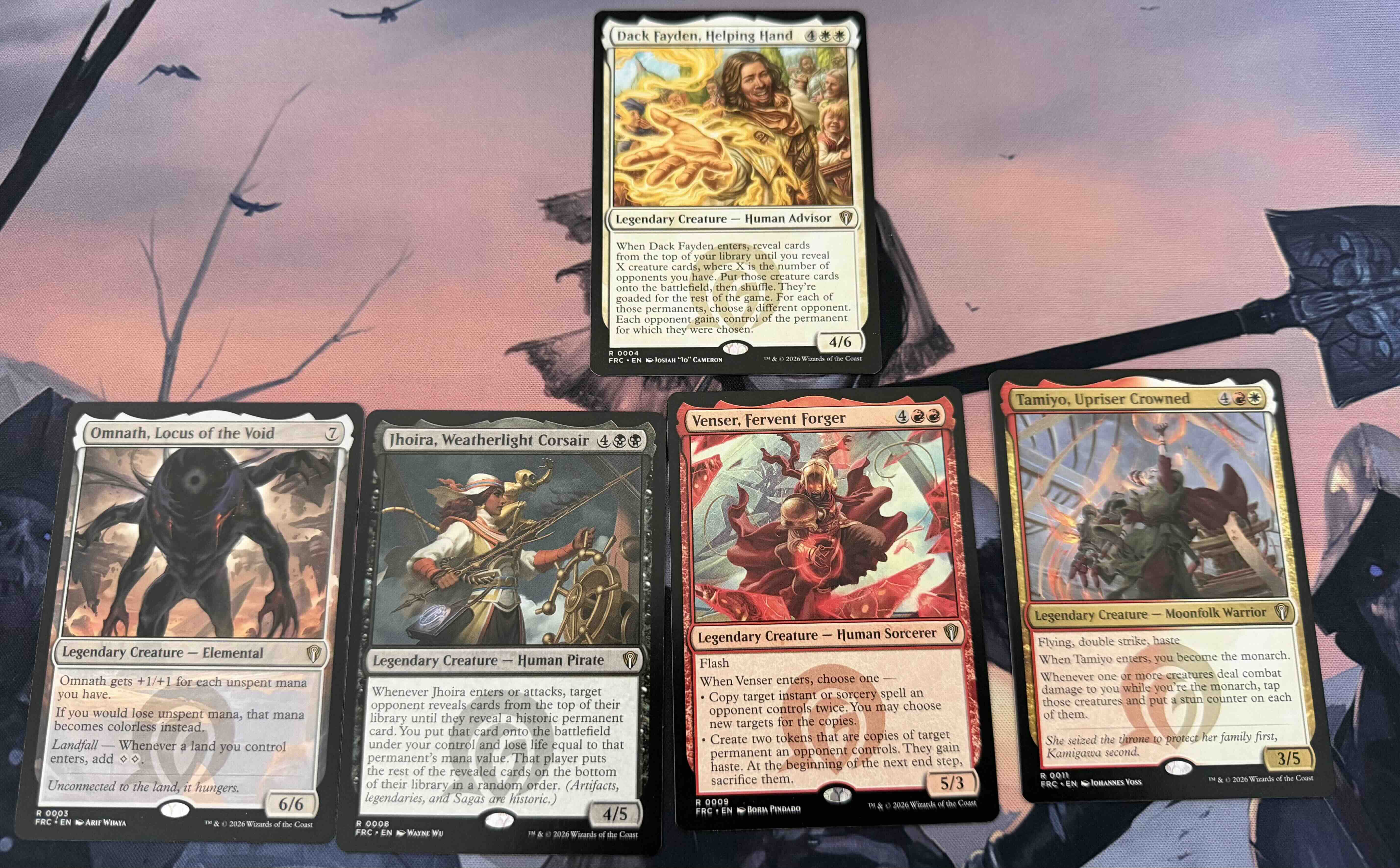
While Jace is technically the ‘main’ character of this set, Dack Fayden can quickly become one of your most important cards, turning the tide of battle and ensuring you’re absolutely stomping your opponents with those goad mechanics. You may inadvertently give your opponents an advantage on the battlefield, but it’s worth it when you get to sit back and watch them all fight each other under your watchful eye, knowing you’re protected.
That’s another part of this deck that just works – you’re not relying on any one creature to win. They’re all heavy hitters which can chip away at opponent health. There’s also cards like Dack Fayden which can change the game immediately. As backup, Jace is there to speed your card draw and creature plays to ensure you’re barrelling your way to victory on all sides.
Overall verdict on MTG’s Reality Fracture deck
In an ordinary situation, a pre-con Commander Deck would be in line for some upgrading before it makes it to the table. MTG’s Reality Fracture Commander Deck feels robust from the jump, with no strictly required tweaks to make it feel powerful and synergistic.
There is a gap here, in that you’re vulnerable for your first turns and any clever players will immediately see the need to attack you, to reduce your health base before you’re able to trounce them. But for the right player, those losses can be made up with life gain and clever defence until the monster mash gets going.
I’d use this deck as-is, given its construction is so fun and tailored towards big clashes with horrific, reality-warping monsters. It starts slow, yes, but if you let this deck work its magic, you’ll be unleashing a great battle of titans and get the pleasure of seeing your opponents scramble out of your way.
An MTG Reality Fracture Commander Deck was provided for the purposes of this review.