Crossovers can be a tricky business. Often something is lost from either or both franchises and the end result feels less than the sum of its parts. But Magic: The Gathering‘s latest Star Trek set is clearly a labour of love.
Spanning more than 60 years, Star Trek is perhaps the most impactful sci-fi series of all time. The set covers the full history, featuring characters and iconic moments from the original 1966 TV show all the way through to the more recent ‘NuTrek’ like Strange New Worlds and even Lower Decks, the animated Family Guy-adjacent Paramount+ series. Whether you’d prefer your Captain Kirk to be William Shatner or Anson Mount, there’s something here for you.
The lead game designer for the set, Gavin Verhey, is an absolute titan in the trading card game space, and also a life-long Star Trek fan. Wizards of the Coast have truly thrown the best-of-the-best at this set, and that really shows in both the authenticity for Star Trek fans, and the way the themes of the show have been expertly translated to MTG gameplay.
MTG Star Trek review – quick links
Taking to space
Spacecraft make a return. Introduced last year in the Edge of Eternities set, these massive artifacts enter as non-creatures and require creatures to charge them up by tapping before eventually joining the fight up-close and personal.
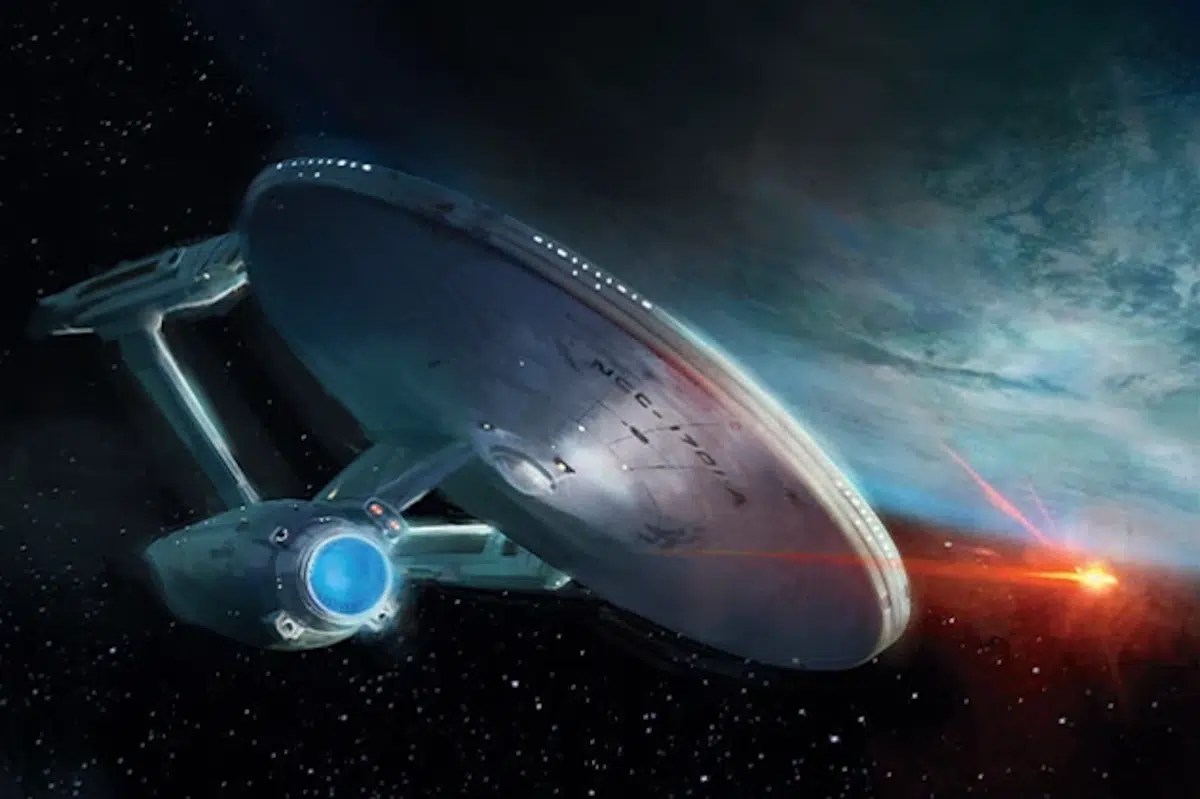
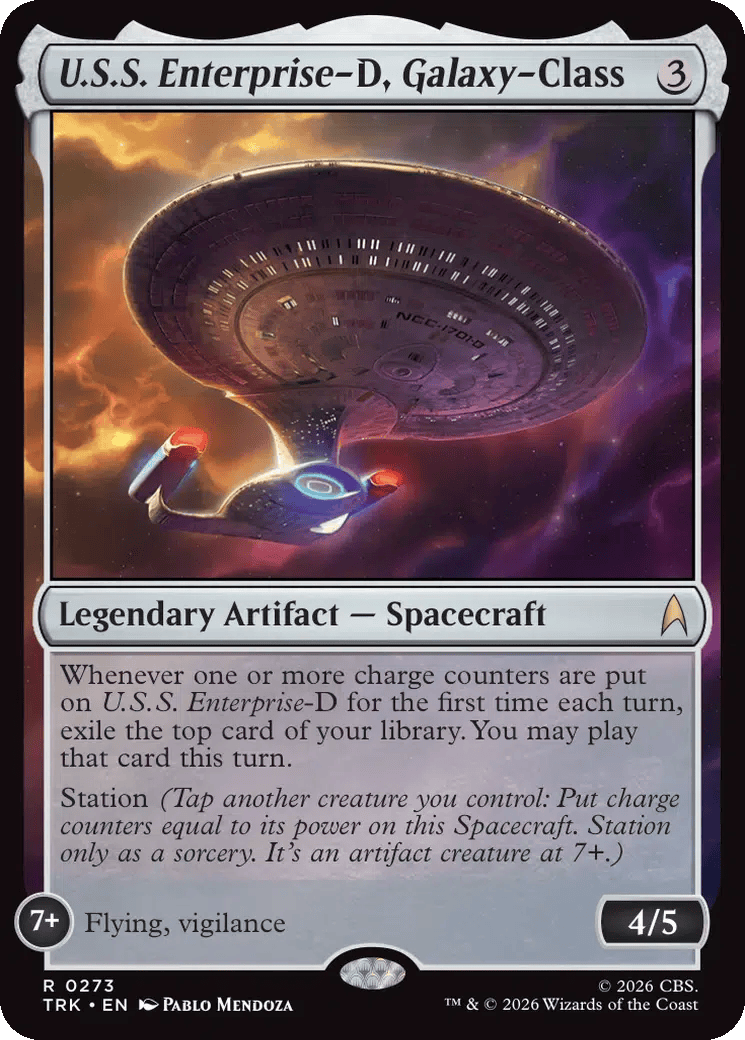
Star Trek has a huge range of starships to pull from, and all of the classics are here. The USS Enterprise D is probably the most iconic, but it’s hard not to love Deep Space 9. It costs 9 mana, needs 9 charge counters and just like in the series, you never know what is going to come through the wormhole (or out of your deck, in this case).
Compared to other sci-fi contemporaries, the Star Trek franchise deals more in moral dilemmas and ethical conundrums than space laser battles. MTG already had an in-built mechanic for ‘whenever you face a dilemma’ for any cards that offer the player choices, and bringing that mechanic back in this Star Trek set means you can choose whether to ‘set your phasers’ to stun or kill, or experience the futility of the Kobayashi Maru scenario for yourself.
Some of the more villainous cards even force your opponents to face dilemmas and – just like in the series – sometimes there is no objectively ‘correct’ choice.
Introducing the Federation mechanic
Federation is a mechanic affecting how many different types of creature you control. The designers of the Star Trek set made the call to not lump every non-human under the existing MTG type ‘Alien’ and so instead we have Bajoran Scientists, Klingon Warriors and even Whale Officers.
In-universe, the Federation represents the different worlds who have joined together with the common goal of furthering society and maintaining peace in the galaxy. In-game, your team will always be better off with a diverse mix of races and jobs – five Human Scientists is fine, but it’s much better to get some Vulcans and Security Officers in the mix.
While it might take newer players a while to wrap their heads around this, the flavour it adds is more than worth it and it’s fun to see these types have a meaningful impact on gameplay as well.
The Federation mechanic does specify non-Borg creatures though, since the Borg exist to strip away the uniqueness of individuals in favour of the monolithic collective hivemind. The Borg get plenty of their own powerful cards, with every Borg offering keywords or other buffs to their fellow Borg.
The Borg can also assimilate other creatures into the collective, which allows you to take them from your opponent and turn them into Borg Artifact Creatures on your side of the table.
The upshot is they now benefit from the rest of your on-board buffs, but they do lose all other creature types as the nanaprobes remove everything that made them unique – truly an inspired oppositional mechanic. As your collective adds new members, they become exponentially more powerful until they threaten all life in the galaxy (or at your local game night, at least.)
Staying true to the spirit of both franchises
Representing Star Trek‘s real human (or alien) actors while also continuing MTG‘s high-fantasy style is no easy ask. MTG‘s vision for this set strikes a good balance, using original painted portraits as opposed to direct shots from the series (which are themselves hugely inconsistent in style owing to the decades between old and new Trek).
It makes for a much more consistent look and feel across the entire set, and the actors are rendered lovingly, giving fan-favourite characters the presence they deserve.
There are also more direct nods to the show within the set. Sagas are a long-running MTG mechanic, often depicting in-universe folktales with each chapter and effect reflecting part of the story. For this Star Trek set, the Saga cards instead represent iconic episodes, and the designers picked some absolute bangers.
Fan-favourite stories
To keep things as spoiler-free as possible – well, for a four-decade-old TV series – The City on the Edge of Forever is an episode of Star Trek’s original series where Kirk, Spock and McCoy travel back in time and accidentally change history, erasing the future (present?) they know and love.
The climax of the episode reveals that McCoy saved a woman from a moving car who was supposed to be killed, and to reset the timeline to normal they have to allow that fatal accident to occur. There is a lot of emotional weight in allowing an innocent woman to die to correct the timeline, and much discussion of the ethics of what is ‘supposed’ to happen. Also Kirk fell in love with her because of course he did.
The MTG version of The City on the Edge of Forever is a three-chapter saga which creates an 0/1 Human token, and causes all of your other artifacts and creatures to phase out as though they didn’t exist. They can only return if the token is killed. Gasp!
Never fear though, after some emotional turmoil and drawing a few cards in the second chapter, you move onto the third where you can sacrifice the creature, gain 5 life and restore the timeline as your creatures phase back in. Just try not to get too emotionally attached to your 0/1 token.
There are 14 of these sagas in total across the set, featuring season finales, cliffhangers, all-timer great episodes and exactly one shirtless George Takei. Your friends and opponents will be thrilled, for sure, to hear you info-dump about how the card so accurately represents a 60-year-old episode of television about a virus that makes you drunk.
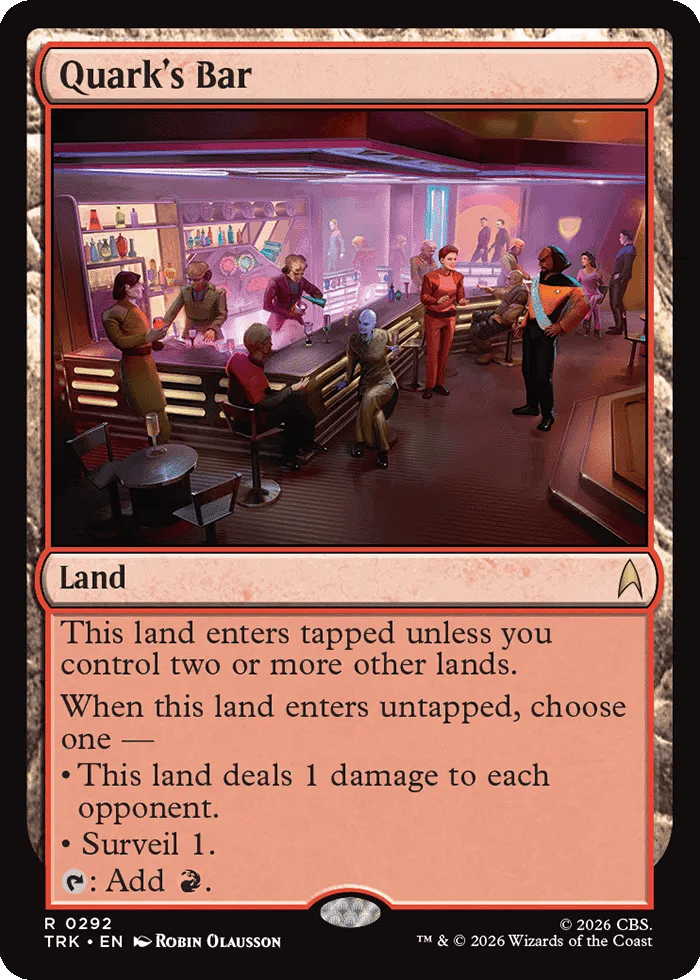
The passion of the designers behind the set comes through in some of the deep-cut references. Troubling Tribbles floods your board with useless creatures. Other fan-favourites are Humpback Whales and Quark, Humble Proprietor (who loves to acquire Latinum but would never sacrifice it).
A commander deck that rewards exploration of the galaxy
The Landing Party commander deck revolves around one of the coolest new mechanics from the set: Strange New Worlds. This mechanic rewards players for having differently named lands, representing their skilled exploration and charting of the great unknowns in the galaxy.
Ramping up to get more lands than your opponent, or playing around the older mechanic of Landfall, which rewards individual lands, are both very powerful strategies in MTG but decks built around these tactics can sometimes look very same-y once players put all their lands on the table.
Landing Party throws in a fun new twist, encouraging players to diversify their lands and go hunting for specific, different names. It’s not just good enough to throw down 20 forests. If you want maximum value, you’ll need to lay in a course for a Shattered Grove or Vineglimmer Snarl.
Heading up the deck is Commander Spock, as depicted by the late, great Leonard Nimoy. Spock, true to his scientific nature, engages in academic research by revealing the top card of your library whenever he enters or attacks.
If that card is a land, you’ve discovered a new planet and can put it onto the battlefield tapped. If you already control more differently named lands than the mana cost of the card, your research has paid off and you can cast it – for free!
Not enough different lands? No problem. You can draw the card instead and save it for when you’ve run a few more tests.
Spock and Kirk are powerful commanders
Commanders like this are super strong. Although it sounds like there are a lot of conditions, the reality is that Spock can never miss or whiff. You’re either ramping a land, drawing a card or casting a spell for free every time he enters or attacks – which also means you can subject your Spock to all sorts of exile-and-return effects to get his effect over and over, or just give him haste and start ‘exploring’ your opponent’s board until you overwhelm them with advantage.
Spock does cost 5 mana, which is steep, especially if you have to re-cast him a few times. Since the rest of your deck is built around making sure you have land, your increased resources should offset any difficulty you have in making sure this powerful half-Vulcan remains in play, logically.
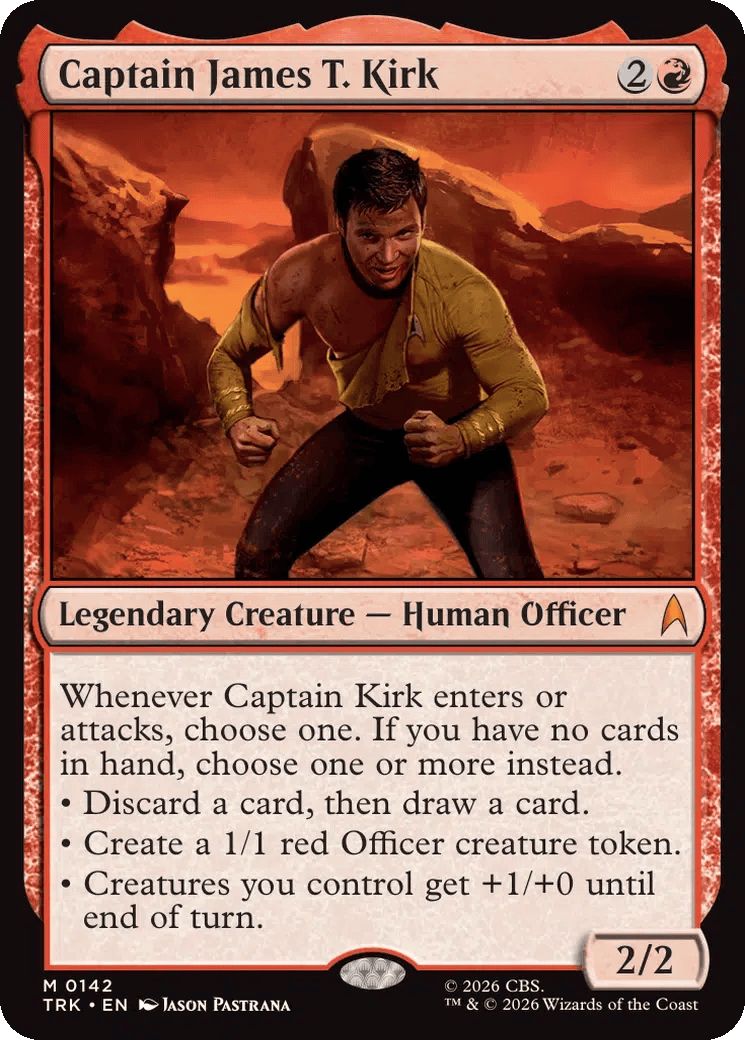
If science isn’t quite your speed, you can also helm the deck with Captain Kirk, Boldly Going. Kirk gives spacecraft creatures a pretty hefty stat boost, and although Kirk benefits all ships, one is closer to his heart than the rest. When he enters or attacks, you also get to search your deck for a basic land or a card named Starship Enterprise.
Once you have the OG Enterprise on the board, you can use Kirk’s ability to discover strange new worlds (as long as they’re basic lands) and when you play those lands, the Enterprise also charges up.
Once the ship becomes a creature, Kirk will apply his stat boost and the Enterprise will start drawing you four to seven cards every time it deals damage. If that happens once it’s powerful, if you draw seven twice you probably win the game on the spot.
A commander deck with options
The rest of the deck is a mix of brand new cards and some MTG classics, set up for a few specific goals.
In addition to Spock and Kirk, there are plenty of other cards with the Strange New Worlds mechanic in the deck, like Christine Chapel, Combat Medic who will gain you a bunch of life to keep you warping into the end-game, and Lieutenant Nyota Uhura, who can use her xenolinguistic skills to cast instant and sorcery spells from your opponent’s deck.
Cards like Janice Rand, Pavel Chekov and Growth Spiral help you to find lands and get them into play. Unlike Captain Kirk, they don’t care if the land is basic or non-basic, so all the freaky different stuff in your deck can hit the table and get that name count going up.
Landfall of course makes a return in this deck too, and part of the fun of a new mechanic is seeing how it interacts with an older one. Since both Kirk and Spock represent a game-winning strategy once you have a medium-to-large number of lands, the Landfall cards are focused on providing opportunities to add some early-game pressure or defence.
M’Ress, Crew Coordinator creates two 1/1 Officer tokens to block for you (RIP to the Red Shirts) and Amanda Grayson makes your existing creatures larger so they can maybe survive a hit or two. Amanda has affinity for Vulcans too, because she’s Spock’s mum – cute.
Beam me up, Mr Kyle! Chief Kyle, Transporter Tech is a particularly powerful Landfall card when interacting with your commander – exiling them and then returning them to get their effect again for free. Returning Spock to play and hitting a land on top of your deck will immediately exile him again, and that value loop will continue until you hit a non-land while protecting your most valuable creature.
The deck is also full of powerful commander staples, reprinted with on-theme Star Trek art which is just delightful.
Lotus Cobra generates additional mana when you play a land, so Spock could come down as early as turn three. Scute Swarm deserves being read carefully. Once you have six or more lands, the number of Scute Swarms you make goes up incredibly fast. In a deck focused on lands, it’s not difficult to have a triple-digit number of 1/1 creatures in play, which can often win the game without any other cards.
It’s hard to go wrong with a good ol’ fashion land-based deck. Landing Party is super powerful out of the box, and with lands being such a popular theme in MTG‘s history it would be a snap to upgrade if high-power gaming is your goal. New lands will appear in every MTG set until the end of time, so it’s also a fun deck to check out if you’re interested in mixing it up and trying out new things in the long term.
If you’re already a player who loves Star Trek this new set is a home run. New players will also find plenty of familiar faces to welcome them in. For the die-hard MTG player who doesn’t know a Ferengi from a Phaser there might be some friction, but interesting card design and powerful reprints help to bridge that fandom gap.
MTG: Star Trek deck and boosters were provided for the purposes of this review.