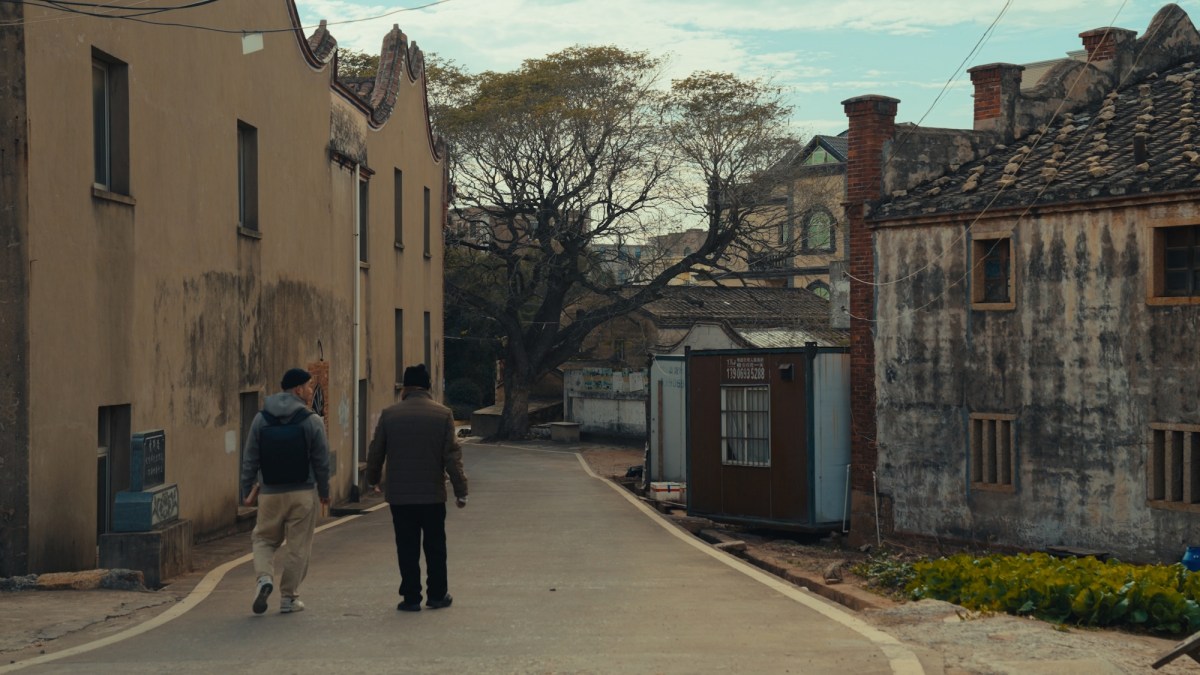
There’s bittersweet timing in Longtian-born, Melbourne-based filmmaker Vee Shi’s lilting, bruised yet uplifting family portrait, Time and Tide, releasing in Australia in the wake of Father’s Day.
A densely informative and emotionally engaging introduction, narrated by Shi in Mandarin, plays over verité footage of the neon-hued glow of this remote Chinese town. Shi informs us that his overbearing dad, Yanjin, a hard taskmaster back in the day, left the family home for work in Türkiye when he was only three. His mum, Jianming, told Shi he stayed up all night waiting futilely for his dad’s return, a second-hand memory of which he has no recollection.
Time and Tide review – quick links
The forces pulling families apart, and back togther
While the family would up-sticks and join Yanjin around a decade later, Shi returned to China shortly thereafter to study, renting a room near his school and living solo when he was only 13. Five years later, he moved to Australia before his parents returned to Longtian, where they reunited with his second of three sisters, Liyun, who was given up under China’s one-child policy.
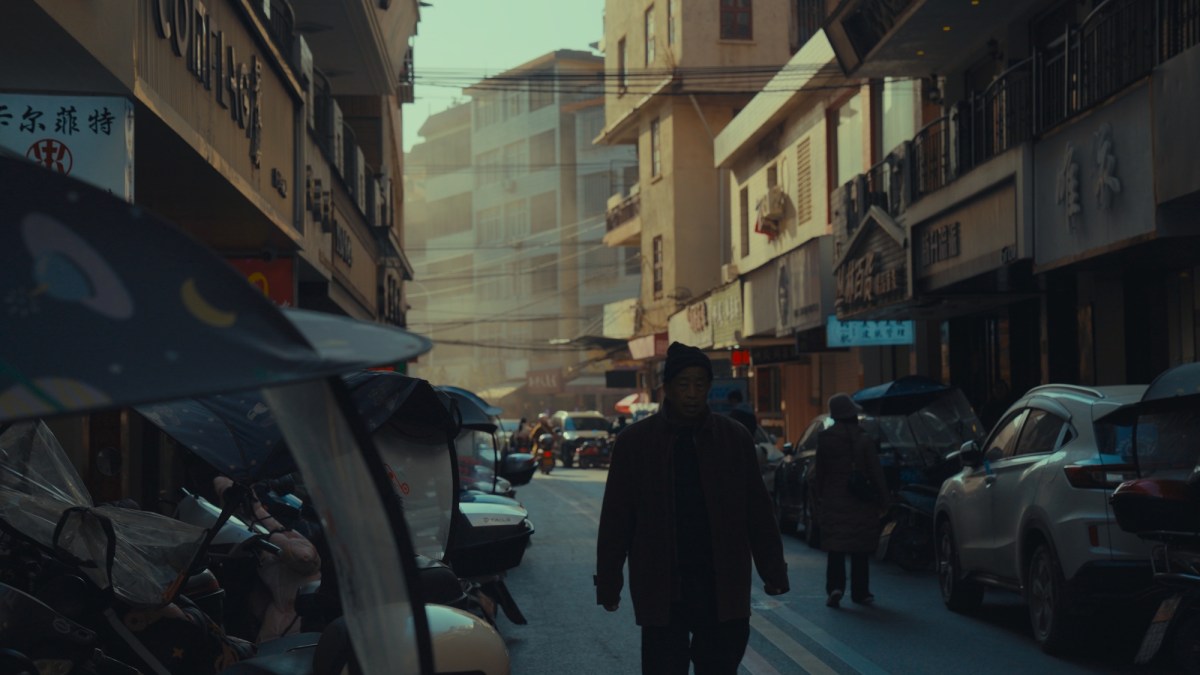
Liyun is a single mum to two lovely boys, Songze and his older brother Haoyang, but rarely gets to hang with them, working a stall selling sea cucumbers while bunking in the anxiety-inducing big smoke of Guangzhou, where strict rules and high costs prevent her from bringing them with her.
Shi, a gay man, can relate to such realities. He spent roughly two months with his parents between the ages of 13 and 34, with the strained couple regularly denied visas to visit him here. They barely know him or his Australian life, and have not met his fiancé.
So when Shi got the call that his dad needed help following a stroke – and by extension his mum and sister needed help too – Shi didn’t rush back. He says he has no real bond with his dad: ‘Only a sense of duty. All I’ve ever cared about was my mum’s happiness and my own dreams.’
Watch the trailer
Faces, places and the passing of time
This emotional gulf between Shi and his dad, and the physical one between him and the rest of his family for such a long stretch, makes Time and Tide the sort of deeply felt documentary that creeps up on you, as your shoulders suddenly help bear the weight of those generational layers piled high. You’ll catch yourself wistfully sighing often, chuckling occasionally and possibly even crying.
Are any of us present enough?
All this difficult history inspired Shi to shoot what was initially intended to be a dramatic feature based on their internecine squabbles. But as is often the case, the family’s truths proved more intriguing than fiction, with Shi instead opting to shoot a fly-on-the-wall-style documentary that offers the sort of unflinching candour that the performativity of so-called reality TV cannot deliver.
Gorgeously lensed by cinematographer Nicholson Ren with lots of languorously paced wide shots, almost every moment, no matter how mundane, gleams like a work of art.
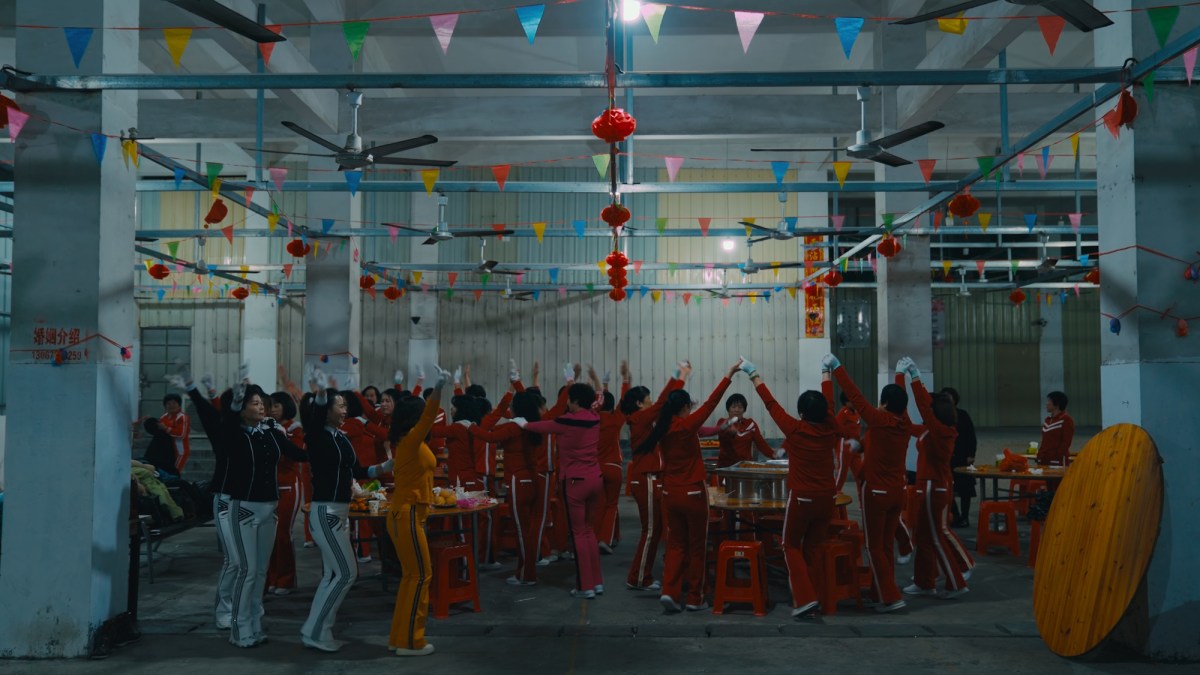
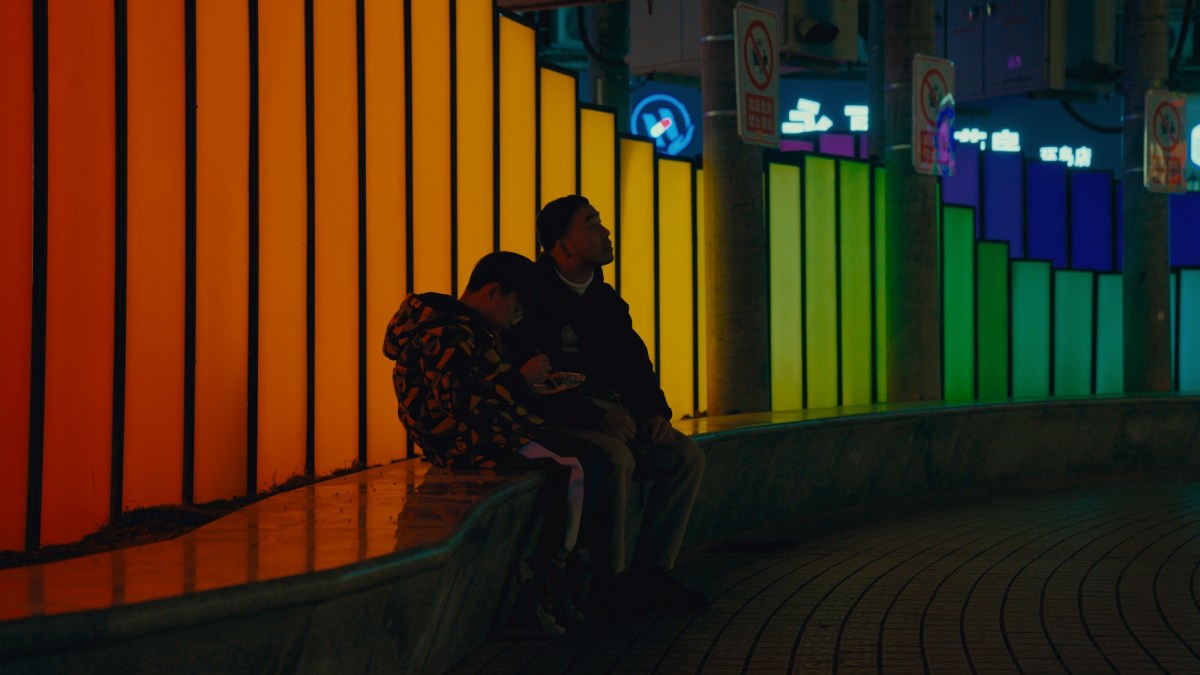
From the beeping and buzzing of an arcade, where the adorable Songze attempts to teach his grandad how to play a digital baseball game, to the blinking neon lights of the public square, where mum dons a yellow-and-black tracksuit, not unlike Uma Thurman in Kill Bill, to practice her dance moves in front of a brothel, Time and Tide looks lush.
Ren’s camera often lingers on the crumbling architecture of Longtian and its compact interiors. There’s an eye for casual beauty here, such as the extended shot of Liyun’s stall, corner-on, with her bathed in the harsh glare of flickering overhead lights, while a playful young lad runs up and down the darkness round the corner after hours.
Visually and spiritually, Time and Tide shares as much in common with the social realism-leaning domesticity of a fiction like Chantal Akerman’s Jeanne Dielman as much as it does Wang Bing’s epic observational, industrially scaled documentary Tie Xi Qu: West of the Tracks, and the Agnès Varda films that straddle both modes.
Space, too much or too little, is integral.
Soul food
Time and Tide, which debuted in competition at Visions du Réel before winning the Sydney Film Festival Australian Documentary Prize, feels lush too.
Shi is often present in-camera, but he’s rarely guiding the narrative, instead happy to sit back, soak it all up and observe with a true documentary director’s eye. Not that Time and Tide feels at all distant. His and his family’s emotional presence is vibrantly alive.
Fair warning, you’ll likely leave with a rumbling tummy given that, alongside the moments of silliness, many of the family’s bitter truths – from a history of domestic abuse whose lasting wounds cut deep, to bickering over money and who’s going to fund dad’s spiralling treatment – play out around the kitchen table over a mouth-watering array of meals. This table is the hub of the small and crowded apartment.
While Shi’s mum and dad seem hopelessly divorced in all but name, with one barking at the latter for snoozing during the day and being up too early, there’s also an abiding sense of duty, of family, and how these connections persist, for better or worse.
And yet the anger directed at Yanjin’s past actions and his sorry present state reflects the fractured dislocation that radiates outwards, down to Australia and westwards to the UK. (We never hear from Shi’s other two sisters.) Can Shi find the connection he so clearly, dearly wants?
There’s an astonishingly unguarded moment, having eventually coaxed his exercise-shy dad to take a walk, where the filmmaker asks the older man if he regrets having so many kids when none of them are around to look after him now. A struggling Yanjin responds, quietly, ‘What’s important is you all do well,’ in what sits as a delicate echo of Shi’s desire for his mum’s happiness.
There’s healing between the lines here, in a film that will resonate deeply with anyone dealing with ailing parents and the vagaries of navigating relationships through time and space. Home is, after all, wherever the heart is, and it beats loud and proud in Time and Tide.
Time and Tide releases in select Australian cinemas 10 September.
Discover more screen, games & arts news and reviews on ScreenHub and ArtsHub. Sign up for our free ArtsHub and ScreenHub newsletters.
4 out of 5 stars
Actors:
Vee Shi and family
Director: Vee Shi
Format: Film
Country: AUS
Release: September 10
Available: Now
Actors:
Director:
Vee Shi
Format: Movie
Country: Australia / China
Release: 10 September 2026