I Was Actually There – quick links
The ABC’s I Was Actually There was one of the surprise winners of 2024, a documentary series that combined snippets of archival footage with survivors’ testimony to create snapshots of the recent past. Put together by the creators of You Can’t Ask That – that’d be Kirk Docker, Aaron Smith and Jon Casimir – it continued that earlier series’ fascination with individual stories while shifting the attention-grabbing hook from the details of people’s lives to history-shaping incidents.
Well, for the most part. The first season of I Was Actually There featured an episode on Nicky Winmar’s stand against racism that unsurprisingly focused a lot on Winmar, and this season’s episode looking at the staged kidnapping of Fairlie Arrow is built to a large extent around getting Arrow herself to tell her side of the story (turns out for, her singing is ‘better than sex’). The other five episodes in season two are aimed at telling big stories from the point of view of people who happened to be there.
I Was Actually There Season 2 focuses on dark days of history
The opening episode looks at the Black Saturday bushfires of 2009. Described by one survivor as ‘a tidal wave of fire’ and by then-Premier John Brumby as ‘the worst day ever in the history of the state,’ it’s a day etched in infamy in the state of Victoria.
Using a clock to run through the day and keep everyone’s stories synced up, a picture rapidly develops of a community prepared for an average bushfire but facing something beyond their wildest imaginings. Knowing how things turn out – 173 lives were lost – lends grim tension, as one survivor after another talks of family members who stayed behind or fled ahead of fires that were apocalyptic in nature.
The second episode looks at the terrorist attack on the World Trade Center on 11 September 2001 through the stories of people who were on site when it happened. Some people don’t remember large parts of what they went through that day; others saw things they’ll never forget.
It’s episode three, which focuses on The Dismissal, that breaks the trend of stories involving a lot of flame and smoke and death.
I Was Actually There: heart and insight
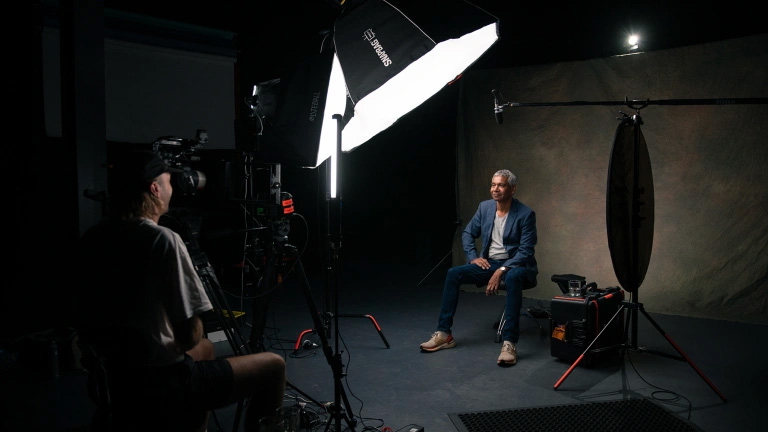
Co-creator and (unseen) interviewer Kirk Docker is a master at getting people to open up. It’s easy to take for granted the achievement here, as a steady stream of regular people who’ve been through horrific situations tell the events of what was most likely one of the worst days of their lives.
Even if you’re familiar with the events, it’s devastating to hear these people tell their stories: death, destruction, grief and psychological injuries that went on long after. It’s powerful viewing, though maybe not something for those looking for a relaxing evening in front of the telly.
The result is often as revealing about those in front of the camera as it is about the big events they were part of. Their humanity is constantly coming through, in and around the facts they’re recounting, and even if you’re an expert on the history side of things there’s plenty to take in on a human level. Which is fortunate, as across the six episodes the balance is somewhat skewed towards stories of violence and death.
Aside from the four instalments already mentioned, there are episodes covering the Cronulla Riots and the 1998 Sydney to Hobart Yacht Race where six lives and five yachts were lost – neither of which are exactly lighthearted tales of a community coming together.
No doubt that’s partly the result of the people they could find who wanted to talk; in interviews, Docker has said they’re often working on multiple episodes at a time, and there are a number of stories they have planned that can’t go ahead until specific people are ready to open up.
Whatever the cause, the result is a slightly darker series than the first, where the Beaconsfield Mine Rescue, the 1964 Beatles visit, Winmar’s anti-racism stand and the 2002 Woomera detention centre breakout helped create a season that was about more than tragic tales of lives lost.
The second season of I Was Actually There has lost none of its impact. Seeing people relive moments that were literally life-changing makes for powerful viewing, and each half-hour episode works both as a history lesson and a look into the lives of the people who lived through it.
While it’s destruction, violence and loss of life that hit hardest, it’s the relatively harmless Fairlie Arrow episode that’s probably the most memorable. Death and disaster are daily occurrences in our current media landscape. Given enough rope, a quirky personality can still cut through.
I Was Actually There airs Tuesdays 8pm on ABC, with all episodes available to stream on iView.
Discover more screen, games & arts news and reviews on ScreenHub and ArtsHub. Sign up for our free ArtsHub and ScreenHub newsletters.
Actors:
Director:
Kirk Docker
Format: TV Series
Country: Australia
Release: 07 October 2025