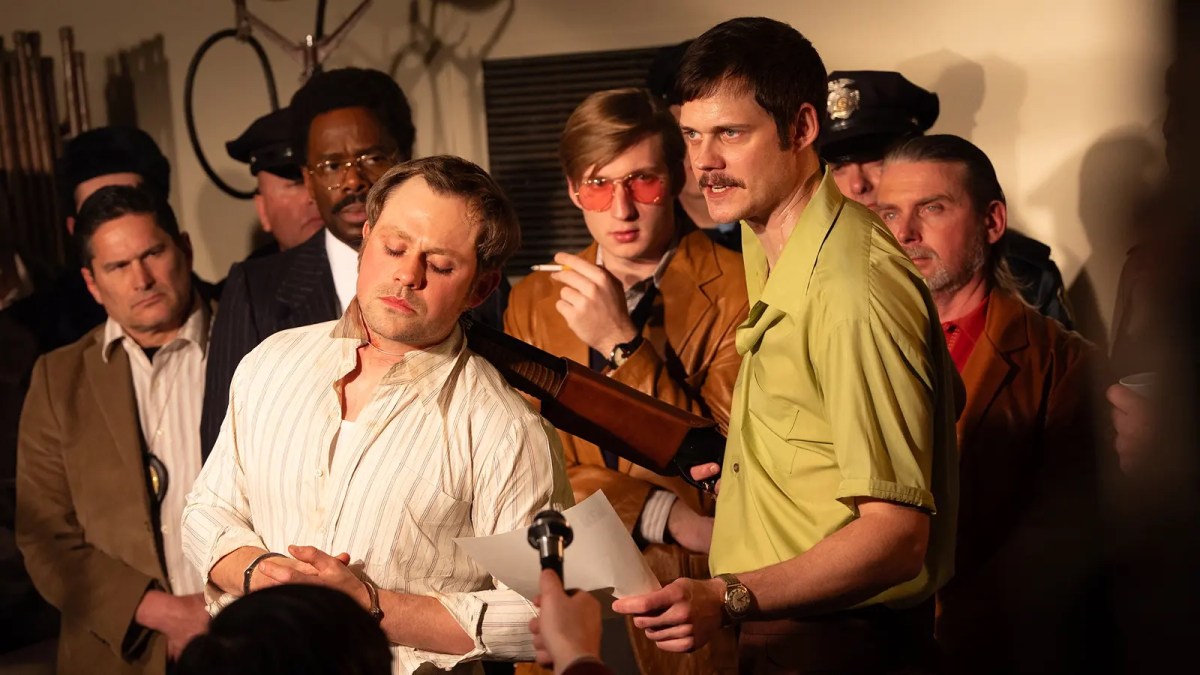
Dead Man’s Wire could’ve been a very serious film. It focuses on a real-life event in 1977 when American mortgage holder Tony Kiritsis took the son of his mortgage broker hostage, in a standoff that lasted days, and was broadcast across the United States.
Rather than leaning into the common tropes of the crime thriller genre, which has a tendency to overly dramatise traumatic events, director Gus Van Sant leads an entirely different approach – one instead that brings out the awkwardness and inherent humour of Kiritsis as a character, and the events surrounding him.
Rather than being a caricature of an insane kidnapper, he’s presented here as a weird, twitchy and over-eager everyman, whose justifications for kidnapping are more than understandable in a society that often preferences capital over people. And Bill Skarsgård is the glue that holds this approach together.
Dead Man’s Wire review – quick links
Skarsgård’s charismatic performance
Dead Man’s Wire is swift in its opening stanza, beginning with the arrival of Tony Kiritsis to the Meridian Mortgage broker company, with a mysterious box in-hand. He presents as a relatively reasonable client, if a bit strange, ready to discuss the next stages of his mortgage, on which he’s fallen behind.
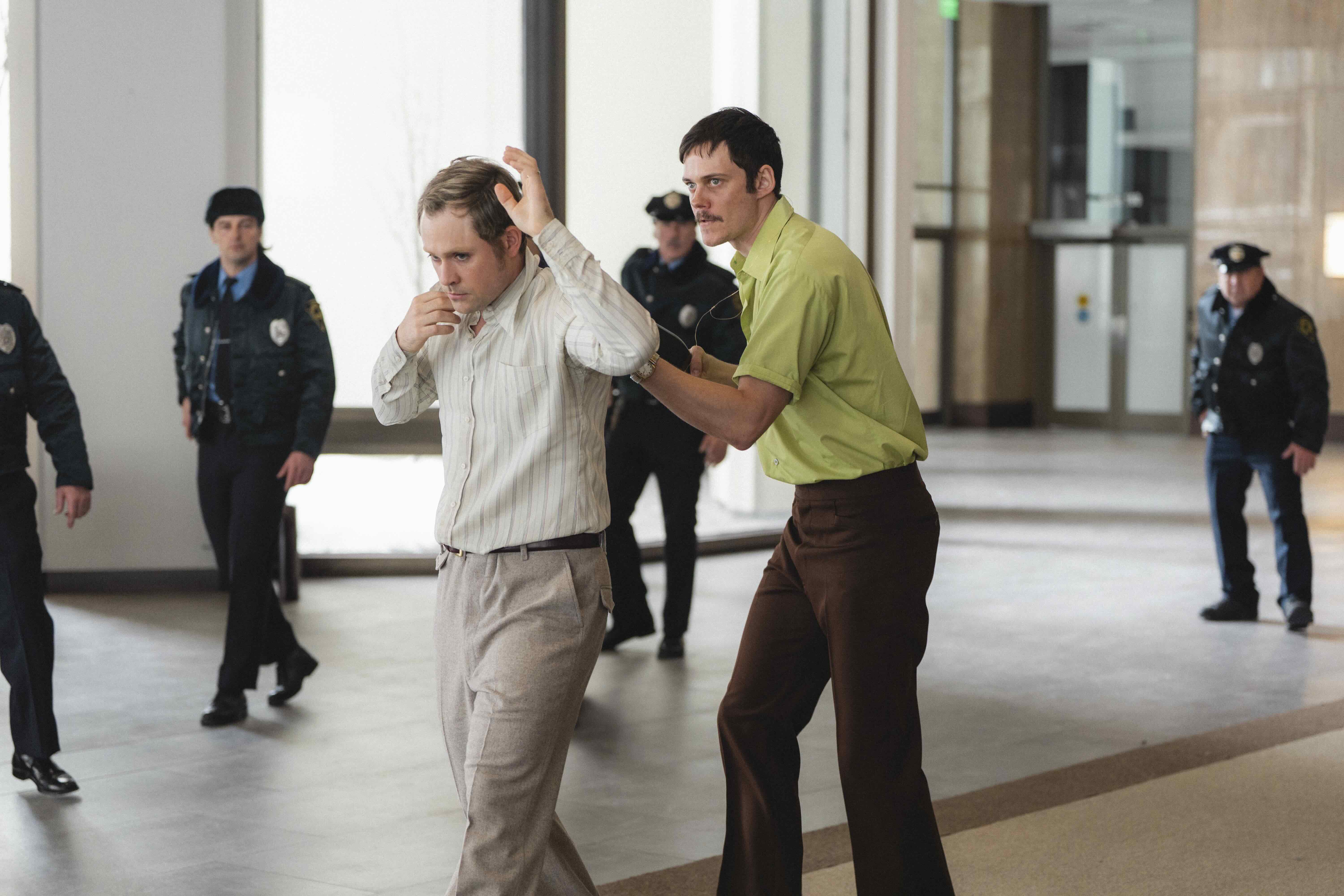
The mask quickly falls as Kiritsis claims to have been wronged by his mortgage broker, and kidnaps his son Richard Hall (a tense, quiet Dacre Montgomery), using a dead man’s switch to wire a shotgun to his neck.
Van Sant focuses on Kiritsis’ oddities early, as a means to establish the needed bond between himself and the audience. We understand what Kiritsis does is wrong, but in close-ups, we’re also shown the simmering injustice he feels.
Skarsgård is magnetic, portraying Kiritsis as wide-eyed, weird and even somewhat endearing. He’s particularly subtle in showing the dualities of Kiritsis, well-balancing his misguided good intentions with his more violent acts.
Throwing out any need for balance, Dead Man’s Wire focuses near-solely on Kiritsis as the wronged party, presenting him as a notable folk hero in modern American lore. There’s an undercurrent of Ned Kelly – or even the legendary Jack Karlson – in this portrayal, that firmly places Kiritsis as a misunderstood anti-hero fighting against capitalism’s injustices.
That’s not only seen in the various manic, rallying speeches performed by Skarsgård, but in the sub-narrative of how he’s seen by the general public, through the lens of nearby TV crews and their cameras.
The gaze of the television audience
The real-life tale of Tony Kiritsis captured the imagination of the general public, partly because the stand-off was so widely televised, but also perhaps because of the strangeness and charm of Kiritsis as a character – his declaration of being a ‘national hero’ fighting a large corporation, his eccentric mannerisms and the wildness of his actions.
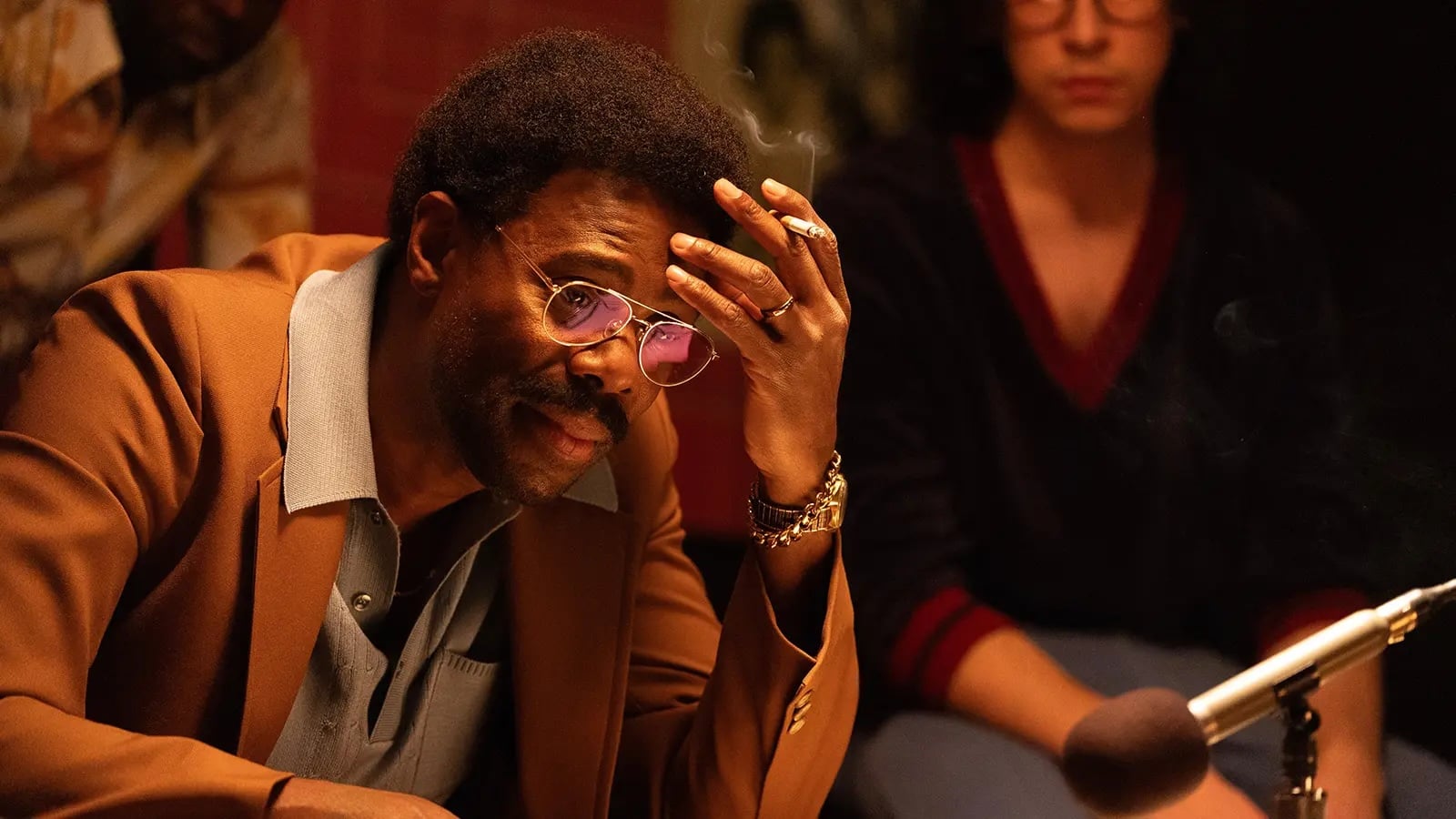
In Dead Man’s Wire, Kiritsis calls his threat into police, and then marches Hall publicly through the streets of Indianapolis before settling within his apartment complex. He demands – and is granted – an audience on a live broadcast, and even calls into a radio station, forming a seemingly parasocial relationship with newsman Fred Temple (Colman Domingo).
All the while, Kiritsis justifies his actions with a simple call to justice, rallying against ‘The Man’ with such strong belief that audiences – both at the time, and now watching the film – are swept up in his mania, to the point of believing it themselves.
ScreenHub: More Sydney Film Festival news and reviews
Overturning the tropes of the crime genre
In line with the real-life stand-off and subsequent events, Dead Man’s Wire is not so concerned with the actual ethics of the crime itself. The actual wronged party, Richard Hall, is portrayed more as a background character in his own story, at Kiritsis’ mercy. Outside of a nightmare sequence that sees Skarsgård bringing out his inner freak, the actual tribulations of Hall take a backseat.
Rather than being a story about the impact of being a hostage, or really about the justice system, Dead Man’s Wire is a rumination on human nature and its inherent awkwardness – and perhaps some of its incompetence, too. The focus here is on Kiritsis as a character, and why he became an informal folk hero.
The situation of Kiritsis and Hall – strung together by a dead man’s wire hooked up to a shotgun, walking through a public street – seems like a simple conundrum. But whole squadrons of police must let Kiritsis pass, or risk chaos and a hair trigger pull.
Slowly, carefully, Kiritsis and Hall steal a police car – and nobody can stop them.
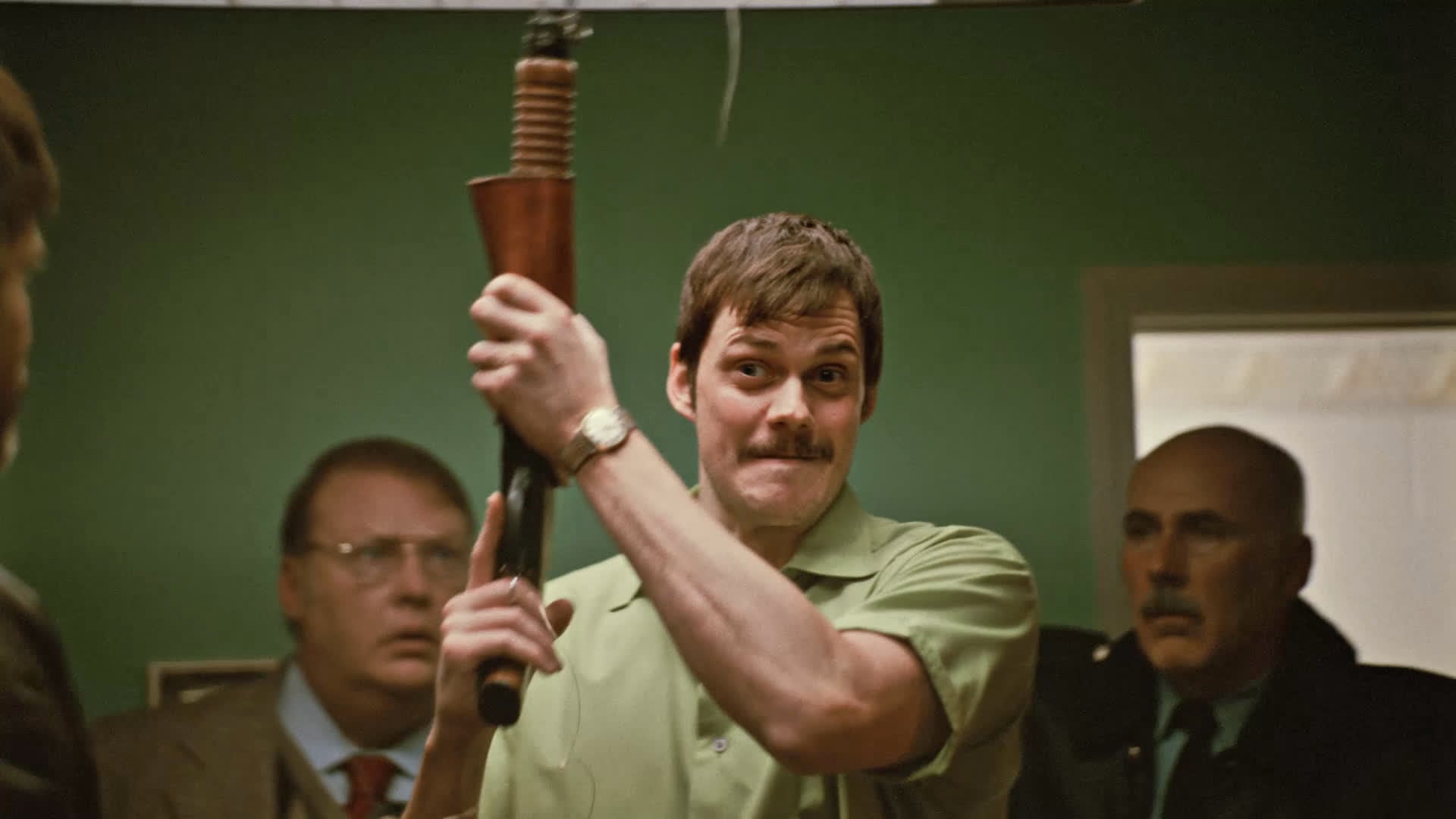
Later, at a public press conference, Kiritsis wields his shotgun with Hall attached to the end. Even surrounded by a flock of reporters and police, such a small and clever wired system means Kiritsis is untouchable.
The absurdity of how far the situation gets is part of what made the original events so compelling. Kiritsis’ plot is wild, and likely shouldn’t have worked, but through a series of circumstances – as well as an inexperienced police force – he held Hall hostage for days.
It’s a frankly ridiculous series of events that seem so easily preventable, but as Van Sant makes clear in Dead Man’s Wire, life is so full of weird, preventable circumstances.
Life is inherently strange – and while some films will dramatise crime and dress it up with Hollywood tropes, humans are very odd by nature, and Kiritsis is perhaps more like the average criminal than many movies would have you believe.
He’s a fascinating part of America’s criminal history, and Dead Man’s Wire is a strong exploration of his chapter in it. It’s a snappy, smart and funny showcase of his particular crime, but also an impactful rumination about humans in general, and all their odd little foibles.
Dead Man’s Wire screens on 11 and 12 June as part of Sydney Film Festival 2026. The festival continues until 14 June.
Discover more screen, games & arts news and reviews on ScreenHub and ArtsHub. Sign up for our free ArtsHub and ScreenHub newsletters.
Actors:
Bill Skarsgård, Dacre Montgomery, Cary Elwes, Colman Domingo, Myha'la, Al Pacino
Director:
Gus Van Sant
Format: Movie
Country: United States
Release: 02 September 2025