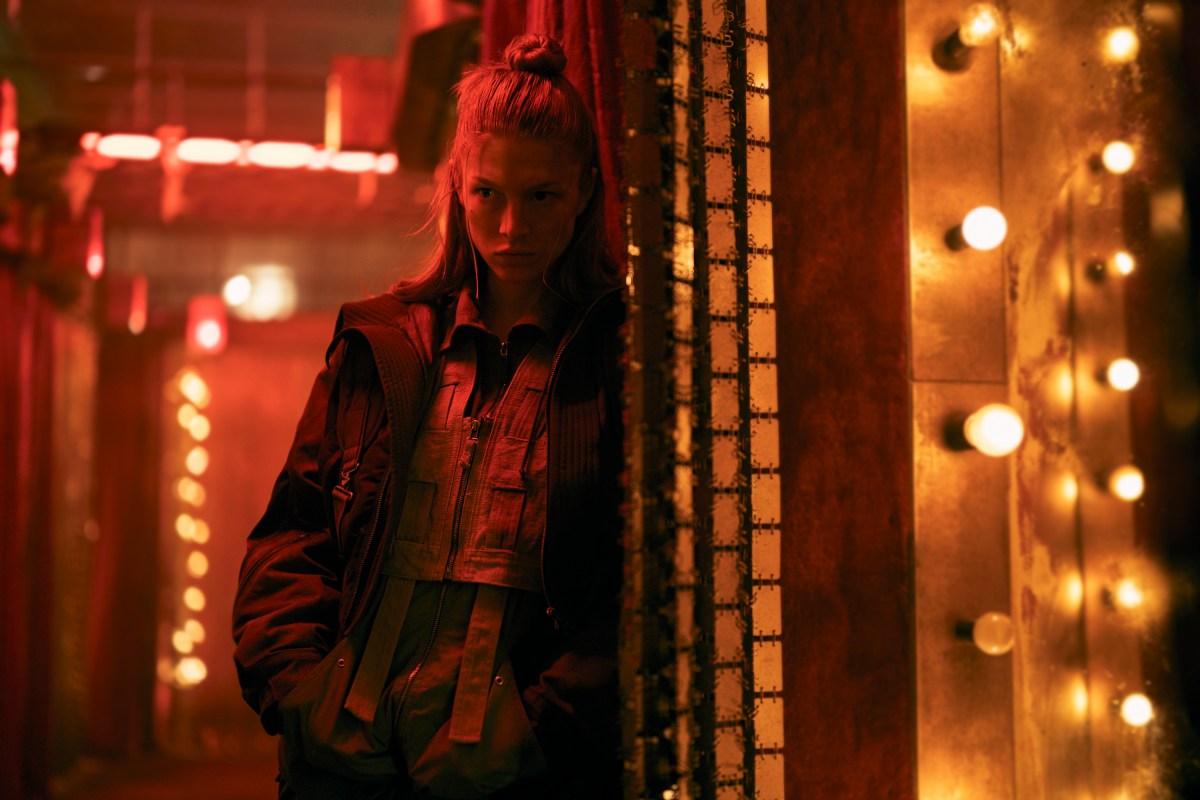
Like Joe Turkel’s would-be-god Tyrell in Ridley Scott’s original, Blade Runner 2099 creator Silka Luisa (Shining Girls) risks being burned, in attempting to harness the original’s unique starlight.
While it was mauled by studio interference and a bastardised cut bombed at the box office, Ridley Scott’s poetically epic Blade Runner has long since been reevaluated as the sci-fi masterpiece it is.
One of the most astonishing-looking films ever made, it enjoys a rare depth of field – in production design, models, costumes, lighting and more – that ensures Scott’s world feels indelibly real. The Vangelis score perfectly accompanies its wounded soul – replicant or not.
With a screenplay very freely adapted by Hampton Fancher and David Peoples from the also excellent Philip K Dick novel Do Androids Dream of Electric Sheep?, the film’s multifaceted genius can be distilled, as in the original novel, to one question: what makes us human?
Blade Runner 2099 review – quick links
Tears in rain
A replicant may be less empathetic, but if it has cherished implanted memories, is able to feel love, anger and fear, and will fight for its right, and that of its fellow kind, to survive merciless persecution, then isn’t it human?
And if a biologically born blade runner or bounty hunter knows all this, but can coldly kill a replicant that has emancipated itself from off-world labour, just so it can beg its uncaring maker for more than its cruelly allotted four-year lifespan, then just how human is that ‘following orders’ person?
This is the lifeblood that runs through Blade Runner, beautifully distilled into Rutger Hauer’s partially improvised dying monologue, as the replicant Roy Batty, having saved Harrison Ford’s would-be executioner Rick Deckard from plummeting to his death. ‘I’ve seen things you people wouldn’t believe… All those moments will be lost in time, like tears in rain.’
There’s a further twist of the knife in the implied tragedy that lies just beyond the end credits. As Deckard flees with the woman he loves, Sean Young’s replicant Rachel (double standards abound), he spots an origami unicorn. Left by his LAPD handler Gaff (Edward James Olmos) it echoes an image from Deckard’s dream. One his colleague could only know if Deckard is also a replicant. But will Gaff show Deckard and Rachel mercy?
‘It’s too bad she won’t live. But then again, who does?’
Pale copy
Denis Villeneuve’s empty-hearted Blade Runner 2049 is a pale copy, with a woefully miscast Ryan Gosling, far too pretty to play hard-boiled dick in a neo-noir, along with an over-reliance on computer graphics instead of building a tangible world, and a scattershot plot trying to jump-start aborted sequels.
This, without even getting into the irksome depiction of an older Deckard and the frankly appalling offscreen fridging – killing women as a narratorial device to drive male plotlines – of Rachel, post-immaculate birth, shitting all over the central tenets that make the original sublime.
Thankfully Luisa is far more clued into what makes Blade Runner tick, with 2099 vastly superior to 2049, if not the unimpeachable original, in every conceivable way. Nearly a century on from Deckard’s dash, Luisa and her stacked writers’ room, including Watchmen’s Claire Kiechel and The Leftover’s Tom Spezialy, flip the board in ways that make sense.
The humans with the financial means have long fled the choked and dying Earth for the heavily advertised promise of off-world luxury. The stragglers are now outnumbered by the far stronger replicants, who were created to terraform these new off-world colonies. Unlike the turn-the-other-cheek Batty, the Nexus model nines do not forgive those who trespassed against them, having enslaved their slavers.
Watch the trailer
Trading darkness
Euphoria star Hunter Schafer is Cora, a human toiling away as an indentured labourer in one of many industrial behemoth factories that cloak Los Angeles in acrid smoke and toxic rain, though the city has gained some environmental reprieve from giant air conditioning units.
Like many humans fudging false identities, she dreams of escaping and seizes her chance in the hubbub caused by the arrival of replicants in their spinners – space-age cop cars. These replicants have reclaimed the name of their terrorists, the blade runners.
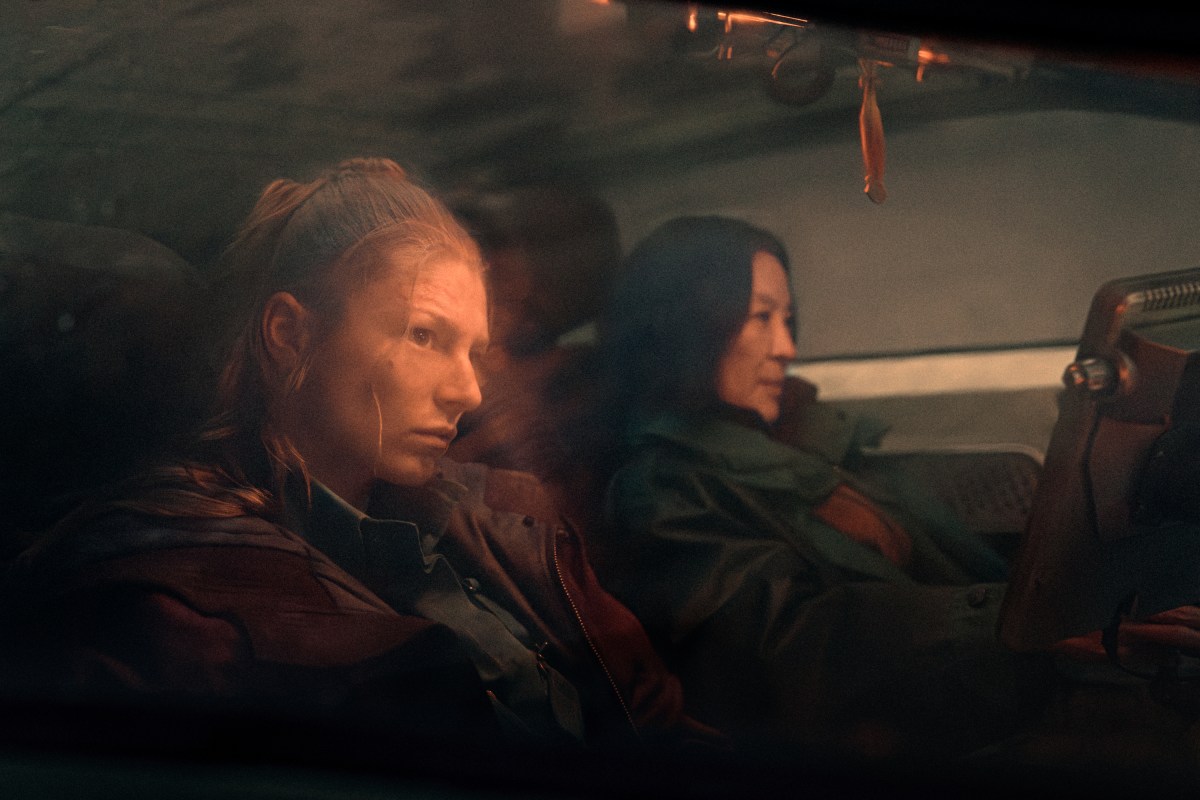
Michelle Yeoh was born to play the ice-cold role of Olwen, in her dying days and not entirely ok with it, no matter how much the synthetic lady doth protest that ‘it’s just trading one darkness for another’. She’s also feeling abandoned by her previous partner Marek (Johnny Harris), who’s gone AWOL. She’s saddled instead with the weaselly creepy Yahya, who is acidly played by an ace Matthew Needham from House of the Dragon, rocking a greasy mullet.
Cora’s escape through clamouring streets echoes the desperate flight of Joanna Cassidy’s Zhora, though her run is more successful. Seeking the aid of her fake ID-dispensing bestie Bebeto (a sparkling Dimitri Abold), Cora is offered an unusual get-out-of-jail card: he can implant a fake sub-dermal registration number and eye contacts so she can pass as a blade runner!
Light and shade
It’s a stonking set-up that delves deeper into the question of humanity, tying itself into Tyrell’s hubris while flying free, though perhaps too close to the sun, like Icarus on the run.
While Blade Runner 2099 occasionally stretches credulity in how much of a beating a human can take compared to a replicant – who are still far from invulnerable and can bleed out like anyone else – the mighty pairing of Yeoh and Schafer is worth suspending disbelief for.
They enjoy brilliant good cop/bad cop chemistry, with Luisa eking nail-biting tension out of Cora’s behind-enemy-lines deception. Schafer hurls herself into the role, wearing blade runner duds more convincingly than Gosling, if not quite as well as Yeoh, with costume designer Helen Huang’s work impeccable throughout.
There’s light and shade to Olwen’s anti-villain, just as there was with Batty. As a trans actor, Schaffer layers so much into the adeptly code-shifting Cora’s attempt to pass. She’ll do whatever it takes to ensure the safety of her brother, Elias (Somewhere Boy’s Lewis Gribben) who lives a suffocating shut-in life after his legs were incapacitated during an ill-fated escape attempt when they were kids. This plotline and how it progresses will likely raise valid questions over who gets to play a character living with disability.
A sweet boy, Elias’ open mind is at risk of warping in this brutal world he barely knows, with a surprising subplot involving their adopted mother Helena (The Vampire Lestat scene-stealer Sheila Atim) exploding everything the siblings thought they knew.
It sets Elias on a different path from Cora in this wonderfully shifting series that enticingly tilts the world logically from Scott’s sturdiest foundations, introducing everything-old-is-new-again mysteries.
Android dreams
Blade Runner 2099 leans into the original’s murky morality, as do production designers Chloe Arbiture and Paul Inglis and art director Martin Vackár, who bring a welcome physicality back to this world that was airbrushed out by Villeneuve.
Yes, there are brief cameos from two of Scott’s characters. But rather than deploy 2049’s uncanny valley mechanics, they’re blink-and-you’ll-miss-them cameos played by real actors with their backs to us, flickering on the glitchy 80s tech of the original. Yahya pleasingly investigates a crime scene in a dark mirror of Deckard’s slow zooming in.
While this world has progressed in a near-century of development, it remains suitably archaic, as if stunted by its decline, abandoned by many of its first peoples. One notable step forward sees Schafer’s Cora retreading Deckard’s steps in a key location intriguingly glimpsed in two distinct timelines at once.
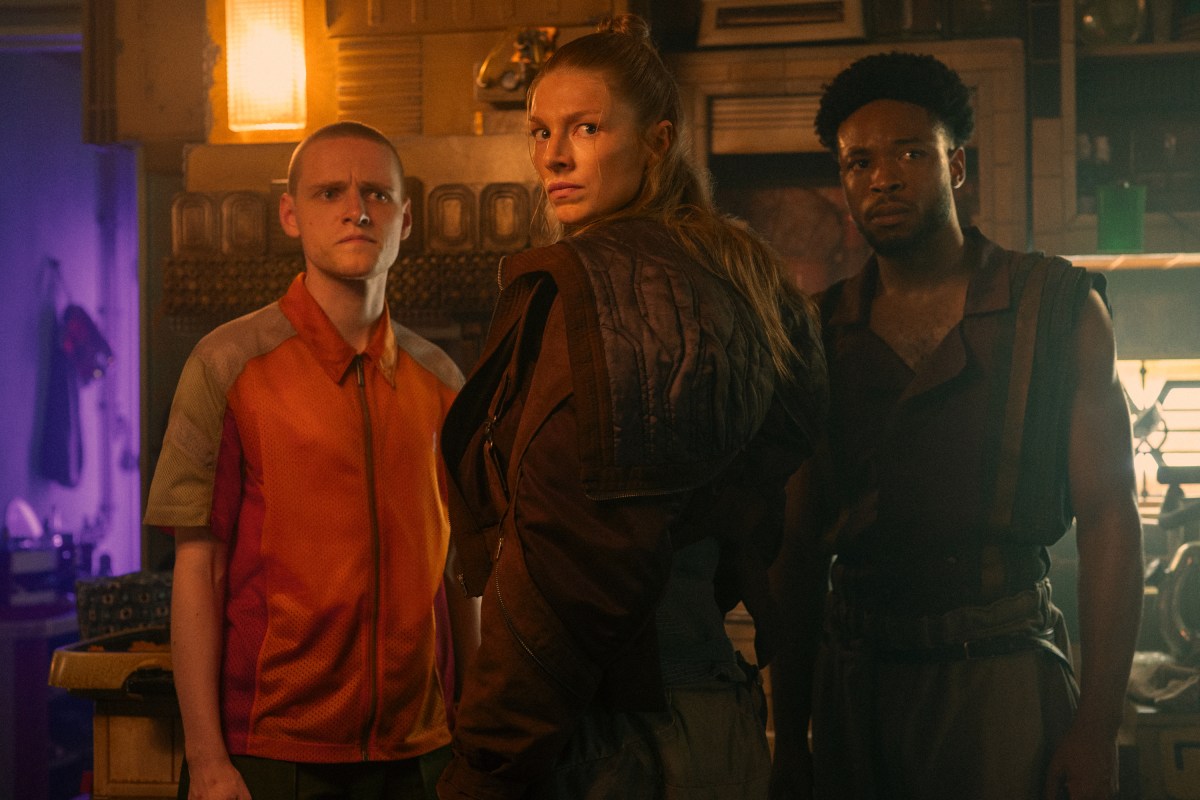
Elsewhere in a sprawling cast packed with fantastic performances, Furiosa lead Tom Burke and Never Let Me Go actor Amy Lennox bring genuine menace in wickedly roguish roles, with The Nun II’s young scream queen Katelyn Rose Downey also standing out in a tragic turn that upends expectation, challenging us to view anew how we measure humanity.
Completists will be rewarded by the long-awaited realisation of a trippy idea that’s central to Dick’s novel, a welcome squaring of this ever-expanding circle that reveals a whole other side to this sickly society, an android’s nightmare.
Unicorns and C-beams
While I’d have loved to see more model work on the cityscapes, they are astonishing nonetheless, as are the detailed interiors, from speakeasy-style clubs to the dark carnival-like spaces where blade runners don prosthetics to experience human stuff like pregnancy and the ghosts of other cities.
Composer Leopold Ross’ majestic work – all synth-driven wonder and aching ennui – is a suitable companion to Vangelis’ original scrore, capturing the hope that still illuminates Blade Runner’s future-noir dystopia. Grand company, Schafer’s dual performance never loses sight of Cora’s humanity, with Yeoh’s taciturn bite nevertheless reminding us how little separates these divergent, warring species who share the same dreams.
Keen eyes might even spy a unicorn, though not quite how you expect. This is Luisa and co’s triumph, with Blade Runner 2099 willing to take the road less obvious: to challenge our memories by showing them from another angle, or by burning it all down to build anew.
Blade Runner 2099 is a bold and beguiling vision that, as Batty used his last breath to say, burns like attack ships on fire off the Shoulder of Orion, or C-beams glittering in the dark near the Tannhäuser Gate.
Blade Runner 2099 streams on Prime Video from 25 November.
Discover more screen, games & arts news and reviews on ScreenHub and ArtsHub. Sign up for our free ArtsHub and ScreenHub newsletters.
Actors:
Hunter Schafer, Michelle Yeoh, Dimitri Abold, Matthew Needham, Johnny Harris
Director:
Karena Evans, Ariel Kleiman, Marcela Said, Jonathan van Tulleken
Format: TV Series
Country: US
Release: 25 November 2026