Any media that’s run as long as The Muppets may reveal something of the world in which it was made. In having a controlled variant – in this case, characters who survive the ages – the changes that impact them and their world are made more obvious.
An analogous example can be found in the world of professional wrestling. This form of entertainment has continued over generations and charted many global, cultural shifts in both attitudes and values. Watch from the beginning of its history, and you may note a slow removal of wrestler characters based on cultural stereotypes. You might notice women gaining more power and agency over their portrayal. Eventually, you’ll find familiar values of the modern era.
The Muppet Show celebrates its 50th anniversary this year, with an array of celebrations planned in the form of merchandise drops, character appearances and even the arrival of a special Jim Henson exhibition at the Gallery of Modern Art in Brisbane.
In this five decade history, you can trace many significant cultural shifts and upheavals. As with professional wrestling, The Muppets have now been around long enough to experience a changing world, and to be changed in turn.
While much of The Muppets remains as it was – as charming and delightful as it’s ever been – there is one particular character that’s changed most of all in this worldly progression: Miss Piggy.
Analysing her history, and particularly the build of her puppets, reveals so much about who she portrays: the stereotypical woman, as seen through the eyes of men. In the 50 years that the The Muppets has entertained, women and the expectations placed upon them have changed dramatically.
The changing face of Miss Piggy is an inadvertent visual representation of this shift.
The changing face of Miss Piggy – quick links
The origins of Miss Piggy and her first puppet
Miss Piggy was first introduced in 1974 in appearances for The Tonight Show and Herb Alpert and the TJB, in the lead-up to the arrival of the 1976 comedy variety show, The Muppet Show. Alongside Miss Piggy, The Muppet Show starred a cast of puppet critters including the famous Kermit the Frog, Gonzo, Fozzy Bear, and more.
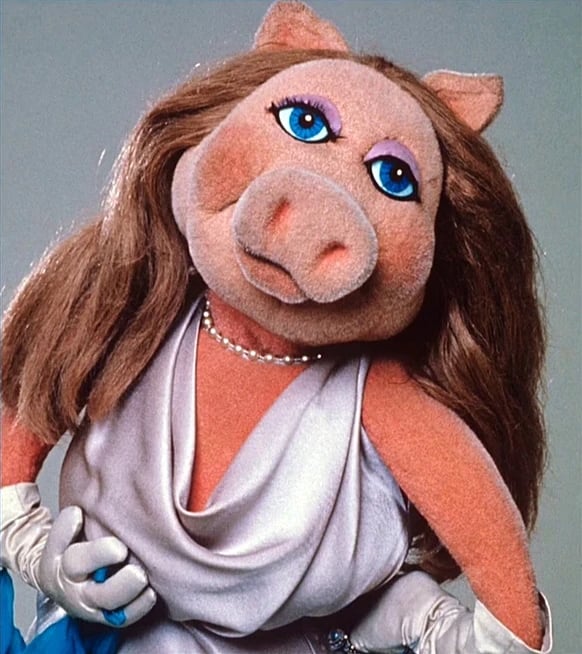
The initial Miss Piggy puppet, used throughout her early appearances and through the show’s first season, is a fascinating one. She wears short eyelashes and a light purple eyeshadow, as well as a light dash of blush, for a more ‘natural’ yet glamorous pig-like look.
Glamour is really the aim here, and her outfit – pearls and a ball gown with a draping neckline paired with gloves and long, brushed hair – represents what was considered beautiful in the 1970s. Or at least, as a caricature of what was considered beautiful, as Miss Piggy was often the butt of jokes.
Likely inspired by the glamour of 1960s stars like Marilyn Monroe and pioneering 1970s fashion brands like Halston, Miss Piggy arrived glammed up in her first appearances and stayed that way for the early parts of The Muppet Show.
It’s also worth noting her characterisation in this early season. Already, it was established that Miss Piggy was a romantic at heart, longing for connection and aggressively making moves on Kermit the Frog. Despite her appearance, she was often rejected in her advancements, and treated like an air-headed inconvenience.
The more recognisable Miss Piggy of The Muppet Show
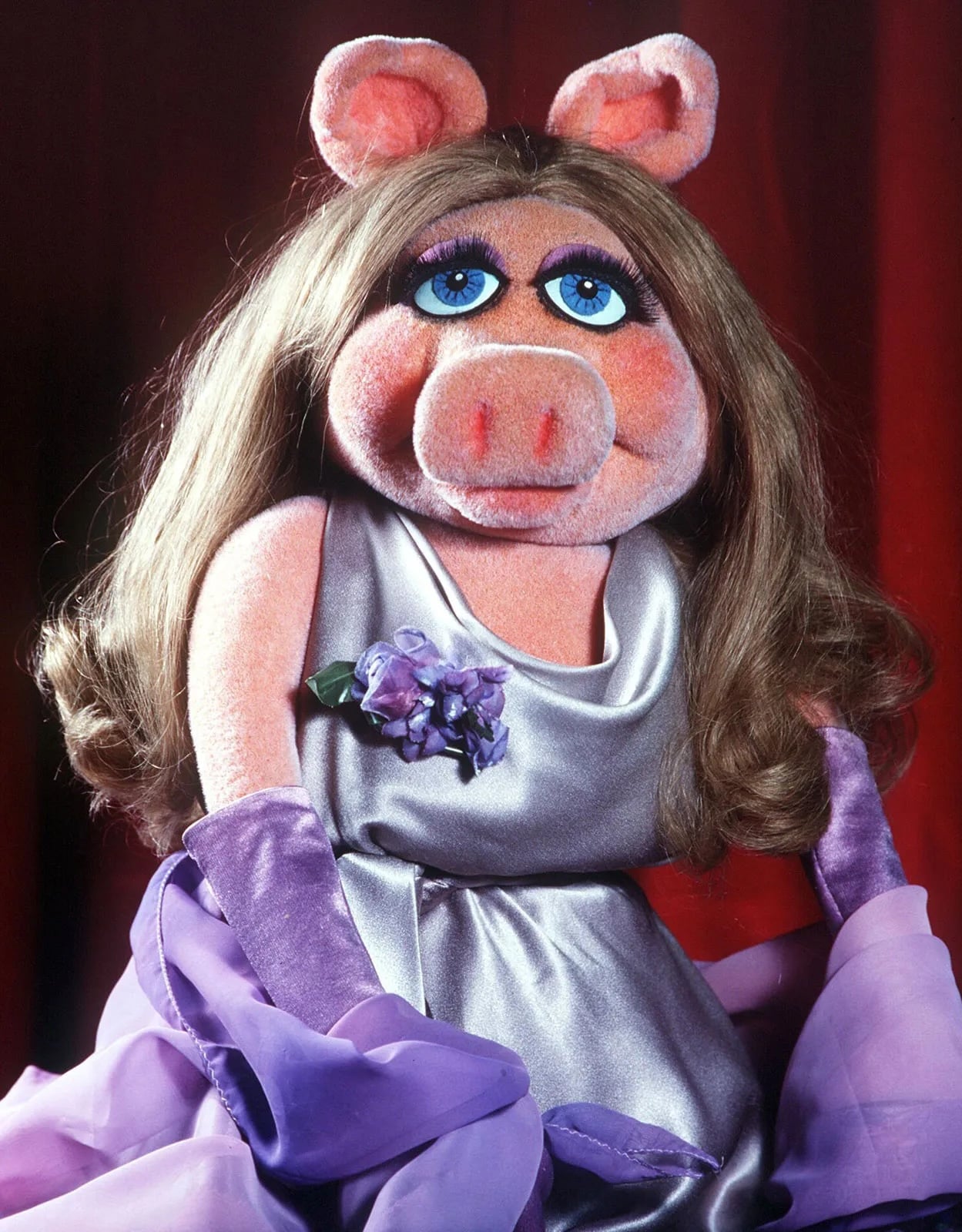
Between seasons of The Muppet Show, the Miss Piggy puppet was reworked multiple times. She got a smaller and rounder head shape to emphasise her cuteness, and her snout was seemingly reduced to make her rosy cheeks and mouth more prominent. The other biggest changes in this particular version of the puppet, seen in the third season of The Muppet Show and recognisable in The Muppet Movie, is that Miss Piggy gained larger lashes and heavier makeup.
The emphasis of this puppet is on a more traditionally feminine appearance, with softer, rounder and cuter facial features. Her hair better accents her cheeks, and her clothes have changed slightly to integrate soft purple colours. What’s equally notable is that Miss Piggy looks more ‘human’ in nature, with design cues from more traditional human beauties.
Her personality largely stays the same in these appearances, although with sweet, lighter notes in her interactions with Kermit, and louder, more demanding notes in interactions with the other Muppets. Seemingly in response to criticism about her pig nature, she becomes more emboldened by her own identity and her power.
It’s worth noting that many of these changes align with wider cultural movements within American society at the time, and particularly the rise of feminism from the 1960s to 1980s, commonly known as second-wave feminism, and its concerted push to ensure better equality for women in relationships and the workplace.
The Muppets Take Manhattan, and the rise of the perm
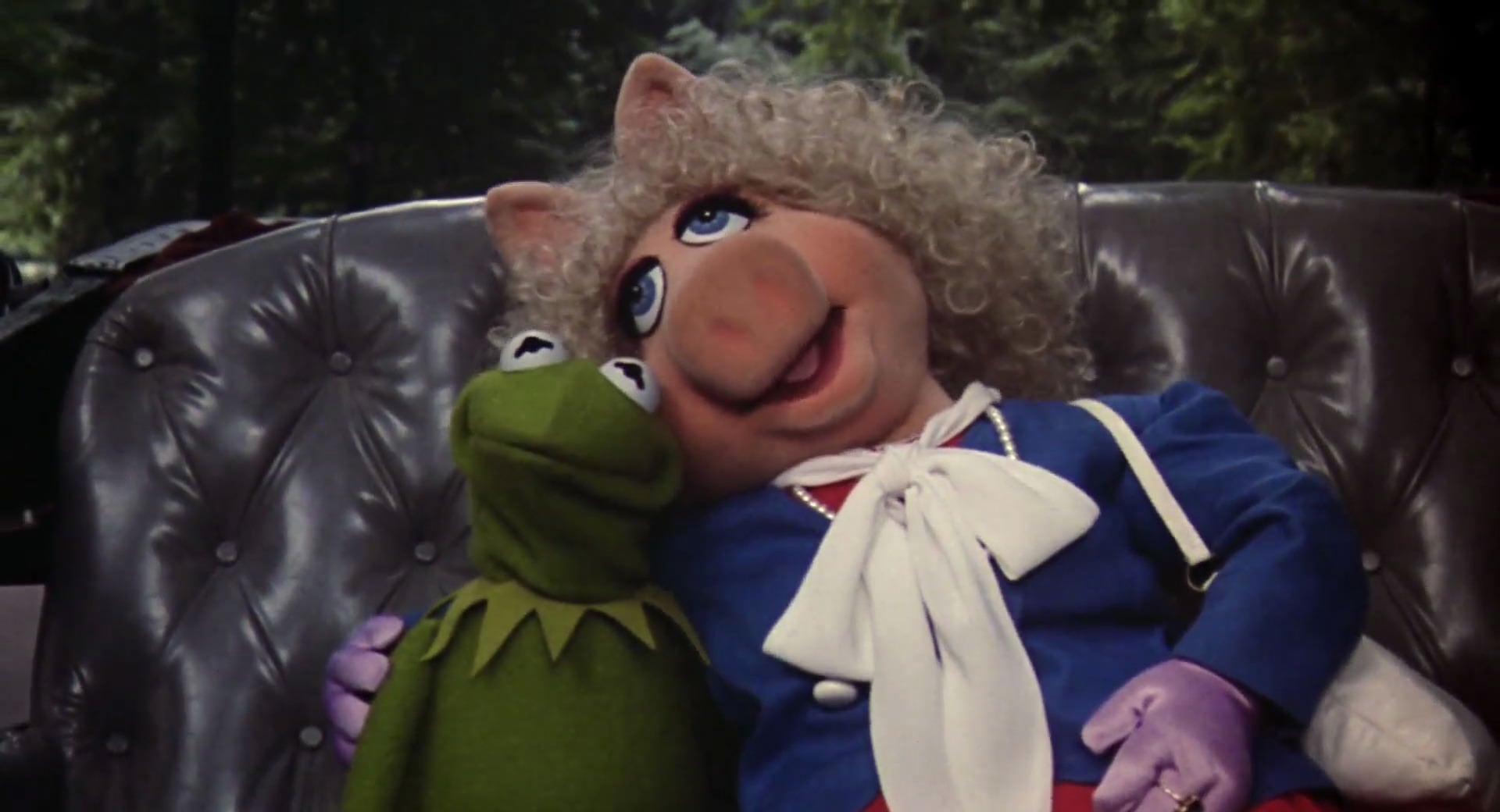
One of the bigger shifts for Miss Piggy arrived in The Muppets Take Manhattan, where she sported a classic perm alongside another puppet rebuild. In this particular film, her eyes are separated slightly, again to reflect ideas of the ideal woman, while her head is slightly reshaped to emphasise her cheeks and her smile.
The nature of this film and Miss Piggy’s position speaks to how women’s fashion was changing, along with women’s desired roles. In this particular story, the Muppets split up to find work and money in the hopes of regrouping with the funds to bring their dream Broadway play to life.
Miss Piggy, pretending to have left the group, secretly stays behind to watch Kermit. She’s portrayed as fairly possessive in this film, becoming jealous of Kermit’s relationship with diner worker Jenny (a human). She also spends time dreaming about being together with the Muppets again, this time as babies (in a surreal dream sequence that eventually inspired the Muppet Babies TV show).
Notably, she also seemingly tricks Kermit into getting married for real, during a stage play that’s supposed to be a fantasy – although the ‘canon’ of The Muppets plays loose with this sequence.
The Muppets Take Manhattan presents a fairly simplistic view of Miss Piggy, representative of the era’s stereotypical expectations around women – that they think largely of babies, and are possessive to the point of stalking. It’s all fantasy and puppets, but there are very real, odd ideas about Miss Piggy in this particular film.
Muppets in Space, and the journey towards modernity
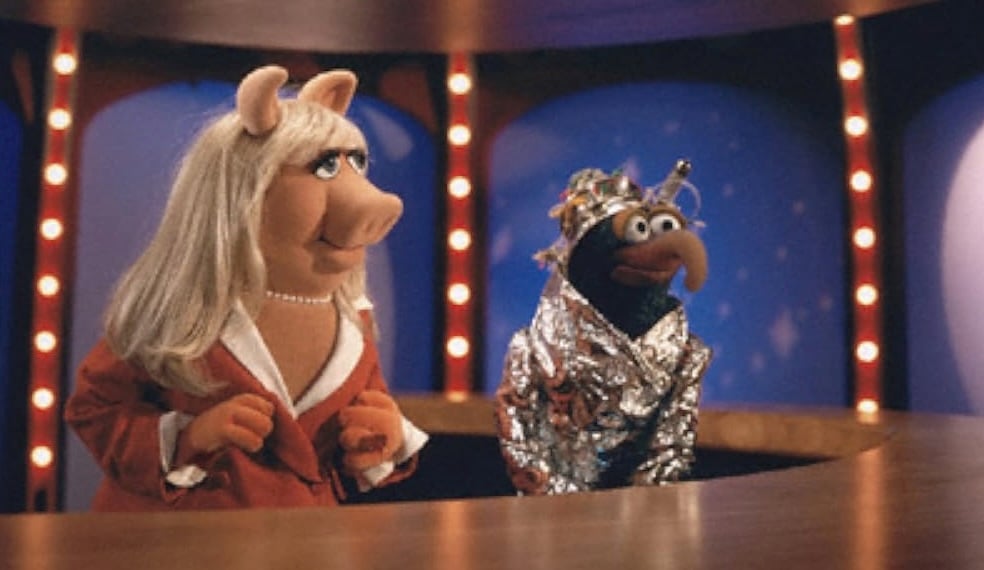
For a brief period in the late 1990s, Miss Piggy sported an updated version of her perm with bouncy, curly twirls in her hair. Then from 1999 film Muppets in Space, she started on the path to her modern look and behaviour – with long, straight hair, pink eyeshadow, longer lashes and a more defined, nearly angular face shape.
Her hair is fairly typical for the era – it’s not quite The Rachel, but it’s very close. It’s also worth noting her change in attire. Where the Miss Piggy of the past wore dresses, her appearances in the 1980s and 1990s usually included power suits, suggesting a more business-minded woman.
While she still pined after Kermit, there was a suggestion of more personality in this era, with her dramatic nature becoming a quirky and more endearing part of her dialogue. She was still pushy, but was more often played for laughs and in on her own jokes, rather than being the butt of them.
As with the feminism of the era, she was gaining power and agency over her own unique identity. She evolved to be more confident, and to become a more prominent voice amongst the Muppets – pushy, but respected.
Another step towards the modern, refined Miss Piggy
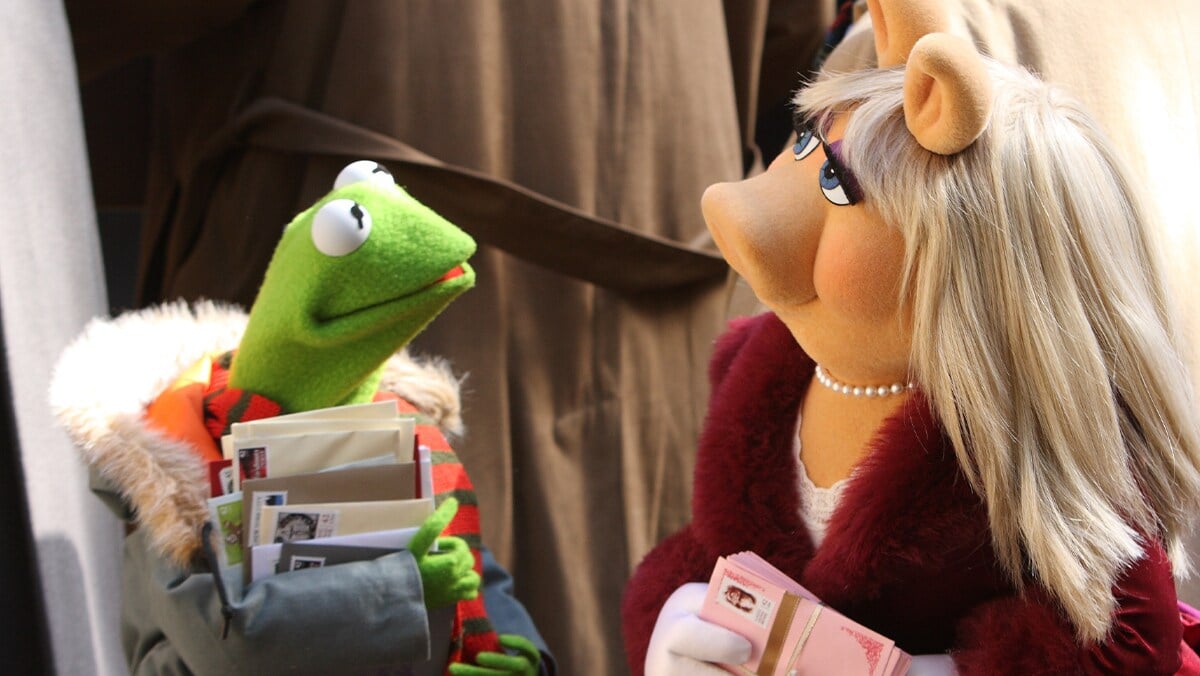
Around the mid-2000s, under Disney ownership, Miss Piggy transformed again – into a much more recognisable form. She gained a fringe, her hair became a whiter blonde, her makeup became darker, and she was again changed to better resemble a human woman.
A Muppets Christmas: Letters to Santa was a significant change in her appearance, and one that signalled a new era for Miss Piggy – where her power was more on display, as was her heightened celebrity status. Where the original version of Miss Piggy was laughed at for being a pig and aspiring to be greater – and for putting on airs – the modern Miss Piggy grasps her power and wields it.
She’s no longer a pretender, wearing pearls and glamorous makeup in the attempt to look powerful and beautiful. Instead, she harnesses her power as a socialite and partner.
The modern, recognisable Miss Piggy of 2026
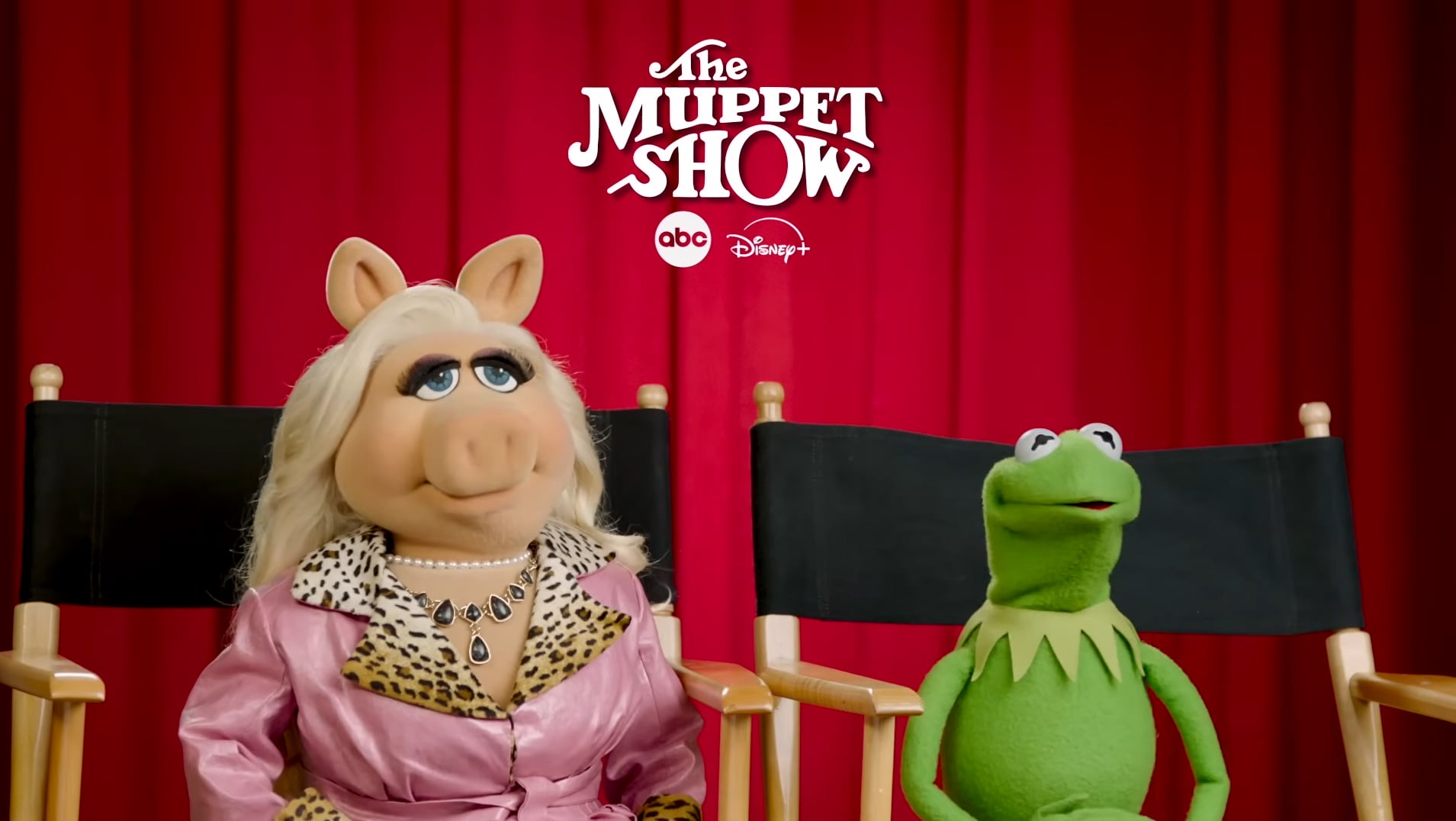
The Miss Piggy of 2026 is an established businesswoman and celebrity who’s depicted as a force of nature – often crossing the line of realism to be considered an actual human celebrity in the real world. She dresses in glittery jewels and has bleach blonde hair and dark makeup. She’s frequently paired with and positioned as a rival to other glamorous female celebrities, like Sabrina Carpenter in the excellent Muppet Show special of 2026.
She’s no longer the subject of ridicule in these appearances. She’s not accompanied by pig jokes. She’s known widely as a diva, but she’s allowed to be multi-faceted, and her behaviour is better accepted. Miss Piggy is elevated as a loud woman and a proud one, with her veracity and enthusiasm being far more appreciated. She’s allowed to be silly and over the top. She’s a woman of many sides.
This acceptance of Miss Piggy, and her slow evolution to getting ‘in’ on the joke, is fairly representative of how women have been treated over the last few decades. Once considered subjects of ridicule and stereotype, there is now a greater effort to represent women as more layered in media, and to allow them to become what they may.
Miss Piggy remains a stereotype in design, with her blonde hair and heavy makeup, but she’s now allowed to be more than that. She’s a diva. She’s a singer. She’s a businesswoman. She’s an icon.
It’s been a long road for Miss Piggy to get the recognition she deserves – as in the case of women worldwide, historically – but charting her 50 year journey shows just how far she’s come, and just how much The Muppets has evolved to suit modernity.