Long before RuPaul’s Drag Race became a global phenomenon, Australian drag was already captivating audiences on stage and screen. Look no further than the sequinned spectacle of 1994’s The Adventures of Priscilla, Queen of the Desert – a global queer cinema landmark.
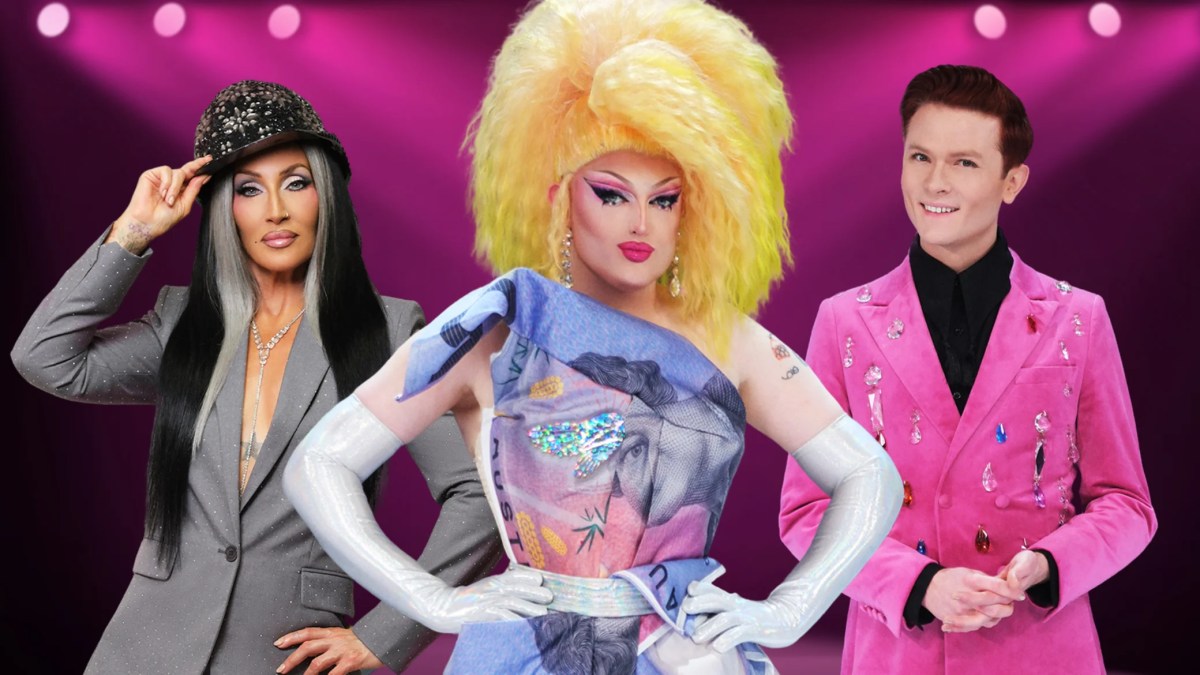
With the inaugural season of Drag Race Down Under vs The World premiering on 24 July, reigning Drag Race Down Under champion Lazy Susan sees it as a chance to remind the world that Australia’s drag legacy deserves recognition.
‘I’m admittedly sick of being the butt of the joke globally,’ she tells me when we chat.
‘I want us to be understood as the incredibly talented performers we are. It’s ridiculous, this is the country that gave the world bloody Courtney Act and Priscilla, and now people think that we don’t know drag? Bitch, we taught you about drag! How dare!’
Read more: RuPaul’s Drag Race: best seasons, where to start, where to stream
Joining Michelle Visage and Rhys Nicholson on the judging panel, the Melbourne queen says the new series represents more than just another chapter in the ever-expanding Drag Race universe – it’s an opportunity to change perceptions of Down Under drag altogether.
Drag Race Down Under vs The World – quick links
The fight for recognition
After four seasons of Drag Race Down Under, the franchise is entering uncharted territory with a new production team at the helm, and the new format seeing drag queens from Australia and New Zealand going head-to-head with competitors from across the global Drag Race universe.
Following a warm reception of the most recent season, which saw RuPaul’s right-hand woman Michelle Visage take over as host and head judge, with some fans declaring ‘the Down Under curse has been broken’, Lazy reckons we’ve reached a turning point.
Despite showcasing some of the finest drag talent in the Southern Hemisphere, Drag Race Down Under has found itself fighting an uphill battle for recognition. For starters, the series is contending with viewer fatigue. The original US series has been franchised into some 24 global spin-offs and counting, meaning there’s rarely a time without one or more current Drag Race series airing.
Down Under has also often been overshadowed by its US counterpart, dogged by relentless comparisons as well as criticism of its comparatively modest production values.
‘I hope this is an opportunity for people that have perhaps scoffed at the thought of watching Drag Race Down Under in the past to revisit the franchise and see the amazing contestants that have come out of it,’ she says.
Badgering Bob the Drag Queen into a fan
Lazy’s mission to defend Down Under even extends to one of the franchise’s most outspoken critics. Earlier this month, she publicly challenged US Drag Race royalty Bob the Drag Queen to finally give Drag Race Down Under another chance. A noted hater of the Antipodean spin-off, Bob has publicly declared that she has little interest in watching the series.
‘Bob has been so vocal about her distaste for our show. If we can convince just this one person, perhaps we can convince the whole world.’
Now, the tongue-in-cheek campaign is paying off, with Lazy revealing that Bob’s team have responded.
‘We have set a day,’ says Lazy. ‘I believe we’ll be appearing on Bob’s podcast to discuss and hopefully make an incredible case for Down Under.’
There’s certainly a chance to reach a wide audience. The crowned winner of Season 8 of the US edition of RuPaul’s Drag Race, Bob the Drag Queen has an estimated combined following of 5.4 million people across social media platforms and two popular podcasts.
‘Bob’s a great sport, and truly, she loves nothing more than funny, petty antics on the internet,’ Lazy adds.
A bigger stage – the same underdog spirit
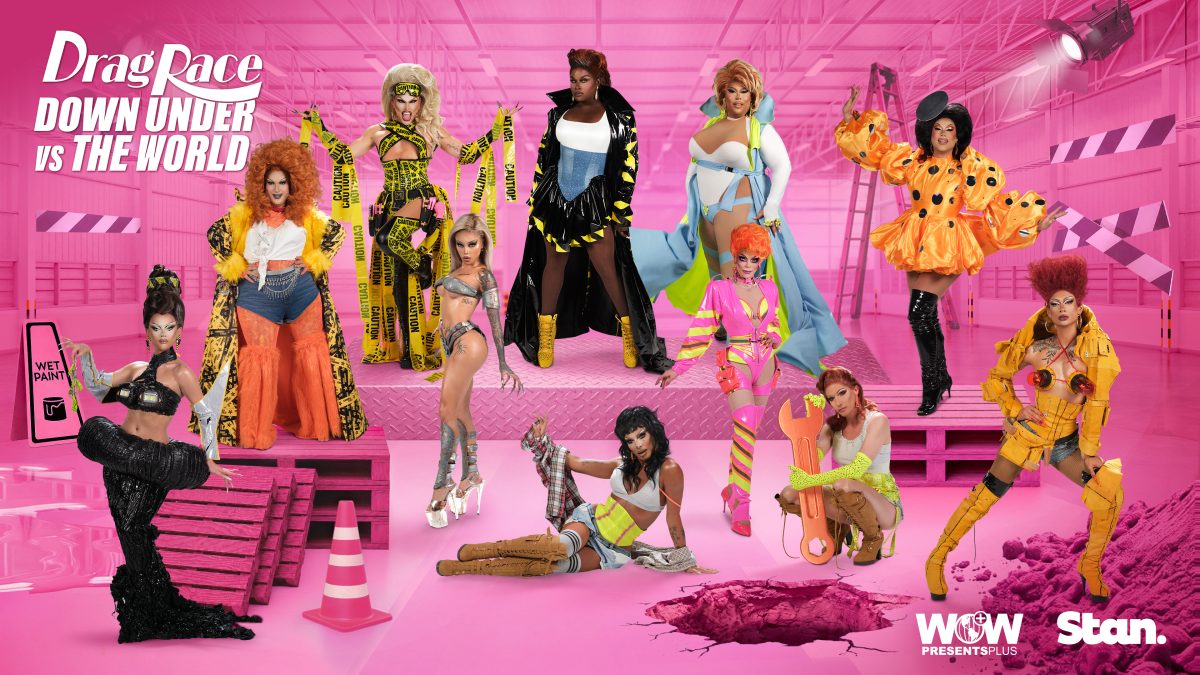
While viewers can expect a noticeably glossier production and an upgraded main stage (‘The LED screens are LED-ing, and it’s very chic,’ says Lazy), she also believes some criticisms of earlier seasons misunderstood drag’s grassroots origins.
‘I don’t understand why the fandom is so obsessed with having a large stage to perform on, because most drag queens in most cities around the world are performing on milk crate stages,’ she says.
‘Drag is not about performing in arenas, it’s about performing in a dingy dive bar at three in the morning, so get real. If you’re a real drag fan, you can appreciate something that’s held together with gaffer tape and string, because that’s the truth of drag.’
That ethos, she argues, extends to the show’s very existence.
‘Drag Race Down Under exists by the grace of some sort of very gay god,’ she laughs. ‘There is a conceivable world where it never got to happen.’
She’s not wrong. For one thing, the production of the first season, which was announced in 2019 and was set to be filmed in Sydney, was almost trashed entirely when it lost production support (in part due to Covid restrictions), only to be picked up across the ditch in New Zealand.
At the time, Labor Politician Rose Jackson called out the NSW Government for doing nothing to keep the production in Sydney, declaring that ‘the minister should sashay away’ in a moment that went viral.
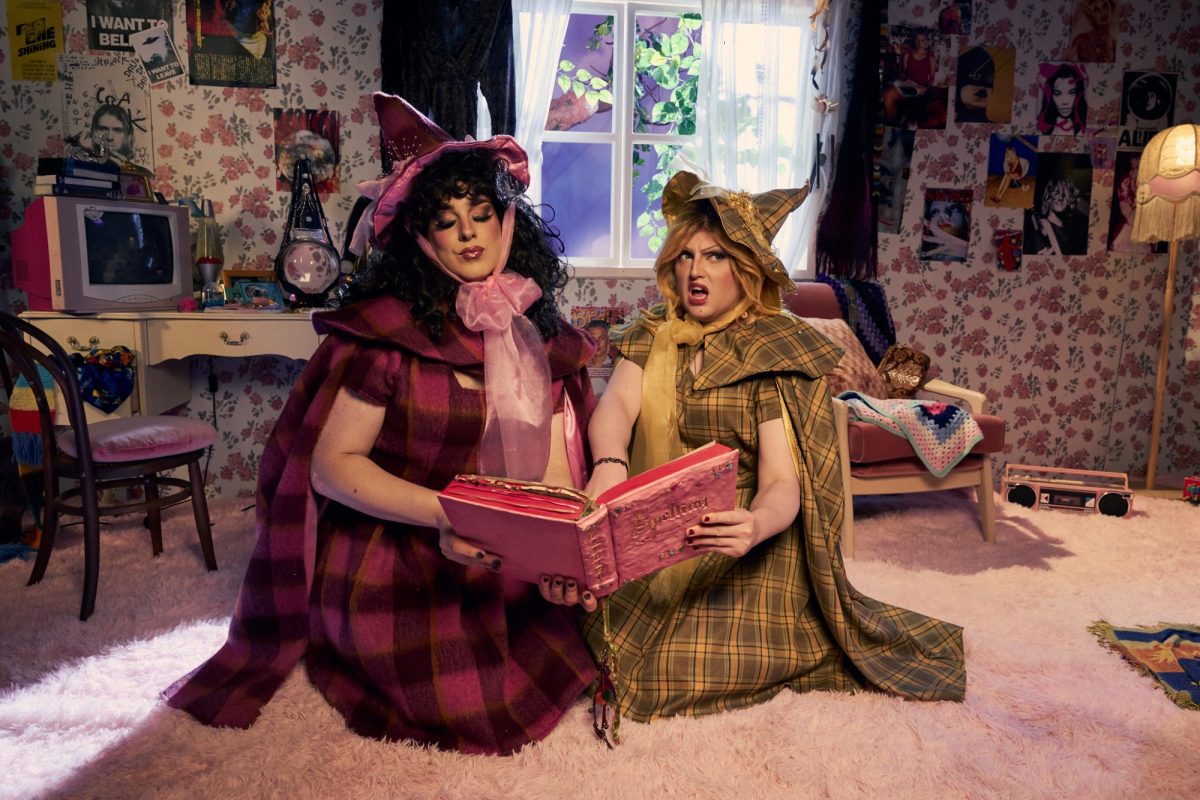
Herself a filmmaker, Lazy Susan knows a thing or two about the tenuous nature of securing arts funding in this country. The Witchy Girls, the brand new supernatural drag comedy web-series she co-created and stars in, faced endless rejections from traditional funding routes before they got the grassroots project off the ground through an unconventional crowdfunding approach.
The struggle to have the project understood and supported by screen funding bodies is directly referenced in the first episode, The Witchy Girls VS The Millennium Bug.
Lazy is also currently developing her first horror feature, Skin Side Up – which won the Frontières ‘Proof of Concept’ Platform at Cannes 2025 – with Melbourne-based production company Iris Arc Pictures. The film also recently obtained an American co-production partner, after struggling to find the additional support it needed in Australia.
Doing the most with the least
Drag Race Down Under has always operated with more limited resources than some overseas editions. Rather than seeing that as a weakness, Lazy says it reflects the ingenuity that has long defined the artform.
‘I think drag is at its best when it’s thrifty and doing the most with the least.’
There’s also something to be said for supporting a show that platforms queer performers from around the globe, especially with recent news emerging from Sydney, where a queer arts venue and nightclub was shut down after the landlords caved to pressure from a conservative group.
The Drag Race universe is not beyond criticism and it certainly doesn’t present a holistic picture of LGBTQIA+ community. The series didn’t cast its first publicly-identifying trans woman until its ninth season, and just last year the Canadian series made history by casting the first drag king in Drag Race history.
But there’s no denying the broader cultural impact of Drag Race and the role it has played in reducing stigma, prompting important conversations about and within queer communities, providing a source of joy and entertainment, and transporting an inherently referential style of performance art from ‘the arsehole of the entertainment industry’ (in the words of Priscilla) and putting it at the top of the pop culture totem pole.
As Drag Race Down Under vs The World prepares to introduce local drag to an even broader international audience, Lazy Susan hopes the conversation shifts away from comparisons and towards recognising Australia and New Zealand’s place in drag history.
What audiences often overlook, she argues, is that drag from down here has developed its own distinctive identity.
‘I mean, Down Under drag is so much informed by our inability to take ourselves seriously,’ she says.
‘One of my most treasured experiences of doing the show has been watching the different flavours of drag that we are presenting in this season,’ she says. ‘Even inside of the the Down Under cohort, we have such a diversity … Nikita Iman is presenting her Samoan drag, and then we have the franchise’s very first Guatemalan drag queen, Flor.’
For Lazy Susan, the new series isn’t simply another spin-off. It’s a chance for Down Under drag to reclaim the spotlight it helped create.