The Australian Classification Board is an essential institution within the Australian Government that determines the age ratings for media released in the country, in compliance with federal regulation and established rulings. While it plays an important role, it’s fair to say there’s a general lack of transparency and understanding around how the organisation works.
The Australian Classification website shares information about newly-rated media, with details of content and impact, as well as general guidelines around what’s OK for children to watch. But it maintains a formality that makes the work of the Australian Classification Board difficult to grasp.
To get to the heart of how exactly how the board operates – from how it’s reacting to contemporary cultural changes, to what the classification process currently looks like – ScreenHub recently sat down with Steven Thomson, Director of the Australian Classification Board.
Australian Classification Board – quick links
How the Australian Classification system works
As outlined by Thomson, the Australian classification system currently categorises and classifies many common forms of entertainment media available to Australian audiences, including films, TV (physically released and on streaming services), video games, mobile games and publications.
It does not currently classify radio and TV broadcast content, websites, social media, apps or music.
When a piece of media is classified, it’s formally ‘approved’ for release within Australia, with a resulting rating designed to inform audiences about the age appropriateness and key themes of the content.
Under the classification scheme, there are a number of elements that may be flagged alongside an age-gated rating, including simulated gambling depictions, drug use, coarse language, sex scenes and sexual references.
In the case of video games, there are also additional classifications for elements like in-game purchases (such as microtransactions and chance-based loot boxes), simulated gambling and online interactivity.
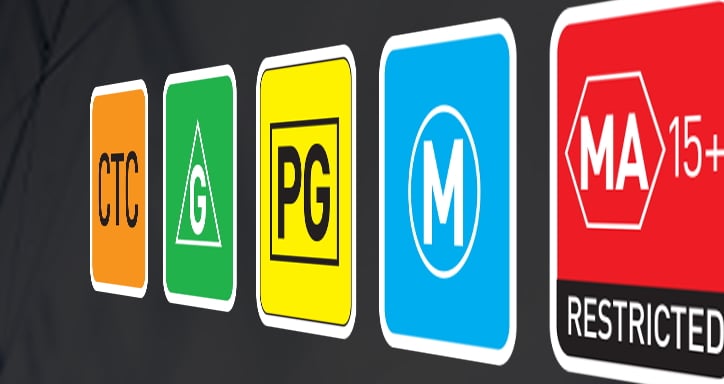
For a game to be classified under Australian Classification Board guidelines, it must pass through one of three established routes.
The first involves the developer or publisher of a game applying to the ACB directly, with this process typically involving a 30-minute highlight reel of the most impactful content being sent in online as part of an application form.
‘We get a board panel together, they’ll assess the content, make a decision, and then issue a certificate,’ Thomson says.
But this is the more traditional route, and is ‘old school’ compared to other options, Thomson explains.
The second option relates to the accredited classifier scheme, which allows interested parties to gain accreditation as a self-classifier through various online training modules. Thomson pointed to this particular avenue as being of particular interest for smaller developers and publishers, as a way to streamline the classification process.
The third option is the International Age Rating Coalition questionnaire, otherwise known as IARC. This is a series of questions lined up with the board standards and global regulations, which ‘spits out’ a classification rating based on your input, Thomson says.
Who is the Australian Classification Board?
Currently, the Australian Classification Board monitors and utilises all three main methods of classification to govern the availability of material in Australia. The board also has oversight on final determinations and changes to classification decisions.
While common discourse portrays the board as an all-seeing eye, Thomson says the organisation is actually comprised of everyday people from multiple disciplines, who bring a variety of perspectives on, and experience with, contemporary media.
‘Board members are effectively recruited for their representation of the community,’ Thomson says. ‘We’ve got a wide range of backgrounds. We have an art auction value house worker, someone who used to work in magazines and media, and then in state parliament.’
‘The deputy director used to be Chief Executive of IMAX and worked at the Dendy, and our longest serving board member has got a background in law enforcement and security. So, it’s kind of all over the place. There’s no requirement for a specific game expertise or cinema expertise – it’s about making sure that we’ve got a decent range of experiences on the board, and then everyone gets trained up on how to classify.’
Thomson himself has a background in archeology, restoration, communications, government funding, urban planning and corporate strategy. It all helps to inform his work with the board, and his unique perspective.
The need to keep changing with the times
As Thomson tells ScreenHub, the work of the board remains essential, as the Australian Classification Board has an important role to play in protecting children from content that may harm them, as well as informing parents about the nature of media, and preventing the dissemination of generally harmful material to the public.
‘When I started, I assumed that [classification] was … almost like a bit of a quaint artefact,’ Thomson says.
‘The more I’ve gotten into it, the more I’ve understood how it’s actually at the intersection of some of the biggest issues that we’re dealing with.’
He adds, ‘For example, the emergence of multinational streaming companies. All of their content – your Netflix, your Apple, your Amazon – is all classified to the board’s standards. [It’s important to understand] the role of the board in making sure that consumers can make informed choices across really contemporary, prominent media forms that are in our lives every day.’
It’s also an arena that constantly changes – particularly in the world of video games, as newer mechanics like loot boxes, microtransactions and in-game communication become more common – and requires oversight to ensure protection is maintained through the changing eras.
As Thomson explains, it’s a difficult process to keep the guidelines up to date, but that’s part of the responsibilities and essential nature of the job.
‘There [are] two tiers to how the classification standards get set,’ Thomson says.
‘There are what we call guidelines, which are a legally enforceable document that are negotiated between the Commonwealth Government and the states and territories, so they’re kind of set in stone and are very difficult and time-consuming to review, because you need to get everyone agreed on what the changes should be.
‘Flowing on from those guidelines are something that we call board standards, and that’s the sort of detail that sits underneath the guidelines that we apply on an everyday basis.
‘Typically for board standards, the department runs community standards research every three to five years, so that will flag … [areas] of community concern that’ve been increasingly prominent.’
How changes to the Australian classification system are implemented
Currently, the Australian Classification Board is working alongside Federal Government on a consultation process to update the guidelines, to ensure that classification is better able to reflect the values, ideas and moral code of today.
This process of change is ongoing – although this state of flux is nothing new to the board. As modern technologies and media change, it’s consistently made updates to guidelines and standards on all levels.
In 2024, significant changes were implemented for video game classification specifically, inspired by the mainstreaming of gambling-like loot box elements in games. It was decided from this point that games including loot boxes would be automatically flagged at a minimum mandatory age rating of M15+, meaning they are not recommended to children under the age of 15 years old.
Additionally, a minimum mandatory R18+ rating was passed for games including simulated gambling – elements like slot machines, games of chance and casino depictions.
With these changes also came greater scrutiny on the content available in games designed for children, with microtransactions becoming more of a concern. As outlined by Thomson, microtransactions are not currently tagged to a particular classification level, but there is ongoing discussion about changes that may better protect children in future.
‘The main thing is to keep the consumers informed about what’s likely to impact them most in the games,’ Thomson says.
The challenges involved in rating video games
The games classification space is unique and requires care in this regard, as while it shares a lot with the screen classification space – depiction of drugs, violence, sex, language, nudity and other elements – changing mechanics mean they can be more complex to classify.

‘What’s changing most in the games space, from my perspective, is the monetisation mechanics, and the online interactions and chat functions,’ Thomson says.
‘Unlike in films, having to keep on top of that kind of functionality and the mechanisms that are in games is a really important part of keeping parents informed on what their kids are playing.’
Interactivity is also a major factor to consider in classification, and it’s part of the board’s role to determine the potential impacts of content.
‘Interactivity is definitely what we’d call a contributing factor to making a classification decision,’ Thomson says.
One example given is the interactivity of a virtual torture scene. In the world of films, the viewer watches on in horror. In the world of games, players are active participants, taking part in simulated scenes that can be semi-realistic.
‘The board acknowledges that interactivity, depending how it’s handled, is a contributing factor to how impactful those things are – but it’s not black and white.’
There is a need for nuance when classifying tough subject matter such as this, and the classification outcome often depends on deep debate and multiple perspectives from the board.
The push for a more transparent approach
As Thomson tells ScreenHub, the Australian Classification Board aims to be more transparent with their work in future, to bridge the gap with the local entertainment industries in Australia, as well as with public audiences, so that the board’s work and intentions are better understood.
Classification is complex, with many layers involved in the existing system. Education can help to illuminate how decisions are made – and for developers and creatives, how best to comply with standards.
The board is currently in discussion with Screen Australia about possible avenues for education-focused podcasts or information sessions for the video games industry, with a view to highlighting why classification remains such an important and evolving part of entertainment media releases.
As Thomson explains, such efforts are ‘so they can understand a bit more about how the classification system works, what the common pitfalls might be, and then have that in mind as they’re developing their titles’.
‘I think traditionally it’s been a bit tricky for the board,’ he adds. ‘It’s something we definitely want to explore more … us being able to explain how things work and how decisions have been arrived at.’
As well as engaging in more public-facing activity, the Australian Classification Board is also expected to reveal more about its guideline consultation process in future.
With the deadline for proposed reform closing in May, it may be some time before plans for change are publicly announced or implemented – but given the importance and nuance required for updates, taking time is a necessary part of the process.
According to Thomson, there is still ‘a way to go’ before the Australian Classification Board reaches a ‘real, transparent relationship’ with industry, but the groundwork is currently being laid for a brighter and more cohesive future – one where the importance of classification work is better understood, and where the board is better able to deliver its knowledge and guidance to a wider audience.