Every now and then I’ll agree to review a game and promptly realise that I’ve stitched myself up. Some games are enjoyable in ways that are difficult to describe, not just because they feature a lot of abstraction necessarily, but because some of the magic is lost once you start trying to analyse the trick. Titanium Court, a game about (among other things) how we define magic, is one such game.
What else is it about? Match-3 puzzle gameplay. Meta-commentary. Performance. Baseball. War. Developer AP Thomson has crafted a game that you can’t really reduce down into an easy description without missing the point of the whole project.
Titanium Court review – quick links
The battle for the Titanium Court
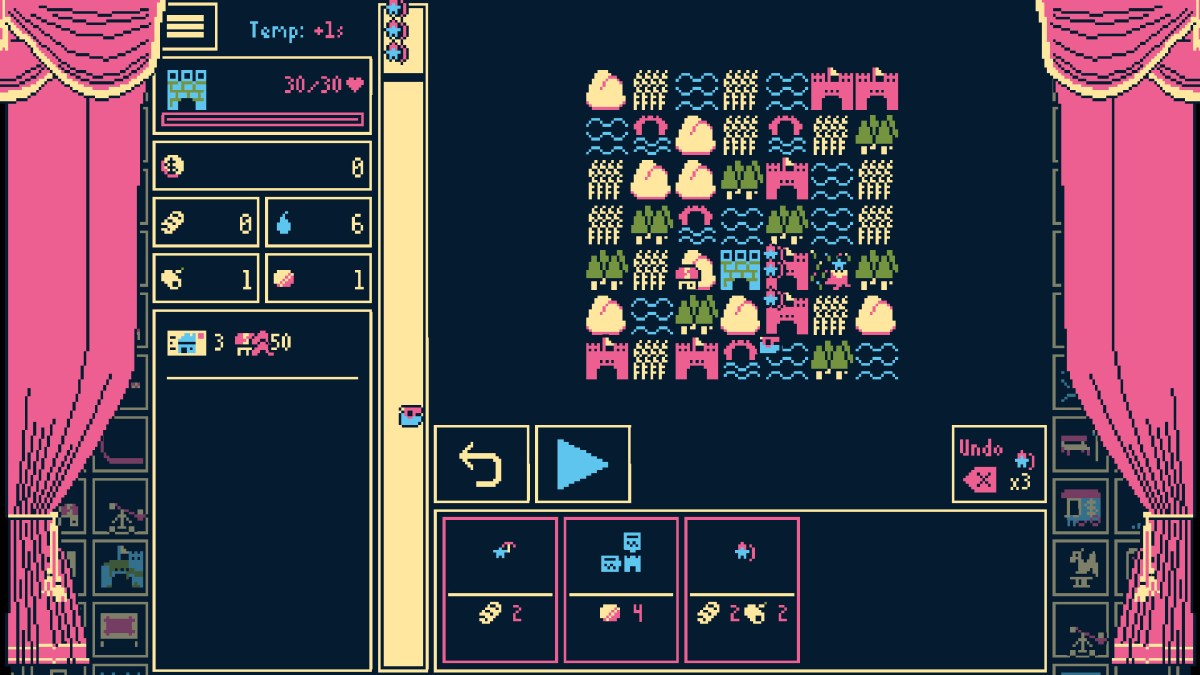
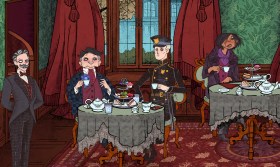
Titanium Court follows a character who stumbles into a magical realm full of faeries and is immediately proclaimed their queen. It’s then up to them to guide the eponymous Titanium Court, an eternally shifting-and-changing kingdom, through a series of battles that play out through match-3 puzzles.
During high tide – the initial phase of each battle – you match tiles on the battlefield to gather resources and destroy enemy strongholds. Once enough moves have been made, you move to low tide, where you can make use of any of the map’s amenities to improve your standing and spend your resources on units, who will then attack enemies, defend your court, or gather resources during the proceeding battle.
At the end of each round of war is a boss battle, and how you defeat them depends on a few factors, including which court you took to battle (because there are multiple unlockable courts, all of which play differently), which victory conditions you’ve uncovered, and whether you built up resources and abilities that could adequately counter your enemy.
Whether you achieve victory or lose, you may or may not progress different plotlines and game objectives. You could end up in a conversation about some new lore element of the world, or you might unlock a new room in the court to explore, or you may even find a new kind of court to play as.
ScreenHub: ScreenHub’s best video games of 2026 so far
If you want to examine the game by its base mechanics, the match-3 gameplay is straightforward and enjoyable, albeit not the deepest system. Figuring out a good strategy to progress through each battle can be satisfying, and while I sometimes found myself losing track of how different courts worked, or struggling to find a way out of certain situations, the core experience does allow for some good strategising and finding fun synergies.
It’s no Puzzle Quest, but like all match-3 games it’s pretty satisfying to line blocks up and watch them disappear.
But that’s not really why you’re playing Titanium Court. You’re playing because you always want to know what’s going to happen next – and you gather, early on, that really could be anything.
Designing a kingdom like designing a game
There’s a reason the game’s Steam page is a bit vague about what Titanium Court actually is. It’s not so much ‘a game that seems to be about X but is actually about Y’ than a game that keeps revealing itself to be stranger, deeper and more metatextual than it seems.
Playing is essential to understanding. In both its writing and its mechanics, Titanium Court is obsessed with metaphor and metatext, and it’s all laid out very cleverly.
Take, for instance, your character’s morning shower. At the end of every war, your character can play a match-3 game with soap, water, and speech bubbles that represent your thoughts, and as you match thoughts you’ll start to unpack the game’s various mechanics.
This dialogue is a mix of gameplay tips and meditations on game design – why does this tile work this way? Does this function fit within the game’s fiction? Doesn’t this rule kind of contradict this other rule? Why have these decisions been made the way they have? Are certain strategies overpowered? Is balance actually important?
The game is not pointing out its own flaws so much as outlining its own design process. Titanium Court questions itself, and the player, throughout the experience.
It wants you to think about where you, the player, fit into the experience, but it doesn’t have any of the trite notions of complicity that are so common in metatextual games, even though the player is an explicitly referenced participant.
Instead, you’re dealing with a game that continues to examine the developer’s decisions and interests. It also, importantly, never passes up an opportunity to do something funny.
A very funny meta-marvel
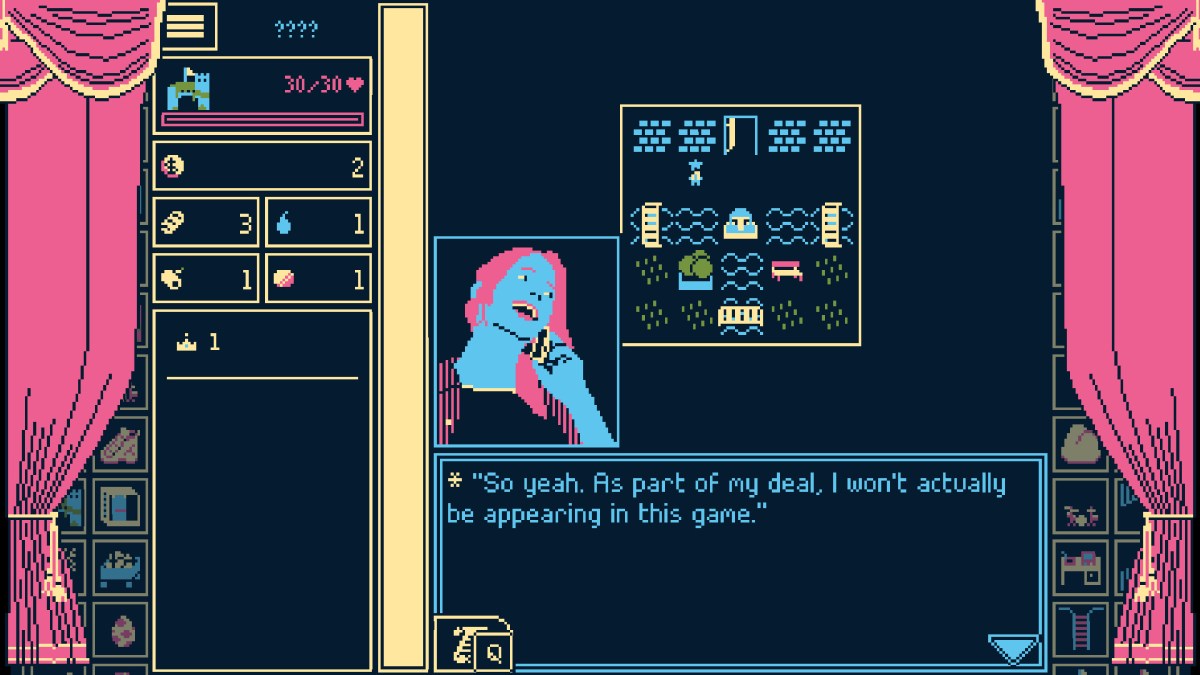
Yes, underneath all of this is a thick layer of humour. It’s a ‘wow, that’s clever’ brand of humour. I did not laugh out loud, but I took a lot of screenshots.
This ties not just into the story, but the mechanics too. An internal conflict between two members of the court about whether the game should be easier or harder plays out until you can ultimately resolve it by committing one way or the other.
There’s a hint of tragedy in how the game explores the limitations of its own NPCs, as funny as some of these scenes are. Even the ending I reached brought me to a point of complicated internal rhetoric, essentially making me weigh the cost and consequences that come from deciding that the game is over.
The whole experience might be a stage play, à la Super Mario Bros. 3, but it also might not be. I’m not sure if 30 more hours with the game is actually going to yield answers or just more questions (but I’d be fine either way).
Titanium Court is strange, funny and very clever, a game that examines the artifice of its own ‘gameiness’ in ways both fresh and exciting. Much of your enjoyment comes from prodding at the game’s edges and finding out what happens, and from stopping to think through the meaning behind everything being told to you.
Even as someone who has played and reviewed, at this point, thousands of games, it’s still interesting to watch a game actively interrogating its own design the way Titanium Court does. It’s a meta-marvel, and one I’ll never be able to adequately explain no matter how many words I use here. Which makes it all the more incredible that playing the game provides an immediate understanding – it just makes sense once you’re in control of the kingdom.
It’s a tremendous piece of narrative game design, and I have no pithy final summation I can put here that will adequately explain it. Just go ahead and play it, please.
Discover more screen, games & arts news and reviews on ScreenHub and ArtsHub. Sign up for our free ArtsHub and ScreenHub newsletters.
Developer
AP Thomson
Publisher:
Fellow Traveller
Release Date:
24 April 2026