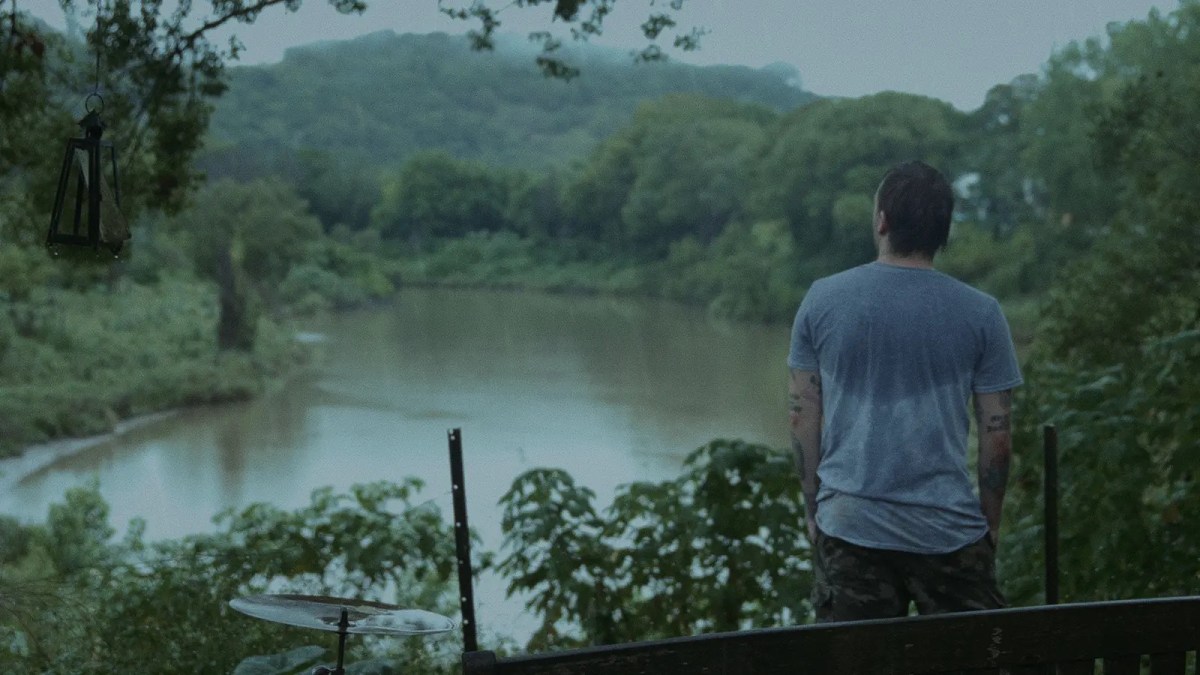
When the Australian documentary Floodland begins with the sounds of Ravel’s Introduction and Allegro for Harp, Flute, Clarinet and String Quartet, the sensuous, dreamlike strains could soundtrack a grand drama set decades or centuries back.
The winner of the Sydney Film Festival’s 2025 Sustainable Future Award also kicks off with the sights of a peaceful creek surrounded by greenery, plus a man and his dog, sun shining over foliage, a cascading waterfall and other scenic vistas. The fact that there’s a magic to Lismore for its dedicated residents shimmers in plain view.
In a film about the New South Wales town known as Australia’s flood capital, these blissful moments come laced with foreboding; darker days, torrential rain and swelling waters will soon dampen the splendour.
That there’s a timeless look and feel to the opening of this excellent and essential feature couldn’t feel more fitting, however. As first-time feature filmmaker Jordan Giusti recognises, humanity battling nature, persevering against the elements and amassing resilience to face life’s volatility is as everlasting and eternal a story as there is.
Floodland review – quick links
Chronicling an immense toll
Giusti was inspired to make Floodland as a frequent visitor to the Northern Rivers region courtesy of his Lismore-born and bred partner at the time. A key learning that helped to spark the film: hearing locals joke about flooding can’t and doesn’t prepare you for witnessing the reality, even if Giusti initially watched on via news coverage when disaster struck in 2022.
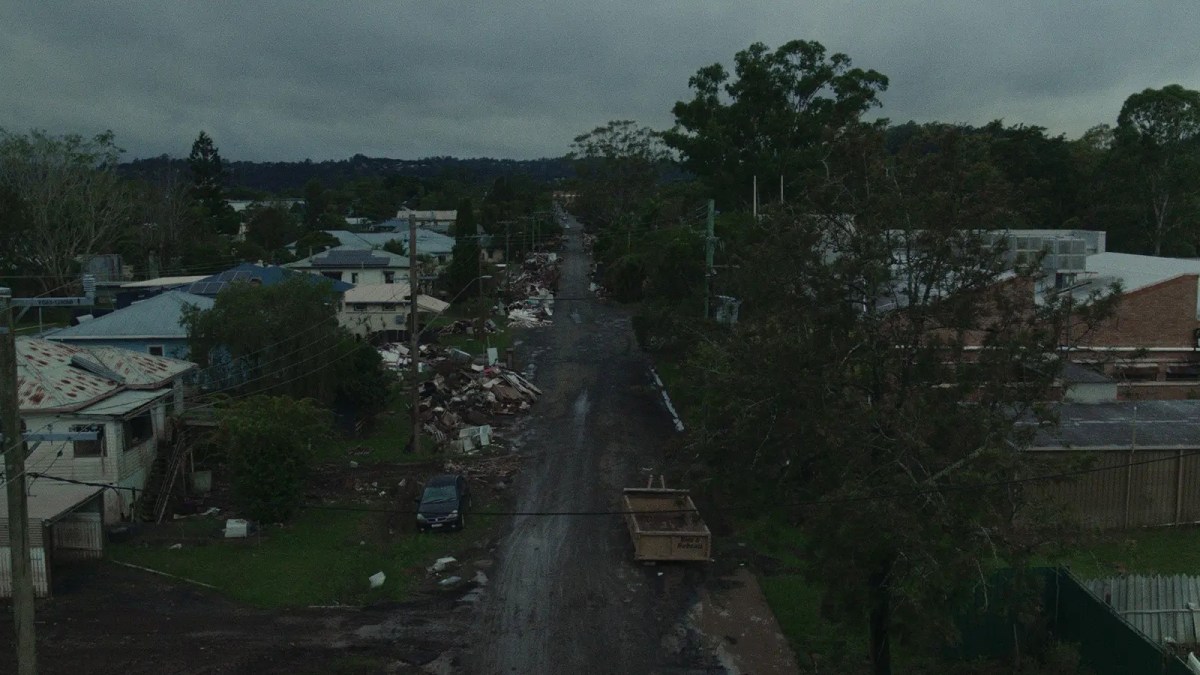
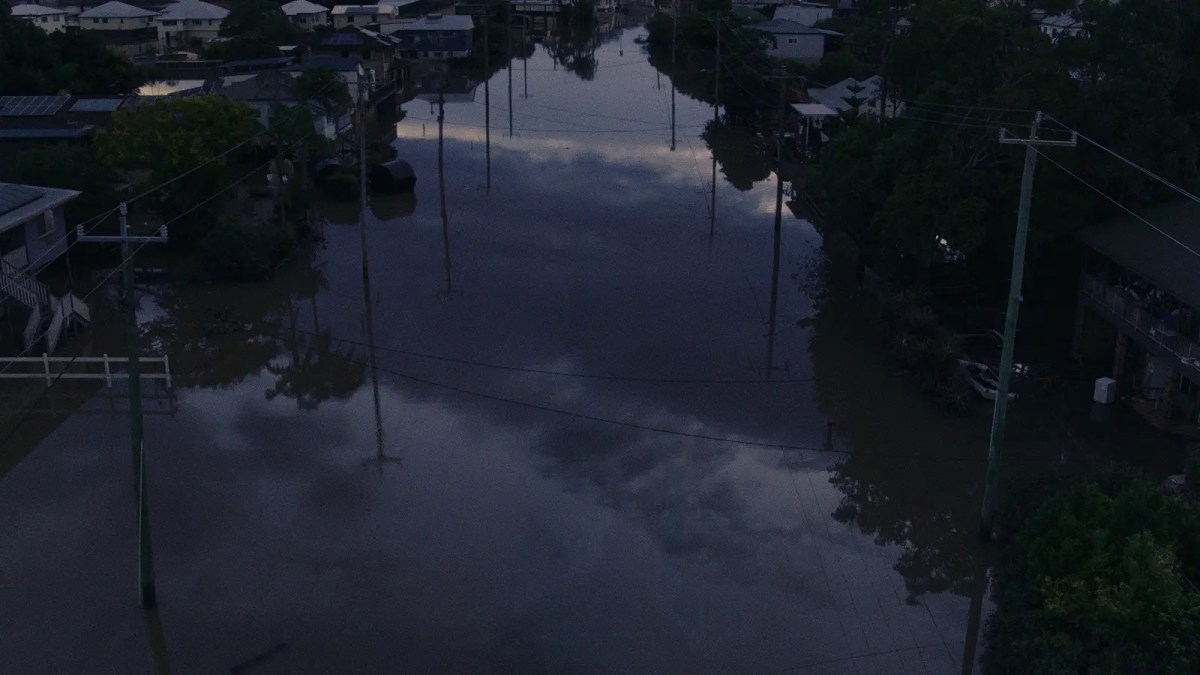
The unprecedented and catastrophic events of that year – the Wilsons River peaked at 14.4 metres at the end of February; and the town was destroyed again the next month following drenching rain, flash-flooding and 11.4 metre waters – may be the reason that Floodland exists, but its true focus is the community that’s constantly destabilised by wet weather and perennially hoping for more for the place that they call home.
‘Have you seen behind me?’ asks Eli Roth, the lifelong Lismore inhabitant whose picturesque backyard panorama – a view that would cost a million dollars in Sydney, he also notes – gives the documentary its first frames. ‘I want future generations to enjoy this,’ he stresses, passion echoing in his voice.
As Giusti charts Eli’s journey through two devastating floods, a move to higher ground, more tragedy and an agonising decision, the writer/director also chronicles the immense toll when something as simple as living in your hometown is so fraught with distress and uncertainty.
Asking vital questions
Shot over three years and structured season by season, Floodland is an account of anxiety and trauma, and of a changing climate and world that gives rise to hard decisions and questions. It’s as much about the repercussions of historical choices and bureaucratic oversights – including ignoring Indigenous practices and knowledge – and the documentary similarly has the nation’s housing crisis and wealth gap in its gaze.
Telling not only Eli’s tale and that of his partner Jess and her young son Jensen, but stepping through his friend Harper Dalton’s experiences and turn to activism, and spending time with Bundjalung-Yiman social worker Dr Carlie Atkinson as she concentrates on helping the town heal as well, this is a film filled with pressing queries.
The obvious lines of enquiry are covered, as Giusti explores why Lismore is so prone to flooding, how locals cope, why they stay, the long-term impact, the recovery process, and what it takes to rebuild again and again.
Floodland probes the role of denial, how the real-estate market relies upon and profits from short memories, and the chasm between the affluent residents well above flood levels and those with no other choice but to live in the river’s reach.
Also earning the haunting, moving documentary’s considered and conscientious attention, are questions around the targets for blame and fear, and how to secure a future free from living under threat.
The challenge of capturing the personal and universal
It isn’t easy to capture the precariousness, the stress and the beauty of dwelling in Lismore with such care and in such depth – or to convey the love and anger that course side by side within Eli and company.
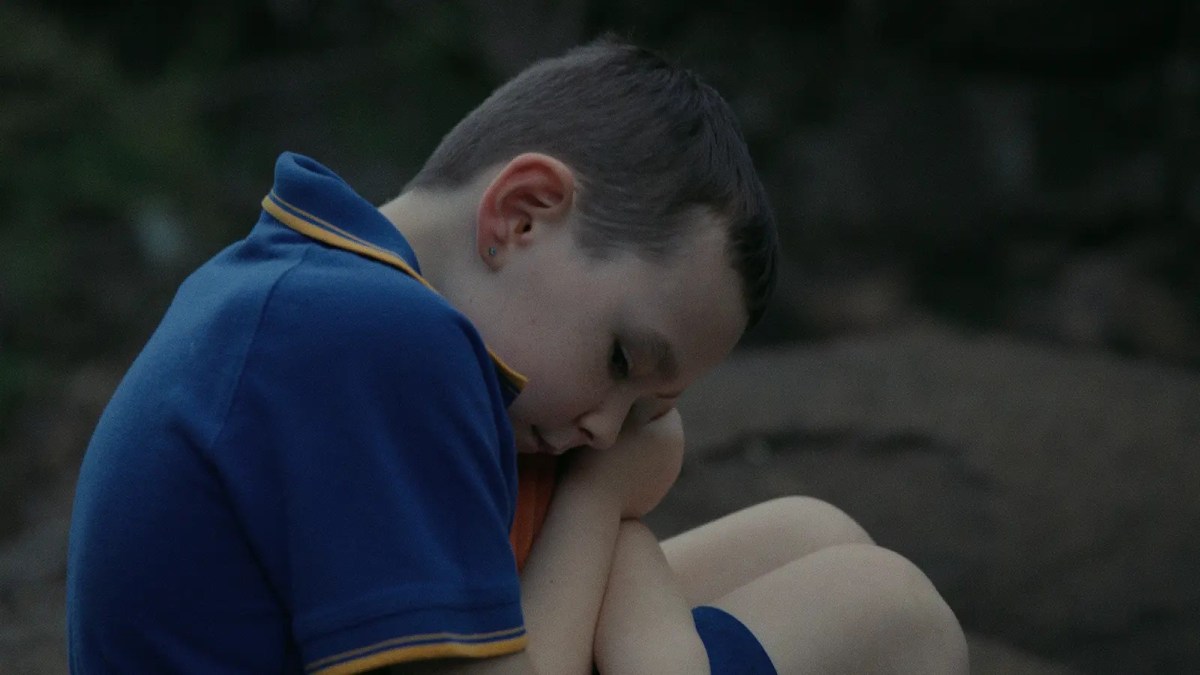
With empathy and intimacy, Floodland achieves the delicate task, and also proves a stellar example of personal-is-universal storytelling. While watching, it’s impossible not to understand that affection, fury, worry and swirling emotional conflict on a visceral level; to despair that the climate crisis is exacerbating severe weather events in their size, footprint and frequency; and to desperately want to feel optimistic that a solution is possible, no matter how unlikely the latter may appear.
Except for when media clips are judiciously used to provide context, that the film is far removed from news footage in its appearance and atmosphere is critical. Thanks not just to Giusti, but also to cinematographer Bonita Carzino (who also shot Giusti’s shorts Reptile and Grevillea) and editor Daniel Wieckmann (The Giants), Floodland’s rhythm and flow – its poetic lingering on rushing water included – are as enveloping and sincere as a documentary this vital demands.
As is equally the case with satirical thriller Birthright – another homegrown feature that premiered at festivals in 2025 and is slated to receive a general theatrical release in 2026 – there’s a touching element of Aussie classic The Castle here, too.
‘This is my home,’ says Eli. ‘This is where I was born and raised. I want to save it.’ That a wealth of factors, history among them, are as good as telling him he’s dreamin’ is utterly heartbreaking.
Floodland is screening at select cinemas across Australia. Communities can also stage their own local screenings.
Discover more screen, games & arts news and reviews on ScreenHub and ArtsHub. Sign up for our free ArtsHub and ScreenHub newsletters.
Actors:
Director:
Jordan Giusti
Format: Movie
Country: Australia
Release: 26 February 2026
