Getting lost in a subway station is no one’s idea of fun, or it wasn’t until 2023.
Given pop culture’s love of Japan, perhaps it shouldn’t be surprising that a walking-simulator video game became a viral indie hit by stranding players in an underground metro stop that seems impossible to leave. Not only is The Exit 8 now a gaming favourite, however, but new movie Exit 8 is 2026’s best video game adaptation.
Exit 8: understanding life’s loops
At the heart of Exit 8 is an eternally relevant question: what if being unable to escape a repetitive cycle is a wake-up call? Time-loop movies such as Groundhog Day and Palm Springs have been asking this for decades. Audiences already know the pattern.
But as Exit 8 takes on its source material’s mission – trying to flee its liminal space – it intelligently and immersively layers in existential anxiety.
This is a film that understands the drudgery of daily commutes, the stress of feeling trapped in an endless maze and the despair of realising how hard it is to break that pattern. It knows, too, how it feels when life’s biggest developments arrive while you’re caught between places – not just emotionally and psychologically but physically.
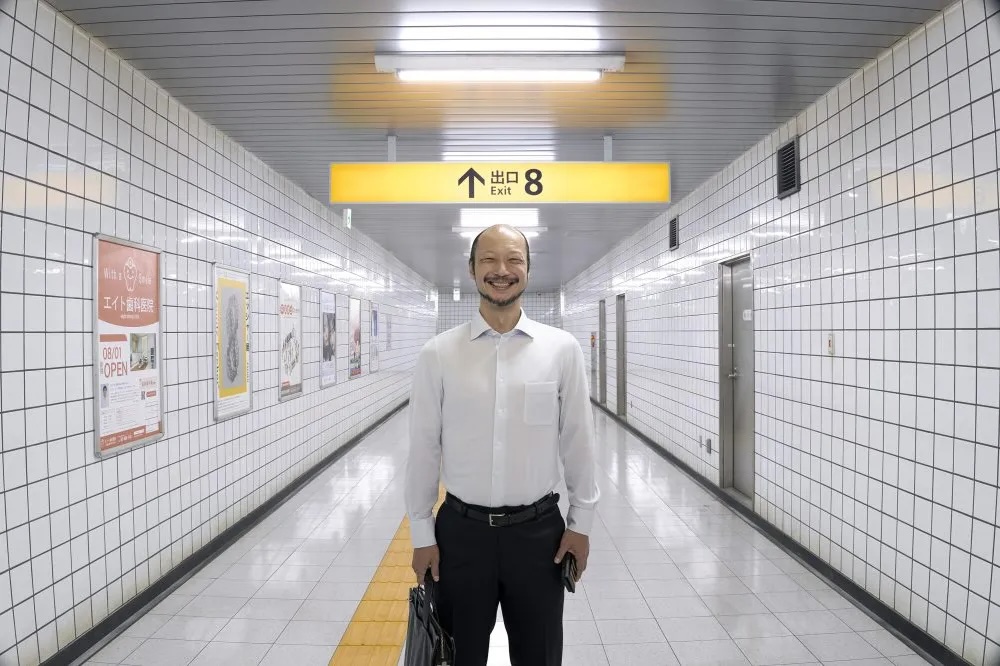
And, it also appreciates that bit-players to us, people that we pass each day yet still remain strangers to – the non-player characters of our lives – all have their own stories and struggles, each ensnared in their own loops.
Exit 8 is deeply relatable, then. We’ve all been The Lost Man (Kazunari Ninomiya, Last Samurai Standing), suddenly gleaning that the everyday routine we despise will just keep echoing unless we actively break its hold. We’ve all desperately wanted to avoid becoming The Walking Man (Yamato Kôchi, Brothers in Arms) as well, and dodge the inevitability of surrendering to the cycle because nothing else appears possible.
Exit 8: transit is hell
Anyone that has used Tokyo’s train network will recognise Exit 8’s setting. With its white tiles, yellow trimmings, vending machines, luggage lockers, and directional signs in both Japanese and English, it could be any station in the city. If you’ve ever battled to find your way back up to street level – another relatable scenario, especially for tourists – then the feeling of being caught in a subterranean labyrinth that Exit 8 so meticulously and potently evokes will also be familiar.
In these winding hallways, taking a wrong turn is easy if you aren’t paying close attention. Exit 8’s protagonist might be en route to his temp job, but even he is soon scrambling for an elusive egress.
As a game, Kotake Create’s The Exit 8 is also a horror puzzle. Transit is hell, after all. Submitting to the mundane, too. It’s spot-the-difference as a looping nightmare, the station’s passages winding back on themselves like a Möbius strip if you stroll past anything that’s out of place without realising.
The task: notice the anomalies, turn back when you do and work your way up from Exit 0 to the titular departure point. If a change escapes your attention, you return to the beginning. If you retreat when nothing is different, spying inconsistencies that aren’t there in a haze of paranoia, the same thing happens.
(Curiosity won’t kill the cat here; rather, a lack of it, and of keen observation, will strand you forever in sterile corridors.)
Exit 8: loving the game, not just adapting it
As a film directed and co-written by Genki Kawamura, a producer of exceptional animated hits Your Name, Weathering with You, Suzume and Belle, Exit 8 mirrors the game’s experience. Beyond time-loop movies, it also nods to fellow big-screen mind-benders. You could say that The Lost Man is looking for glitches in the matrix or traversing the creepiest walkways since The Shining, smooth tracking shots, gushing liquid, eerie companions and all – each fits.
Horror films can and have plunged their characters into torment just because, as The Exit 8 game does. But in Exit 8, The Lost Man’s ordeal begins after he ignores a fellow train passenger screaming at a mother to quiet her crying baby, drowning out the altercation with the playfully repetitive strains of Maurice Ravel’s Boléro. Then, by phone, The Lost Man is advised by his own ex-girlfriend that she’s pregnant.
Soon he’s stuck in the subway station. Disregarding wrongdoing in front of him only immerses him deeper in the film’s Dante-meets-Escher-esque purgatory, as does running from his impending fatherhood.
Watch the Exit 8 trailer.
Whether you’re familiar with The Exit 8 or not, it isn’t difficult to appreciate from Exit 8 not just how the game works but why it is so compulsive and thrilling – and not merely because the film delivers a flawless visual and tonal recreation, right down to starting with first-person point-of-view lensing (by cinematographer Keisuke Imamura, also a Last Samurai Standing alum).
With his attentiveness and precision, plus the thoughtful ways that he expands upon his source material, it couldn’t be more apparent that Kawamura was a player of The Exit 8 first.
Hollywood keeps pressing play on video game adaptations
Exit 8 adapts The Exit 8’s mechanics perfectly, and its aesthetics and atmosphere as well, all while turning the game into an insightful reflection of real-life. Evoking the same feelings as playing the game is another of its feats, and a rarity for movies and TV show based on video games in an increasingly crowded genre.
It’s also an anomaly in an industry that’s more than happy to remain caught in loops itself, constantly bringing existing IP to the screen and, when games are involved, usually proving content to focus on the narrative and the world over the experience.
Gaming adaptations are everywhere at the moment, on screens big and small. 2026’s biggest box-office success so far is The Super Mario Galaxy Movie. 2025’s highest-grossing flick was A Minecraft Movie. The Super Mario Bros Movie was 2023’s runner-up. The Last of Us and Fallout have each become excellent TV series.
The appeal for Hollywood is clear, capitalising upon existing fandom and name recognition. Indeed, whether from games, books, comics or toys, or as sequels, prequels, spinoffs or other franchise entries, adaptations and follow-ups are the movies managing to entice patrons to catch a flick on the big screen, as box-office takings demonstrate, at a time when cinemas are struggling with achieving that very job.
Of course, the dominance of existing IP and the fact that’s largely all that audiences are buying tickets for is all of Hollywood’s own making. What else was going to happen after ever-expanding superhero universes and never letting any franchise ever end became not just the standard but the preference? And when almost everything else beyond indies and awards fare began being pushed to streaming?
The experience matters
Hollywood’s love of spinning features out of games dates back to the poorly received 1993 live-action Super Mario Bros. In that Nintendo adaptation, the animated Mario smashes, and other recent hits like the Sonic the Hedgehog franchise and Mortal Kombat, most don’t meaningfully endeavour to put their viewers in a player’s shoes.
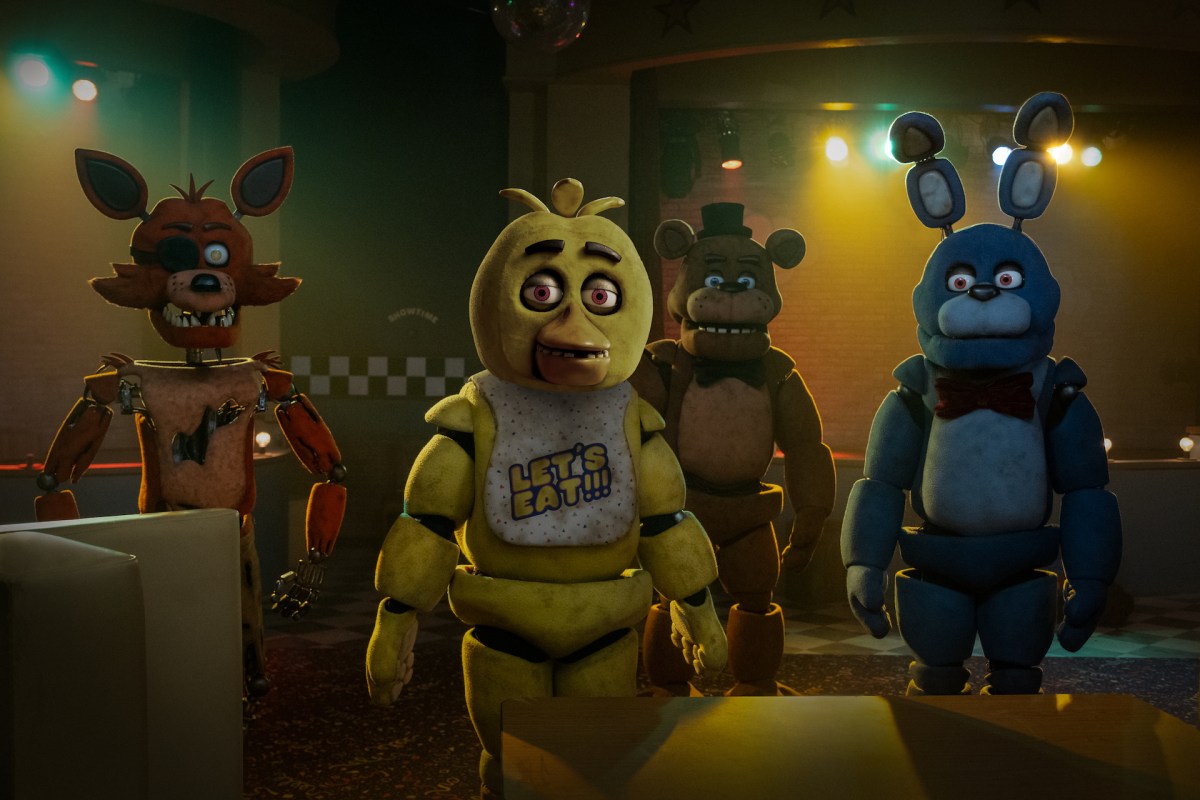
Admittedly, that’s easier to attempt in horror, where a main aim is inducing scares and getting audiences jumping. Still, watching the Five Nights at Freddy’s films, the Silent Hill flicks or the Resident Evil franchise doesn’t typically leave anyone feeling the same as when they’re playing the games. (Perhaps 2026’s new Resident Evil movie, the latest from filmmaker Zach Cregger fresh from the stellar Weapons winning an Oscar, will be an outlier there.)
Also with time loops at its centre, 2025’s film adaptation of Until Dawn tried, but the differences between the movie and the game were glaring.
In a year that also has Mortal Kombat II and a fresh Street Fighter on the way to cinemas, so far only 2026’s other indie hit game-turned-movie, Iron Lung, is on Exit 8’s wavelength. Not just horror games but shorter games might be key; films made outside of Hollywood’s machinery, too. For Iron Lung, effectively conjuring up an immersive sensation has helped an independent movie made for US$3 million take in US$51 million worldwide and sit in the top 20 for the year to-date in Australia.
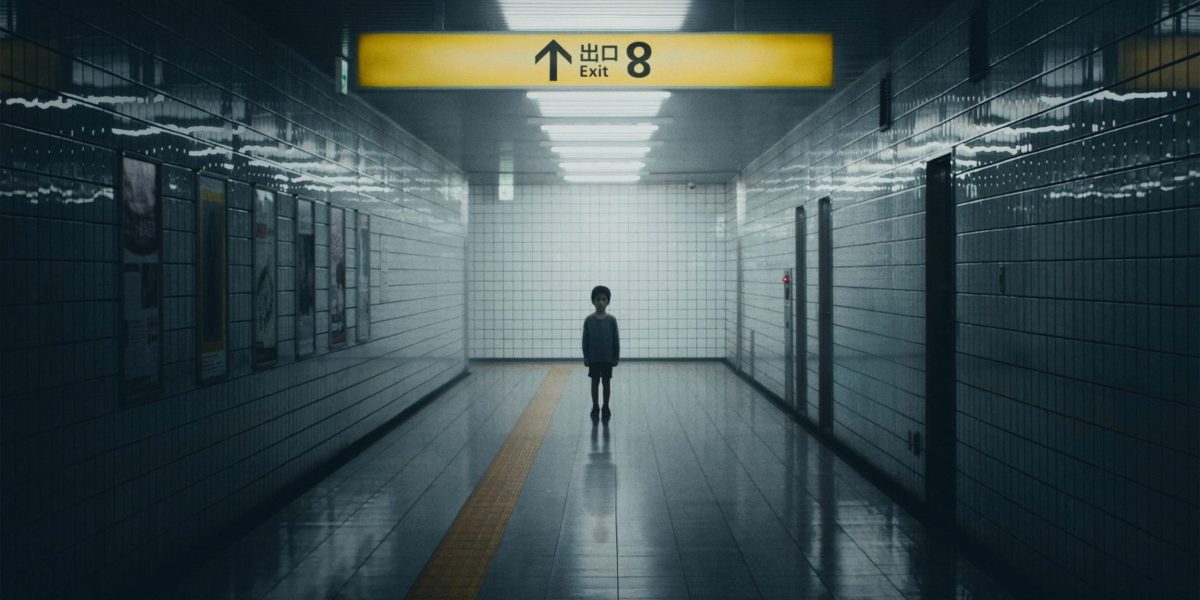
The other big stroke of genius with Exit 8, though, is understanding how eagerly audiences want their viewing choices to acknowledge the perpetual unease, angst, uncertainty and tension that is the 21st-century norm. Severance and Beef also capture it. The current wave of anxiety cinema, from Eddington, Weapons and One Battle After Another to If I Had Legs I’d Kick You, Marty Supreme and The Drama, marinates in it. Directly aping the game, Exit 8 is one of the greats here, too.