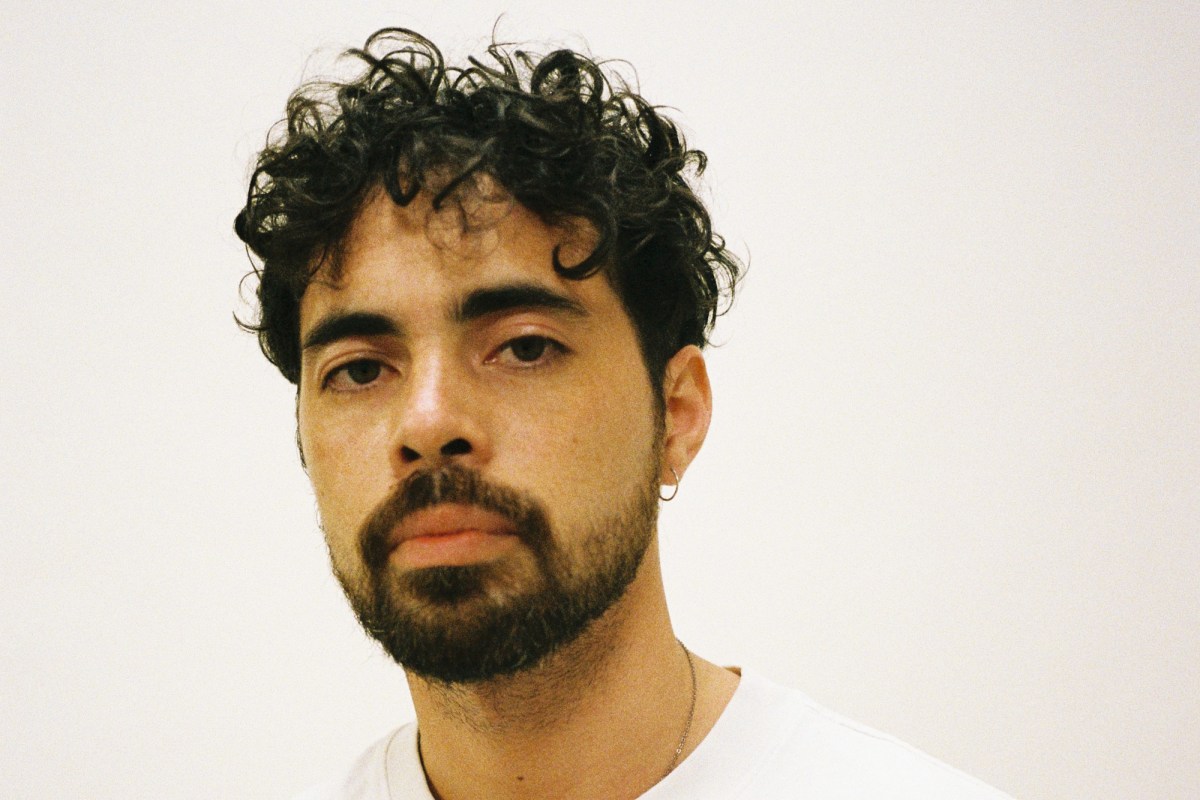
As First Light flows towards its end, the protagonist of photographer-turned-filmmaker James J Robinson’s feature debut ponders mortality.
Played by veteran actor and 2023 Expats star Ruby Ruiz in a career-best performance, Sister Yolanda is a portrait of quiet grace throughout Robinson’s Philippines-set picture. Her composure rarely falters, in what is a visually and emotionally exquisite movie about the chasm between what faith claims to represent and the daily reality of institutionalised religion.
The elderly nun’s musings about the end that awaits us all are given with perennial poise, and lend the feature much of its deeply affecting potency. ‘The way that I see death is like the rain falling gently back into the great ocean,’ she shares.
With such a magnificent metaphor, it’s no surprise to hear Robinson counts it as his ‘favourite line of the film by far,’ as he tells ScreenHub. ‘It’s the one that I always tear up seeing.’
James J Robinson interview – quick links
When a fashion photographer and elderly nuns chart similar journeys
The backstory behind that piece of dialogue and its meaning says plenty about the entrancing picture, which won the Filipino-Australian talent the Best Australian Director Award at the 2025 Melbourne International Film Festival.
ScreenHub: First Light is a luminous reckoning with darkness
Into his most cherished line – and the entire movie around it – Robinson channels his own wrestle with Catholicism, the splendour of the natural world, an eagerness to sit with moments and people, plus the innate understanding that our perception is always shaped by our cumulative experience.
‘When I started rewriting my relationship with Catholicism, there was a quest to find a new form of spiritualism that worked for me, that replaced faith or replaced a Catholic dogma, and something that just felt more grounded and natural,’ Robinson tells ScreenHub.
First Light is part of that process. ‘The very first blueprint of this story was almost diaristic,’ he says. ‘I had written out my own journey with Catholicism.
‘I was raised in this way that was beautiful and taught me that the world works in this certain way. And then at a certain point, I started questioning things, when I realised that my identity didn’t fit into this supposed perfect world.
‘Then there was anger, then there was a kind of submission, and then there was a way of looking back at it.’
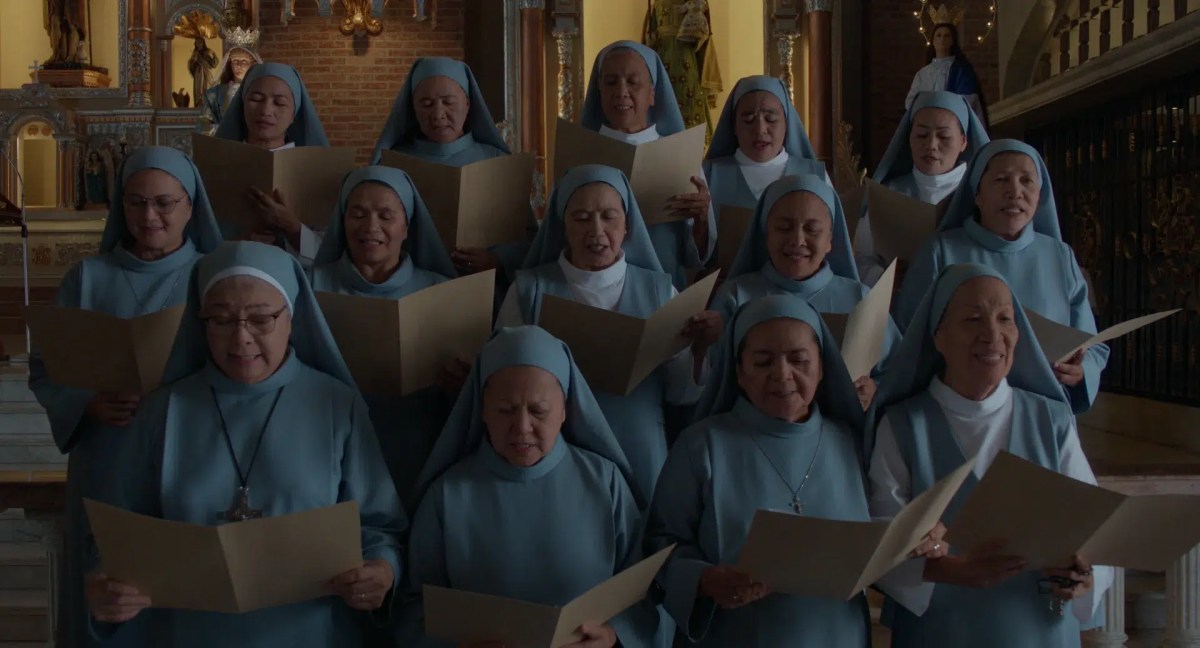
In ‘writing about it in this really direct way’ in First Light, he crafted a narrative that tells ‘that same story through metaphor, putting a very personal spiritual journey into a tangible narrative that people could follow,’ he says.
‘So I think that I processed all of my emotions through the film. I guess that’s why it’s such a classically linear story, because I’m like “that was my journey and my relationship to the Catholic church”,’ Robinson continues.
As he’s learned through ‘actually meeting nuns in the mountains’, Robinson’s own complicated relationship with Catholicism speaks ‘to the universality of the experience and the deeper human truth’.
‘There was something beautiful in being like “whoa, we come from such different backgrounds, me and these older nuns in the mountains, yet we’ve had similar journeys in our relationship to faith in the church”,’ he says.
An act of internal negotiation
Four years before First Light’s MIFF world premiere, the Melbourne-born writer and director sparked headlines over another reassessment, of toxic Catholic private school culture. For his Burn the Blazer protest piece, Robinson broke into his old high school of St Kevin’s College to set a piece of his uniform alight. The resulting imagery is unforgettable.
With both his attention-grabbing photography series and his initial feature, he isn’t shy about making a statement, or about shining the spotlight on the church and its institutions.
First Light is an act of internal negotiation, however, with the aspects of Catholicism that Robinson is still drawn to. The film is also guided by the contrasts and commonalities between organised religion and Indigenous perspectives.
‘When I was spending time in the mountains of the Philippines when I was doing research, I was spending time with a lot of the Igorot Indigenous groups up there. The metaphors for everything and their way of understanding the world is purely through understanding the rest of nature – it’s through understanding the trees and the birds around them,’ Robinson says.
Yolanda’s line about mortality and returning to the ocean came to Robinson while in the mountains, as he was ‘trying to find the same cycles of life and death in the natural world’.
‘That was a really influential period of writing this script – I don’t want to criticise Catholicism completely, I want to still uphold its values, and also offer an alternative way of understanding the same thing,’ he says.
‘And I think in that, you figure out that there is a universality between something like Catholicism and this Indigenous thought – there is still a synergy between what it’s trying to say about life and death, just through different avenues.’
Natural beauty versus religion’s idea of what’s natural
Throughout First Light, Yolanda is surrounded by the extremes of life and death, which are ever-present across her daily routine of mentoring new novitiates called to God and serving her community.
When she’s asked to perform last rites for an injured construction worker, then discovers that the circumstances of the young man’s passing might be murkier than she’s been told, she begins questioning whether her life has been spent in the right service.
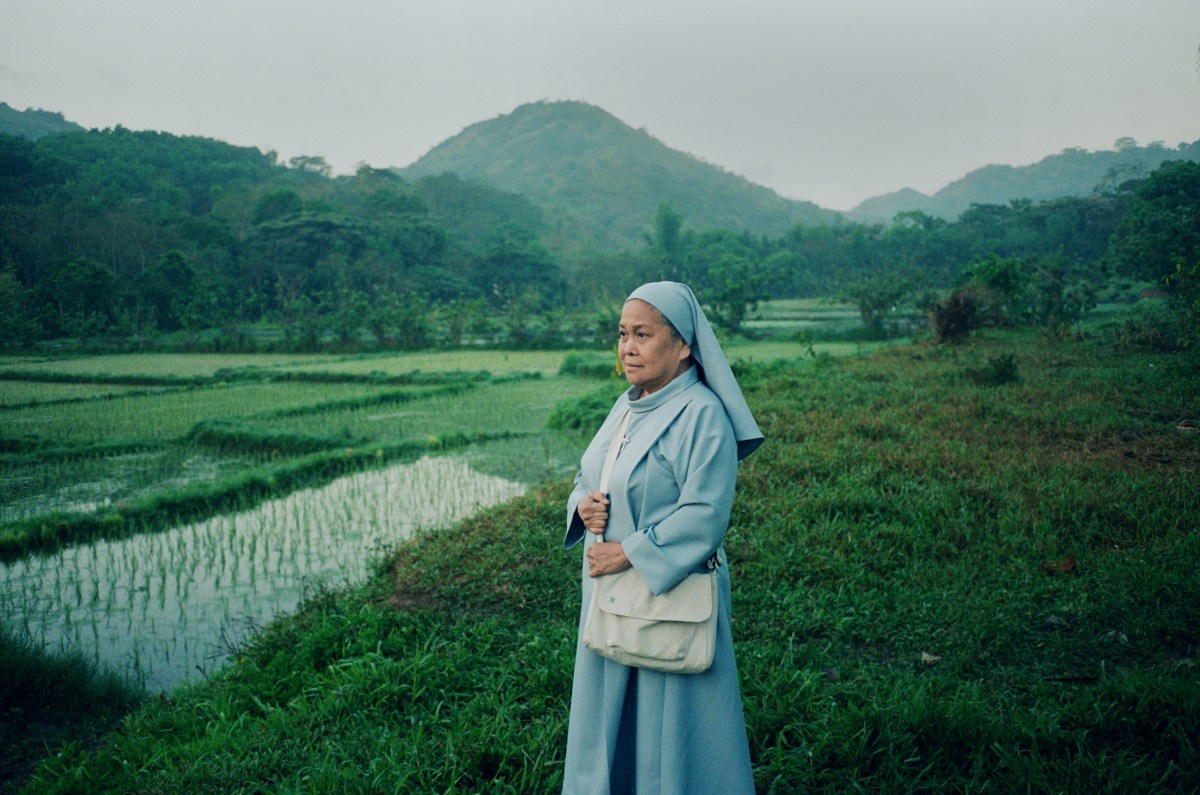
Robinson wraps Yolanda’s journey in a telling contradiction – between breathtakingly natural beauty as the nun’s near-constant backdrop, and the rethink she commences about the church’s idea of, in an ideological rather than physical sense, what’s natural.
Steeping the film in that clash, and representing it visibly, ‘was really important to me,’ Robinson says.
‘I think there are two sides of Catholicism that [have] ended up developing. There’s that one side, which is just so purely institutional, and it’s the side that I think is represented by this crumbling convent and all these stony walls, but then there is the other side, which is not only treating each other with care and love, and treating people how you wish to be treated, but also to treat nature just as well.
‘I wanted to have that divide, not to necessarily create a schism between the church and the land, but more to represent the divide [that] already exists in the church itself. There are parts of Catholicism that are nurturing of nature, and then there are parts which are contributing to some pretty unethical and unnatural things.’
First Light takes a patient, observational approach to cinematography. It was ‘important for us to capture that landscape as much as possible,’ says Robinson. ‘And always situate our characters within their context of the land or convents or mansions that they’re in, which is why we shot everything wide and tried to keep everything situated within the natural world.’
The ‘death of the artist’
Continually spying Ruiz amid gorgeous natural sights, as well as the priory she calls home, the hospital she frequents and the lavish house where she dotes on a rich parishioner’s ailing mother, also helped Robinson ensure that First Light clung to Yolanda’s perspective.
‘A lot of the early conversations with me and my cinematographer, Amy Dellar, were centred around [the fact that] at the end of the day, this film was being told from the point of view of this pious, graceful nun, and I think our cinematography has to match,’ says Robinson.
Yolanda, not Robinson, needed to provide the prevailing vantage. ‘It was almost this “death of the artist”, in the way of being like, I don’t want to shoot this in this gaze of me, as this young fashion photographer-background director. I need to honour the fact that this is coming from her perspective,’ he says.
It became ‘a really great exercise in restraint,’ he adds. How intimately and intricately Robinson contemplated First Light’s visuals, and how they portrayed Yolanda’s perspective and life, is evident. ‘A lot of that slowness and looking at the world, I think that very much captures the way that Yolanda looks at the world,’ he offers.
‘Also, her position in society is someone that people get a lot of help from but generally overlook, so the way that she views the world, I think, is quite observational because people look past her.’
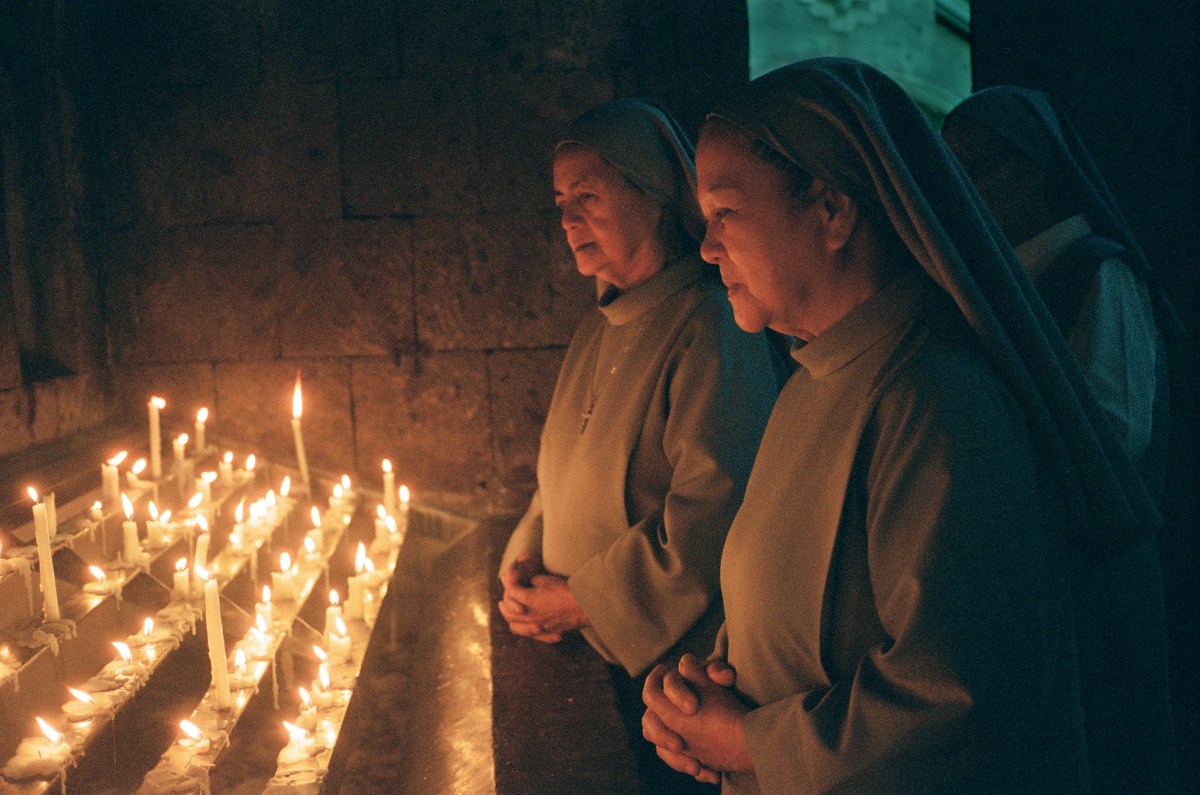
Robinson recognises, though, that valuing such precision in the film’s imagery, and making a movie where each frame represents and expresses such a wealth of telling detail, was ideal for a photographer helming his first feature – even if he actually always wanted to be a director, only to enjoy success in photography first.
‘It made it a nice segue between two sides of my career,’ he says, ‘and it was a perfect film to do, in that sense, because it taught me so much about acting.’
‘To me, acting was reading pages on a script and performing them, but there’s so many other ways to communicate that just aren’t through dialogue, and that we can communicate through camerawork and through lighting, or through the way that the characters walk through the scene and their blocking.’
Authenticity, destiny and diversity
Robinson will absolutely ‘put that same care and attention that I put into body language’ into his next on-screen projects – films that might be in a language he’s fluent in, unlike First Light with its Tagalog dialogue.
That his debut is the first Australian-Filipino co-production of its size, and a movie made in his homeland but in a different country to where he grew up, understandably increased the complexity of the shoot, as did scripting in English, then having his words translated for the cast.
But the primary pressure was always ‘to be as authentic as possible,’ he says. Chasing that aim also couldn’t have provided a better education for, or start to, his feature career.
Long before he was snapping Rose Byrne, Sydney Sweeney, Harris Dickinson and the like, to name a mere few famous figures to stand in front of his camera, Robinson was writing scripts. He thinks that First Light was probably always destined to be his debut, however.
‘Other scripts I had written were maybe less autobiographical, and maybe that’s because I hadn’t lived life to a certain extent to actually have a certain perspective on life or have my own experiences to draw from,’ Robinson says.
Indeed, his route to First Light – through a couple of short films, plus jobs beyond the creative sphere, including in retail, taking Santa photos and in the vital work of disability support, too – leaves as much of an imprint upon the feature that has also played festivals in Marrakech, Rotterdam, Glasgow and Sydney ahead of its Australian theatrical release.
‘I’ve put so much care and attention into learning how to use cameras and direct people, in light and style through my photography work, but I think what in the end was most valuable was living a life in a particular way that gave me something to say, or gave me a perspective on the world,’ Robinson says.
‘I would credit working in a place like Uniqlo, and I really do credit my work in doing disability support, as putting me in touch with different people who live different ways. And to get to meet people from outside of my social bubble, people who maybe have different politics and come from different backgrounds.
‘Those are the things that ended up colouring the script and colouring the story with something that felt real and authentic to me.’
Learning from life – and from lead actor Ruby Ruiz
’It’s a really interesting path to have made a feature film,’ Robinson says. ‘But having different occupations and living different ways and meeting all these different people, that’s what maybe makes the best director.’
He adds, ‘It’s often the thing that I talk about the most when I have film classes. When I’m teaching film students, I teach less about the camerawork and more about personal things of figuring out who you are, what you want to say, how you want to say it, what your taste is and how your taste defines what you want to say.’
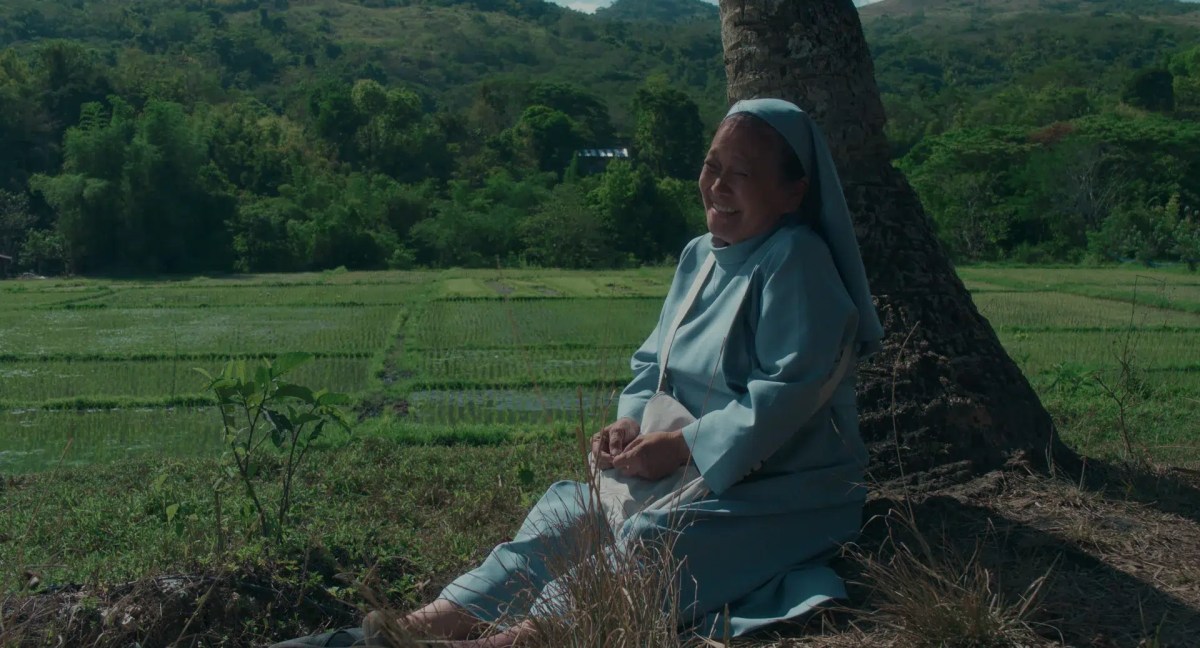
First Light is immensely indebted to the woman at its heart as well, with Ruiz a prolific performer with almost 160 acting credits on her resume. Twelve of those alone, including First Light, are just from 2025.
‘She’s also an acting coach. She teaches a lot of the young actors who want to get into film and television in the Philippines,’ says Robinson.
‘So to have an acting coach as my first lead actress was a dream for me, because I could ask “Am I over-directing or am I under-directing? What do you need from me? Is my esoteric approach to character … is that working for you?”’
Whether Yolanda is reflecting upon life and death or, as she often does, conveying as much without a word, Robinson and Ruiz’s productive collaboration cascades through a film that boasts performances as brimming with naturalism as its scenery. In a country where ‘most of the acting is very much soap opera work, where it’s over-the-top acting,’ Robinson says, that’s equally an achievement.
‘Ruby does that incredibly well and incredibly hilariously. But with this film, because she had worked on Expats so recently with Nicole Kidman, she learned the more restrained way of acting from international films and more arthouse films.’
‘So it was perfect, because she could both teach me everything about acting and, as a Filipino lead, was already well-versed in how to carry an international project.’