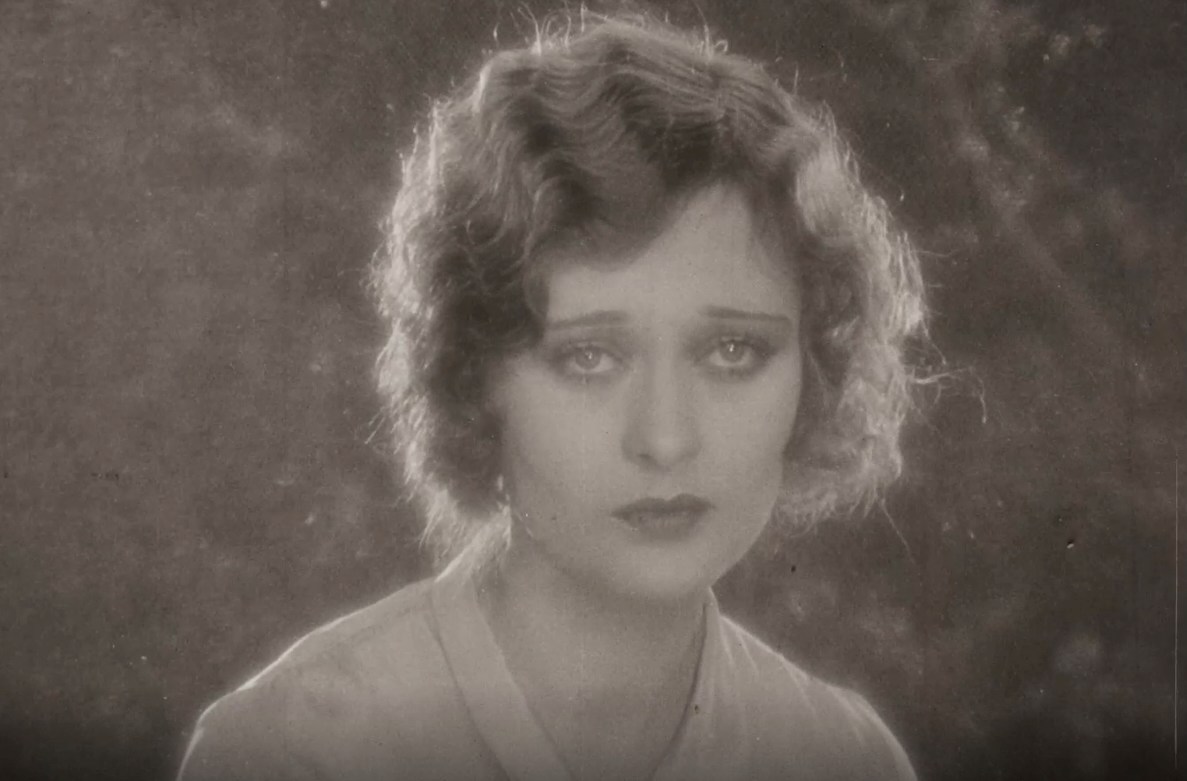
Australia’s National Film and Sound Archive has announced the re-discovery of The Little Irish Girl, a silent film from 1926 starring Dolores Costello (the grandmother of actress and talk show host Drew Barrymore), which has been considered lost since the late 1940s.
As the organisation says, the film has not been seen in public or private since this era, and had been considered lost media. As an adaptation of the Tasmanina-born author Edith Lyttleton’s novel The Grifters, it has an important part of Australian screen history.
The complete four-reel film has now been collected and preserved, thanks to the donation of an array of nitrate films that were gathered by Australian collector Laurie McIver and his son Andrew Gainey, who donated them to the NFSA earlier in 2026. While The Little Irish Girl was reportedly ‘decomposed’ the NFSA was able to ‘stabilise and digitise it.’
Notably, it is quite difficult to preserve nitrate films due to the instability of the materials used to create them. Not only are nitrate films flammable, they can also be toxic, so careful preservation is needed.
It’s estimated that around 75% of silent era feature films produced between 1906 and 1930 are now lost, with Australian-produced films being around 90% lost.
NFSA finds and restores lost 1920s silent film – quick links
How the NFSA restored The Little Irish Girl
As shared in a new article, NFSA curator Jeff Wray has outlined the complete journey of The Little Irish Girl, and the surprise of its ‘completeness.’
‘Directed by Roy Del Ruth and based on a story by Australian-born New Zealand author Edith Lyttleton, The Little Irish Girl comes from a period where nitrate films were particularly vulnerable to loss,’ Wray writes. ‘Many survive only in fragments, while others are known solely through contemporary reviews, photographs, publicity material or references in other films and publications.’
The Little Irish Girl was found in the private collection of Laurie McIver, ‘a passionate film lover, an avid collector and the owner of a cinema in Mount Druitt.’ Over several years, McIver reportedly accumulated many films, being gifted them as well as trading with or purchasing from other collectors.
Eventually, his film collection was inherited by his son, Andrew Gainey, who discovered The Little Irish Girl in a metal shipper within a helicopter hanger that also served as the family cinema.
‘Unable to locate another copy of the film, Gainey realised that the reels in his possession could be something special: a film from the silent era that was believed to have been lost,’ Wray writes.
Gainey was aware of the flammability risks of nitrate films and instead of projecting the film, he chose to donate it to the NFSA in the hopes it could be restored and housed properly.
The challenges of restoring The Little Irish Girl
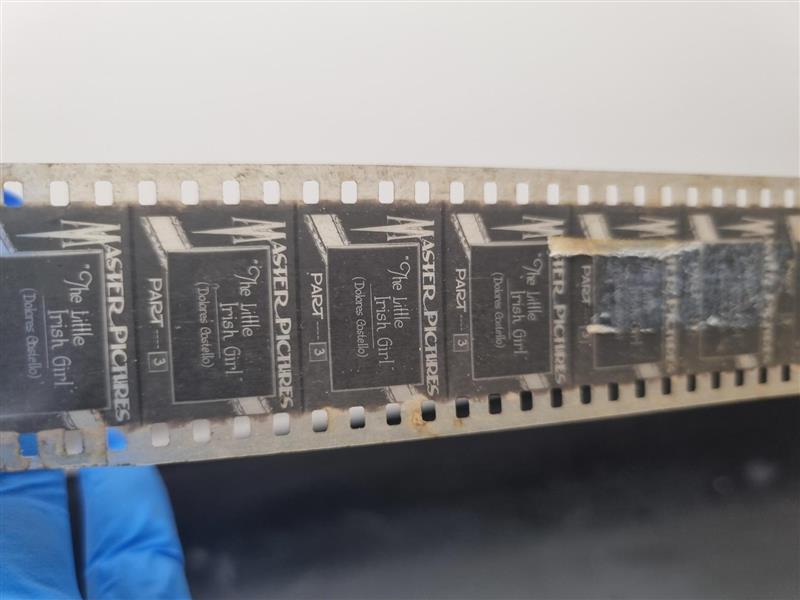
Once obtained by the NSFA, the film had to be treated very carefully due to its state and materials.
‘Nitrate film is an important part of motion-picture history, but it is also chemically unstable and deteriorates over time,’ Wray writes. ‘The Little Irish Girl showed signs of active decomposition and chemical breakdown threatening its long-term survival. Following discussions, the conservation team endeavoured to stabilise the film’s condition and prepare it for preservation scanning.’
As conservator James Campbell says, ‘When we opened the shipper of films, mould and nitrate blisters were visible on the surface of the film pack, so all work needed to be undertaken within a fume hood with appropriate PPE (Personal Protective Equipment).’
Despite some fading, the film’s image reportedly remained visible across much of the film. The nitrate base was also still ‘strong and pliable.’ This meant the film was able to pass through the scanners, to be preserved digitally for a new era.
‘The Little Irish Girl is a remarkable example of how a film’s journey does not necessarily end when it leaves the cinema. Sometimes, decades later and on the other side of the world, it can find a new life – and a new audience for generations to come,’ Wray writes.
It’s worth reading the full story of the preservation of The Little Irish Girl, to understand more about the effort and care that’s gone into the preservation of this film, once thought entirely lost.